
Ninja Van Malaysia Doubles Warehouse Scanning Speed with Zebra Technologies Deployment

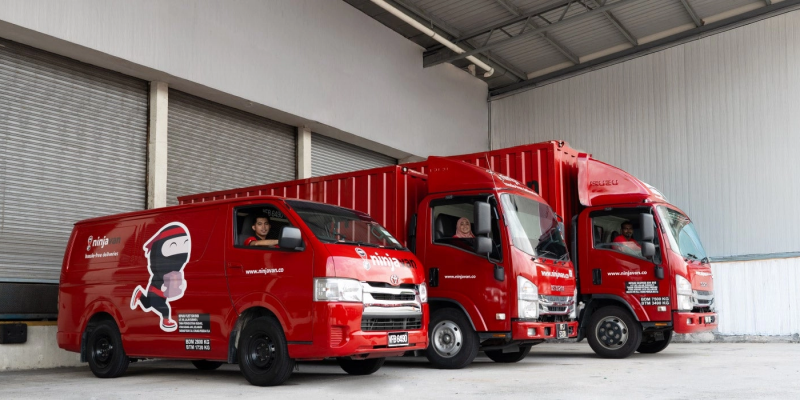
Ninja Van Malaysia has doubled warehouse scanning speeds and largely eliminated peak-period fulfilment lag by deploying Zebra Technologies’ TC2 series mobile computers and ZD200 desktop printers, integrated with the AC2 WAVE cloud-native warehouse management system (WMS).
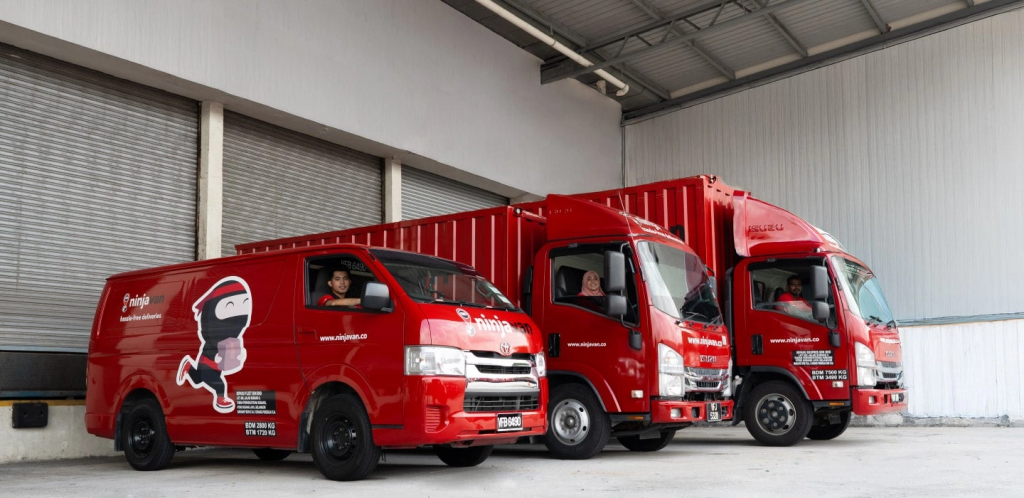
TLDR
- Ninja Van Malaysia deployed Zebra TC2 mobile computers, ZD200 printers, and AC2 WAVE WMS across its warehouse floor.
- Scanning rates doubled from baseline, with operators now comfortably handling 30 to 60 scans per minute.
- Customer complaints about missed or delayed deliveries dropped to near zero thanks to reliable labelling at packing stations.
- The deployment targets Ninja Van’s scale challenge: nearly 25 million recipients nationwide, plus e-commerce and B2B clients.
- Zebra Technologies positions the case study as a blueprint for connected frontline operations across Southeast Asia.
Ninja Van Re-engineers the Warehouse Floor
Ninja Van Malaysia, one of the country’s fastest-growing tech-enabled logistics providers, has completed a major upgrade of its warehouse operations in partnership with Zebra Technologies, a Nasdaq-listed digitisation and automation specialist. The deployment covers mobile computing, desktop printing, and a cloud-native WMS, and is already producing measurable gains on the warehouse floor.
Founded with the goal of connecting Southeast Asia through hassle-free delivery, Ninja Van Malaysia now serves nearly 25 million recipients nationwide. As the company scaled to serve both e-commerce and B2B clients, the complexity of its fulfilment operations grew accordingly. The result was a need for agile, automated solutions that could keep pace with high order volumes, diverse client requirements, and time-critical dispatch schedules without peak-period lag.
What Was Deployed
The deployment has three layers. At the system layer, Ninja Van Malaysia implemented the cloud-native AC2 WAVE Warehouse Management System (WMS) in partnership with Zebra PartnerConnect independent software vendor (ISV) AC2 WAVE. The cloud-native architecture means the WMS can scale with order volume without the kind of on-premise server constraints that often bottleneck regional logistics operators.
At the device layer, the company rolled out Zebra TC2 series mobile computers for warehouse workers. These rugged handheld scanners give staff real-time access to the WMS while they move through picking routes, with built-in scanning that removes the need for separate barcode readers. At packing stations, Zebra ZD200 series desktop printers generate shipping labels using both thermal transfer and direct thermal technology, supporting different label types within the same printer family.
The result is an integrated stack that connects the frontline from picking to final dispatch. Workers use the TC2 devices for real-time guidance on inventory locations, improving asset visibility. After picking, items are labelled at packing stations using ZD200 printers, producing the accurate labels needed for correct parcel routing on the same scan that closes out the pick.
The Numbers Behind the Upgrade
The combined Zebra and AC2 WAVE stack has delivered measurable gains. Operators are now comfortably handling 30 to 60 scans per minute, effectively doubling previous scanning speeds as they rapidly process individual items across thousands of daily orders. For a fulfilment operation running tens of thousands of parcels per day, that throughput improvement cascades directly into dispatch accuracy and on-time delivery performance.
The reliability of the ZD200 printers is the second quiet win. Labels remain legible throughout the delivery journey, contributing to what Zebra and Ninja Van describe as the virtual elimination of customer complaints regarding missed or delayed deliveries. In a market where customers blame the courier for tracing failures that often originate from unreadable labels, that reliability compounds into fewer support tickets and higher retention.
According to Tzi Zhao Lee, Director of Supply Chain and Partnerships at Ninja Van Malaysia, the operational shift has changed how the team works: “With faster scanning and a system that keeps everything flowing seamlessly, our operations are now smoother, more efficient, and truly exceptional. Instead of waiting for the system to catch up, things just move. I can now spend less time at the warehouse troubleshooting, as things take care of themselves. There is less frustration, people are happier, and they keep their momentum going throughout the shift.”
Why Malaysia Matters for Zebra
For Zebra Technologies, the Ninja Van deployment is positioned as a flagship Southeast Asian case study. Kym Lim, Country Manager for Malaysia and Brunei at Zebra, framed the partnership in terms of regional pressure: “Malaysia’s rapidly growing digital economy places immense pressure on logistics providers to deliver with unprecedented speed and accuracy. Ninja Van Malaysia’s success is a powerful example of how equipping a connected frontline with the right technology can drive significant operational modernization.”
Zebra’s broader product portfolio spans connected frontline solutions, asset visibility systems, and automation tools used across retail, manufacturing, transportation, logistics, healthcare, and other industries. The Ninja Van case gives Zebra a Malaysian logistics reference customer at a moment when regional fulfilment modernisation is accelerating, driven by e-commerce growth and the entry of larger cross-border sellers.
Our Take
This is the kind of unsexy industrial deployment that actually moves the needle. Doubling scanning speed and eliminating label-related delivery complaints is not a flashy AI story, but it is the precise category of operational gain that determines whether a logistics company scales profitably or burns cash fighting its own infrastructure. Ninja Van picked the right vendor and the right partner integrator in AC2 WAVE, which is half the battle in regional warehouse modernisation.
For Malaysian logistics operators watching the rollout, the practical lessons are clear. Hardware choice matters: ruggedised scanners that survive a hot, humid warehouse floor and printers that do not jam on long shifts will outperform consumer-grade equivalents every time. Cloud-native WMS architecture matters even more, because peak periods like 11.11 and 12.12 will quickly expose any on-premise scaling bottleneck. And frontline worker experience matters, because the real productivity gain comes from workers who can keep their momentum through a long shift, not from the headliner scanning speed alone.
Expect Zebra and AC2 WAVE to point to this case study heavily in pitches to other Malaysian and ASEAN logistics operators. The deployment is repeatable, the metrics are concrete, and the customer is willing to be named. That combination is rare in regional warehouse automation, where most wins are buried under NDA.