

Huawei ICT Competition 2025-2026 Global Final Concludes in Shenzhen With Record-Breaking 220,000 Participants

TLDR
- Edition: 10th Huawei ICT Competition, the largest in the event’s history
- Scale: Over 220,000 students and faculty from 2,000+ institutions across 100+ countries and regions
- Global Finalists: 177 teams from 49 countries and regions reached the final in Shenzhen
- Grand Prize Winners: 18 teams from 8 countries (China, Nigeria, Singapore, Algeria, Brazil, Egypt, Kenya, Dominican Republic)
- Malaysia’s role: A Malaysian team won the ICT Competition Online Popularity Award, alongside Egypt, Brazil, Poland and Pakistan
- Next edition: A new Ascend AI Operator Development Track will launch in the Chinese mainland
A Decade of ICT Talent Development Closes Its Biggest Chapter
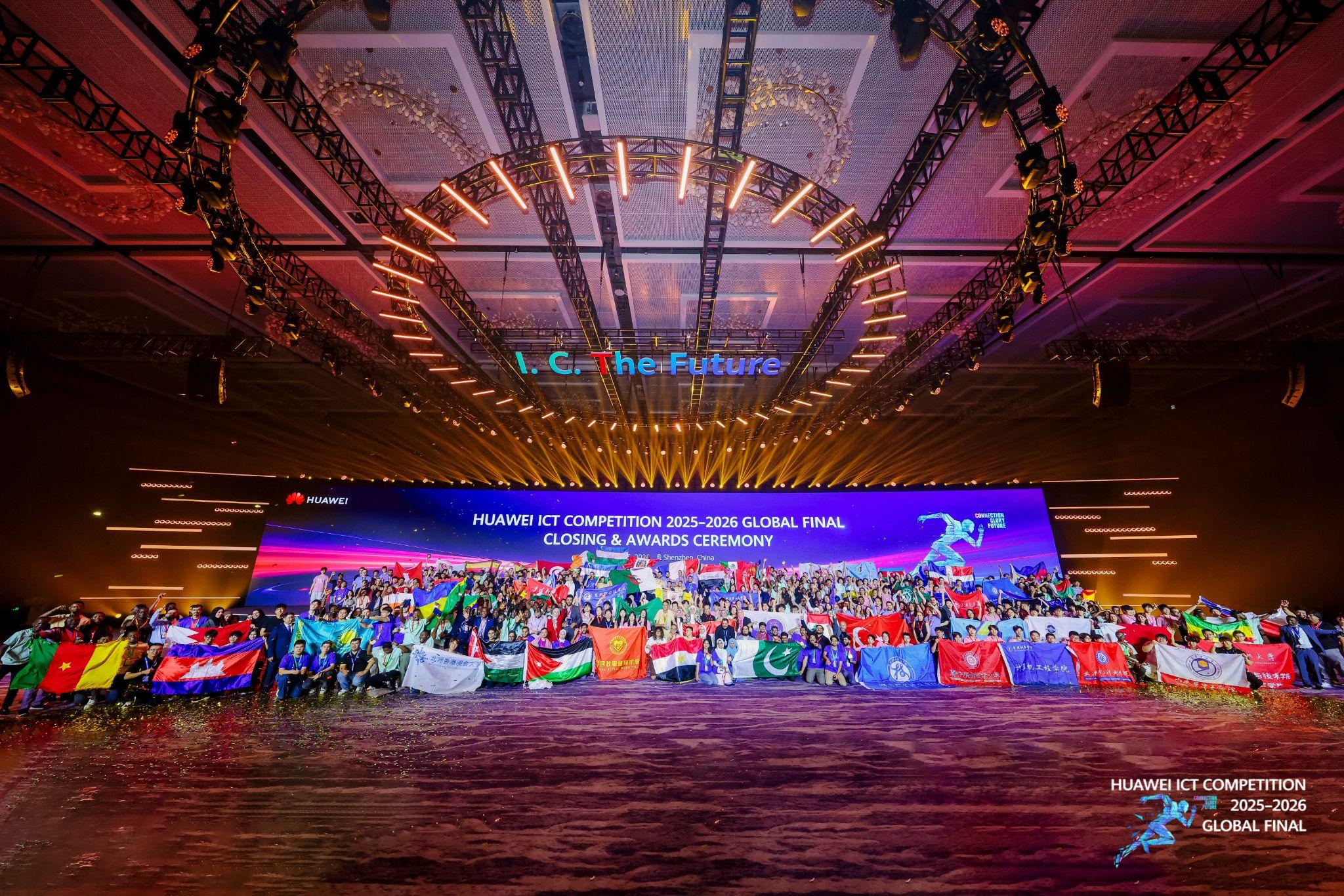
Shenzhen played host to the Closing and Awards Ceremony of the Huawei ICT Competition 2025-2026 Global Final on 8 June 2026, bringing down the curtain on the largest edition in the competition’s ten-year history. The event drew more than 220,000 university students and faculty members from over 2,000 tertiary institutions across 100+ countries and regions, a step up from previous years and a clear signal of how aggressively Huawei is scaling its talent pipeline.

After progressing through national and regional rounds, 177 teams from 49 countries and regions advanced to the Global Final and were recognised at the ceremony. The competition itself is split into three major tracks: Practice, Innovation, and Programming, with each track designed to test a different muscle. Practice rewards hands-on technical skill, Innovation rewards problem-solving creativity, and Programming rewards algorithmic depth and execution.
Grand Prize Winners and Special Awards
Eighteen outstanding teams from eight countries were awarded the Grand Prize: China, Nigeria, Singapore, Algeria, Brazil, Egypt, Kenya and the Dominican Republic. Beyond the technical trophies, Huawei used the ceremony to recognise contributions that go beyond pure engineering. The Women in Tech Award went to seven all-female teams from Azerbaijan, Nigeria, Kenya, China and Bahrain, while the Green Development Award was claimed by two teams from Ghana and China. Ten students from China received Fast Passes to the Huawei Future Business Leader Track, and 16 instructors from nine countries and regions, including Pakistan, China, Nigeria, Egypt, UAE, Brazil, Hong Kong SAR (China), Thailand and Türkiye, received the Most Valuable Instructor Award.
For Malaysian readers, the most relevant line is the ICT Competition Online Popularity Award, which was earned by six teams from Egypt, Brazil, Malaysia, Poland and Pakistan. It is the first time in several editions that a Malaysian team has been publicly named in the global awards roll, and it slots Malaysia back into the global conversation at a moment when regional governments are actively courting AI and data infrastructure investment.
Diplomatic representatives from 11 countries, including ambassadors, consuls general and counsellors, attended the ceremony in person to present awards to students from their home countries, a sign of how seriously the competition is now taken as a soft-power and talent-diplomacy event.
Huawei and UNESCO on AI Education
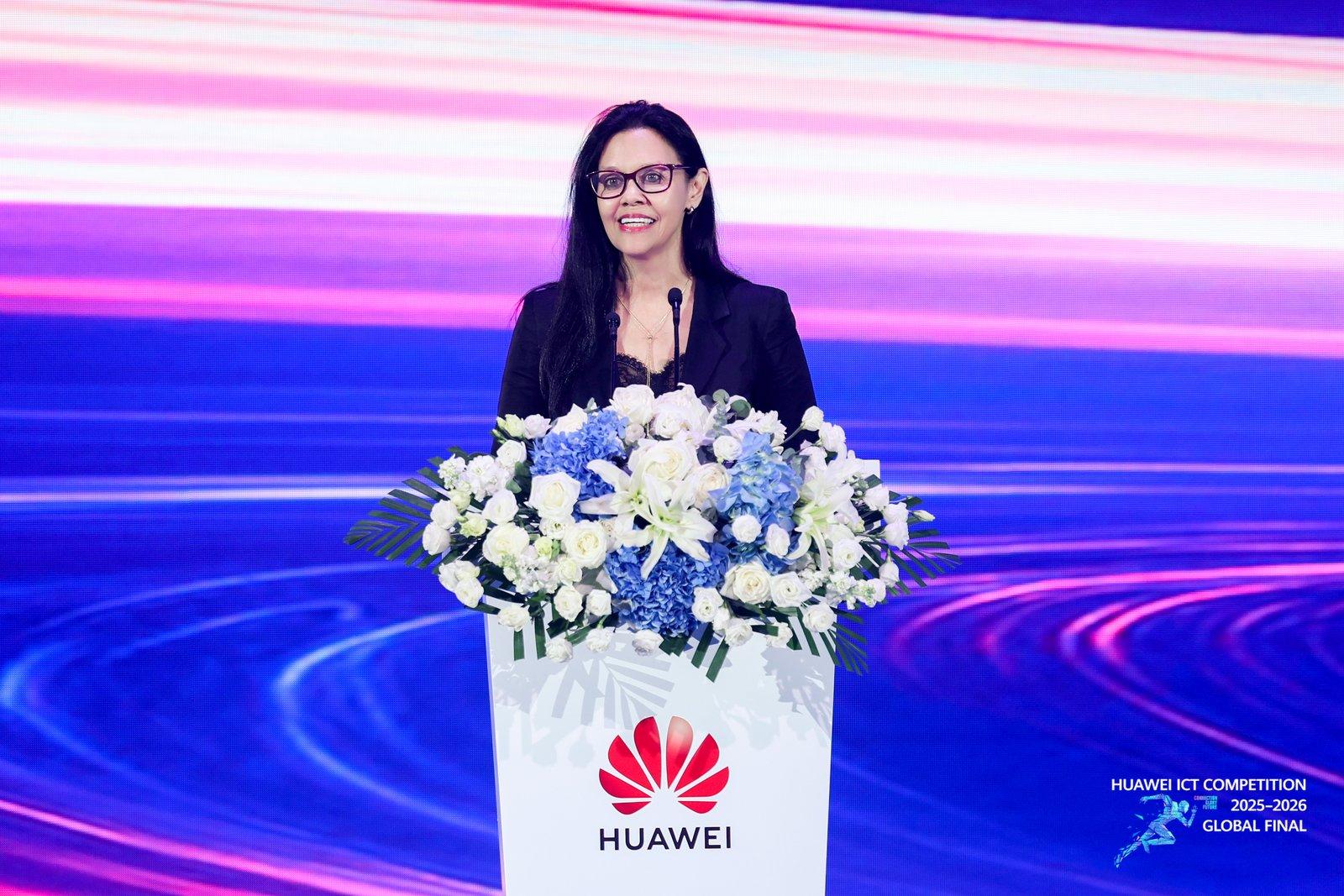
At the Closing and Awards Ceremony, Ritchie (Honghua) Peng, President of Huawei ICT Strategy and Business Development, framed the competition as part of Huawei’s long-running commitment to using technology for good. He announced the introduction of a new Ascend AI Operator Development Track in the Chinese mainland for the next edition, designed to give young developers more direct exposure to cutting-edge industry technologies through task-based challenges. For Malaysian students tracking the Huawei talent ecosystem, the Ascend track is worth watching, because Huawei has been steadily translating its own AI compute stack into teaching and certification content.
Dr. Shafika Isaacs, Director a.i. of UNESCO Institute for Information Technologies in Education and Chief of Section for Technology and AI in Education, praised the partnership between UNESCO and Huawei and commended the participants. She noted that UNESCO and Huawei have been working together on AI capacity-building programmes in Arab countries and ICT education cooperation projects in Central Asia and the Caucasus, with the goal of strengthening higher education and vocational training systems. “The future of AI requires collaboration among governments, international organisations, academia and industry,” she said.
The AI Education Push and What Comes Next
Alongside the awards, Huawei hosted the AI Accelerating Education Transformation Summit, bringing together educators and industry experts to discuss how AI is reshaping the classroom and to share leading practices in industry-academia collaboration. The summit produced two notable releases: the ICT Academy AI Course Solution, which gives universities a comprehensive AI learning pathway for scaling AI talent development, and the ICT Skills Development Insight Report with Recommendations for Nine Countries of Central Asia and the Caucasus, aimed at policymakers who need actionable data to guide talent and industry policy.
That mix, of competition, summit, and policy-grade insight report, is increasingly the template for Huawei’s education play. As demand for skilled professionals in AI, computing, big data and cybersecurity continues to grow, the Huawei ICT Competition has expanded its track list to include Practice, Innovation, Programming, Challenge, Entrepreneur and Teaching. Through partnerships with universities and shared course content, the programme focuses on strengthening practical skills and preparing students for the evolving demands of the digital economy.
Our Take
For Malaysian students and educators, the 10th Huawei ICT Competition is the most relevant edition in years. The Online Popularity Award for a Malaysian team is the headline, but the real story is the wider pipeline: Huawei’s ICT Academy programme, the new AI Course Solution and the Ascend AI Operator Development Track are all pieces of a coherent training stack, and Malaysian universities that engage early will have a real advantage in AI and cloud talent development over the next two to three years.
There is, however, a sober note worth raising. The competition is a Huawei-run programme, and the AI curriculum is anchored on Huawei’s own Ascend stack. For students who go through it, that means deep familiarity with one vendor’s toolchain, which is valuable inside Huawei’s ecosystem but worth weighing against more vendor-neutral AI training paths if a learner’s career plan includes working across multiple cloud platforms. The Malaysia team’s win is a strong signal that the local talent pool can compete globally, and a useful nudge for Malaysian universities to push more students into Huawei’s global competition, summit and certification channels while also balancing it with broader AI training.