
Google’s Gemini Report SEA 2026: 1 in 5 Malaysian Users Now Generating AI Images

TLDR
- Gemini App has surpassed 900 million monthly users globally as of April 2026, with Southeast Asia’s user base doubling in just 12 months.
- 1 in 5 Malaysian Gemini users asks the app to generate images — the highest share of any country in Southeast Asia.
- Malaysians have gone hard for Nano Banana image generation since it launched in August 2025.
- Share of Malay language requests more than doubled in early 2026 compared with a year earlier.
- Malay prompts dominate creative and academic use cases; English remains the default for professional and coding tasks.
- Gemini ranked best-performing large language model for Southeast Asian languages overall in AI Singapore’s SEA-HELM assessment.
Google’s Gemini Report SEA 2026 Puts Malaysia in the Spotlight
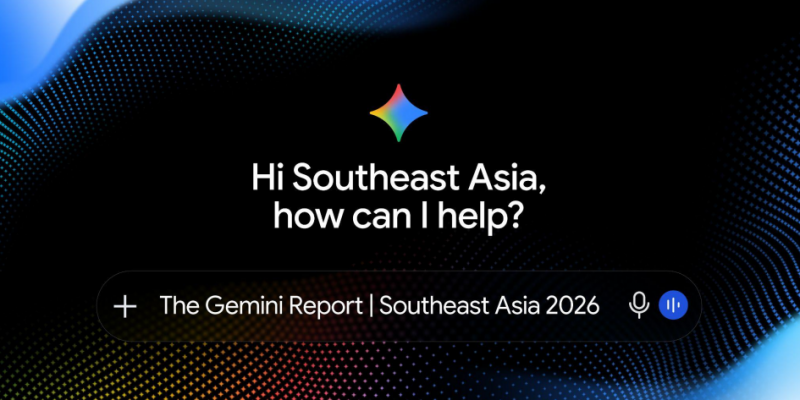
Google has just dropped The Gemini Report: Southeast Asia 2026 — Malaysia, and the findings make one thing immediately clear: Malaysia is no longer a passive AI market — it is one of the most distinctive AI cultures in the region. The report, published on Google’s Grow with Google portal, profiles how Southeast Asians are using Gemini with what the company calls “distinctively native flavors,” and Malaysia is the chosen launch market for the regional deep dive.
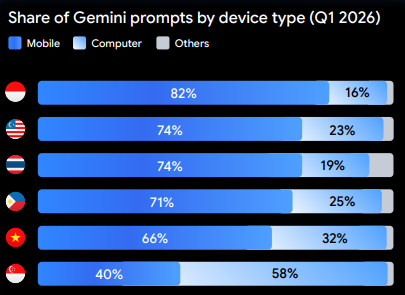
Behind the headline numbers is a story of explosive adoption. The Gemini App has crossed 900 million monthly active users worldwide as of April 2026, but the more telling figure for Malaysia is regional: Southeast Asia’s Gemini user base doubled in only 12 months. That pace of growth, in a region with uneven internet infrastructure and a patchwork of local languages, hints at how quickly AI assistants have moved from novelty to daily utility.
Malaysia’s Image-Generation Obsession
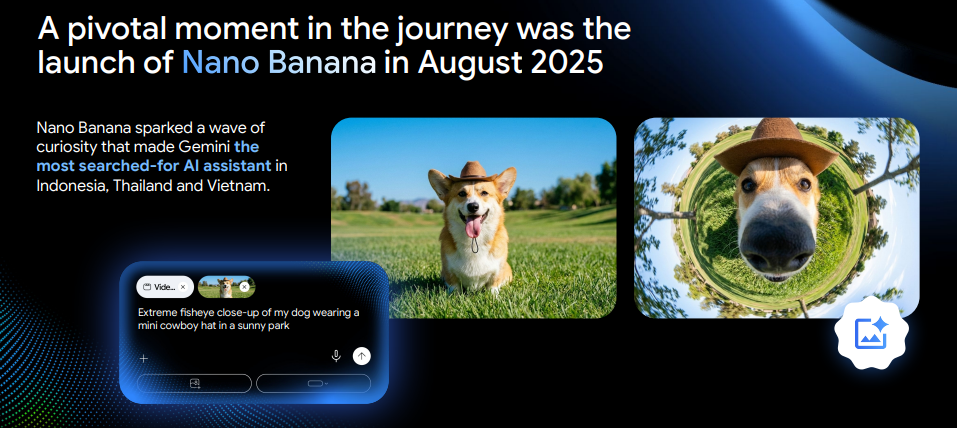
The single most striking statistic in the entire report is this: 1 in 5 Malaysian Gemini users asks the app to generate images. That is the highest image-generation share of any country in Southeast Asia, and it puts Malaysia ahead of larger regional markets like Indonesia, the Philippines, Vietnam, and Thailand. Google attributes the behavior to the runaway popularity of Nano Banana, its image-generation model that launched in August 2025 and quickly developed a Malaysian fan base.
What does this tell us about Malaysian users? Visual creation appears to be the on-ramp to AI for many first-time users here — not text summarization, not coding help, not email drafting, but image generation. That maps closely to Malaysia’s creator economy: a deep bench of small business owners, TikTok and Instagram sellers, designers, and content freelancers who treat Gemini as a visual ideation partner. For an agency owner or freelancer, the ability to iterate on a concept image in seconds is a tangible productivity gain, and the report’s case studies reflect that.
The Malay Language Surge
The other headline from the Malaysia cut of the report is linguistic. The share of Malay-language requests to Gemini more than doubled in early 2026 compared with the same period a year earlier. That is a meaningful shift in a country where English has traditionally dominated professional and tech contexts.
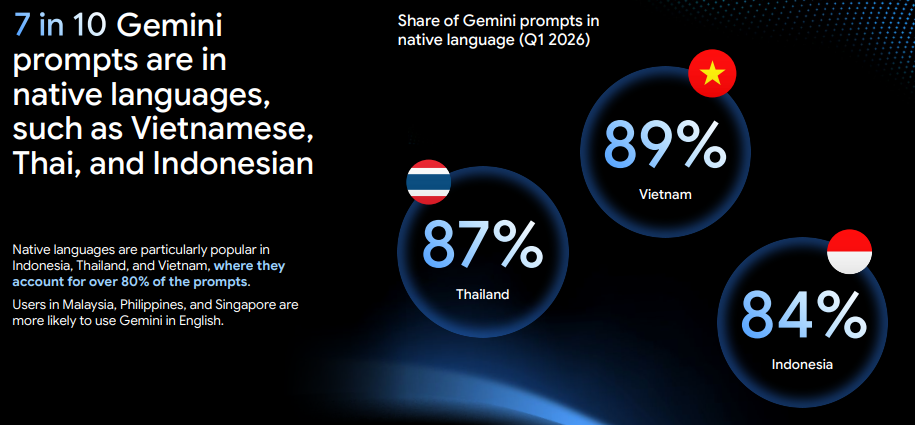
Google’s data shows a clean split in how Malaysians talk to Gemini. Malay prompts dominate creative and academic journeys — storytelling, school assignments, language practice, cultural content, and personal projects. English prompts dominate professional and coding tasks — work emails, technical documentation, software development, and B2B writing. The pattern suggests a genuinely bilingual AI adoption rather than a one-language-fits-all approach. Malaysians are choosing the language that fits the task, and Gemini is keeping up.
SEA’s Top-Rated LLM for Local Languages
None of this adoption story would matter if Gemini stumbled on Southeast Asian languages themselves. According to AI Singapore’s SEA-HELM assessment — the region’s leading benchmark for evaluating LLMs on Southeast Asian languages — Gemini ranked as the best-performing large language model for Southeast Asian languages overall. That covers Bahasa Melayu, Bahasa Indonesia, Thai, Vietnamese, Filipino, and Tamil, among others. For Malaysian users, the SEA-HELM result is reassurance that the model is not just fluent in English with a Malay skin — it actually understands the grammar, idiom, and cultural context of the region’s languages.
The report also highlights a Malaysia-specific education case study: SMK Orkid Desa, where special education teacher Cikgu Siti Ainulmuryida uses Gemini to make classroom learning more inclusive for students with diverse needs. It joins case studies from Vietnam (Mrs. Laila integrating Pythagoras with local culture), Singapore (Alvarez automating Google Sheets formulas), and Indonesia — painting a picture of AI being woven into everyday work across the region.
Our Take
Three things stand out to us at Helloexpress. First, Malaysia is no longer playing catch-up in AI — the image-generation share and the Malay-language surge both suggest Malaysian users are pushing the frontier of how Gemini is used, not just consuming outputs that were designed for Western markets. Google’s choice to launch the SEA 2026 report on a Malaysia-specific URL is itself a signal: the company sees MY as a flagship market for the region.
Second, the bilingual split between Malay and English is the most under-reported angle in this dataset. Most coverage will focus on the 1-in-5 image stat because it is visual and quotable. But the doubling of Malay-language prompts tells a deeper story about how a multilingual society negotiates AI — picking the language that fits the cognitive mode (creative vs professional). That is a model other bilingual markets like Singapore and the Philippines will be watching closely.
Third, for Malaysian creators, educators, and small business owners, the practical takeaway is direct: Gemini in 2026 is genuinely strong in Bahasa Melayu, and the Nano Banana image tools are mature enough for real production work. If you have not yet tested a Malay-language prompt or a Nano Banana image workflow, this report is your cue to start.
Source: