

Lenovo Warns 90% of IT Leaders See Gaps in AI Threat Readiness, Rolls Out Unified Cyber Resilience Framework

TLDR
- Recent research finds 90% of IT leaders acknowledge gaps in defending against AI-driven threats.
- Lenovo is expanding its global Security Services portfolio with a unified cyber resilience framework.
- New offerings target up to 50% reduction in system downtime and up to 40% lower remediation costs.
- Security Services with Absolute and ThinkShield TraceLock headline the new portfolio.
- ThinkShield TraceLock ships from 1 July on select ThinkPad devices including X1 Carbon Gen 14.
The Problem: Fragmented Accountability, Not Missing Tools
As organisations accelerate AI adoption and digital workplace transformation, many are finding that cyber resilience is undermined not by a lack of security tools, but by growing operational complexity and threat sophistication. Recent research shows that 90% of IT leaders acknowledge gaps in their ability to defend against AI-driven threats.

While security investments continue to grow, many organisations face a different challenge: fragmented accountability. Security operations remain highly distributed and siloed, making it increasingly difficult to coordinate response efforts, maintain end-to-end business continuity, and recover quickly when incidents occur.
Lenovo’s Unified Framework
To address this, Lenovo is expanding its global Security Services portfolio with a revamped cyber resilience framework and end-to-end offerings designed to provide a single point of accountability. The framework aims to help organisations reduce security complexity, cut system downtime by up to 50%, and lower remediation costs by up to 40%.
“Security leaders don’t need more tools. They need greater confidence that their people, devices, and data remain protected, and clear accountability when issues arise,” said Rakshit Ghura, Vice President and General Manager of Digital Workplace Solutions at Lenovo. “By bringing trusted devices, leading security technologies, expert managed services, and market-leading alliances together under a single operational model, Lenovo helps customers reduce complexity while strengthening resilience.”
Security Services with Absolute and ThinkShield TraceLock
As part of the expansion, Lenovo is launching Security Services with Absolute, a fully managed end-to-end resilience offering that helps organisations maintain critical security controls across distributed workforces without increasing demands on internal IT teams. Essential security controls can automatically recover when disrupted, reducing manual intervention and supporting consistent protection across complete environments. The service is backed by Lenovo’s global 24x7x365 Security Operations Center.
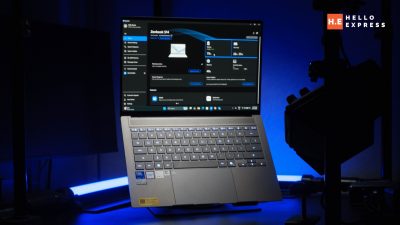
Lenovo is also introducing ThinkShield TraceLock, powered by Absolute Security, to maintain visibility and control of lost, stolen, or disconnected devices that may fall outside the reach of traditional endpoint management. Conventional endpoint security depends on an active operating system or network connection; when devices are powered off or disconnected, they become operational blind spots. ThinkShield TraceLock uses built-in cellular connectivity to let IT teams remotely locate, wake, and wipe devices. ThinkShield TraceLock will be available beginning 1 July on select ThinkPad devices, including the ThinkPad X1 Carbon Gen 14, ThinkPad X1 2-in-1 Gen 11, ThinkPad T14s Gen 7 Intel, and ThinkPad T16 Gen 5 Intel.
Our Take
The “90% of IT leaders see gaps” framing is sharp and lands well with the C-suite audience Lenovo is targeting. Boards increasingly want a single throat to choke when something goes wrong, and Lenovo is positioning itself as that accountable party rather than another point product. For Malaysian enterprises that have built security stacks piecemeal over the past decade, this consolidated pitch is far easier to digest than yet another best-of-breed argument.
The numbers are doing a lot of work here. Up to 50% downtime reduction and up to 40% lower remediation costs are aggressive claims, but they are the kind of figures that survive a CFO conversation. Pairing the framework with Absolute’s resilience layer adds technical credibility — Absolute’s self-healing endpoint story is well-known in the channel — and the TraceLock cellular tracking feature is genuinely useful for regulated industries where lost devices are a recurring compliance headache.
The biggest question is execution. Lenovo is now competing head-on with established MDR players, and the “single accountable relationship” promise is only as strong as the SOC behind it. If Lenovo’s 24x7x365 Security Operations Center can deliver on the framework’s promise, the company becomes a credible alternative to traditional managed security providers. If not, this becomes another vendor consolidation play that does not actually simplify anything.
Keyword: AI threat readiness cyber resilience