
Car Seats Are Legally Required For Newborns In Malaysia: What New Parents Need To Know

TLDR
- Malaysian law has required a Child Restraint System (CRS) in all private vehicles since 1 January 2020, with fines of RM300 to RM2,000
- For a newborn, you need a rear-facing infant carrier rated from birth up to about 13 kg
- Never put a rear-facing infant seat in the front if the airbag is active. The back seat is the only safe spot
- Look for the orange sticker showing ECE R129 (i-Size) or ECE R44/04 certification. Uncertified seats are illegal and unsafe
- ISOFIX is the easiest install if your car supports it. A properly strapped 3-point seatbelt install is also legal and safe
- Taxis and e-hailing vehicles like Grab are currently exempt. Bring your own infant carrier or pre-book a child-seat-friendly service
Yes, you legally need a car seat for a newborn in Malaysia
This is one of those things nobody tells you at the hospital, and you only realise it the morning you are supposed to drive home with the baby. Malaysian law has required a Child Restraint System (CRS) in all private vehicles since 1 January 2020. The fine for not using one starts at RM300 and goes up to RM2,000.

The law is the easy part. Choosing the right seat, installing it correctly, knowing when to upgrade or pass it down; that is where most parents stall. Here is what you actually need to know.
The right seat for a newborn
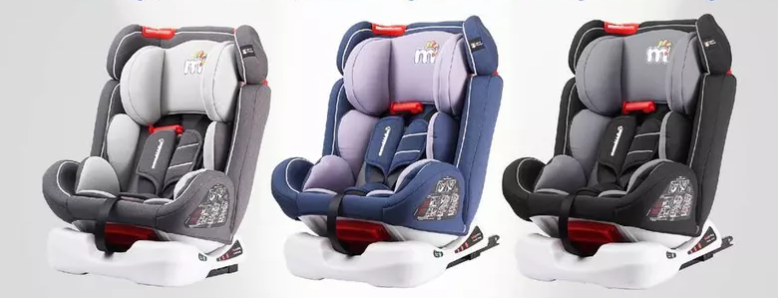
For a brand new baby, you need an infant carrier, which is a rear-facing seat built for the first months of life. The weight limit is usually birth up to around 13 kg. The position must be rear-facing, meaning the baby faces the back of the car.
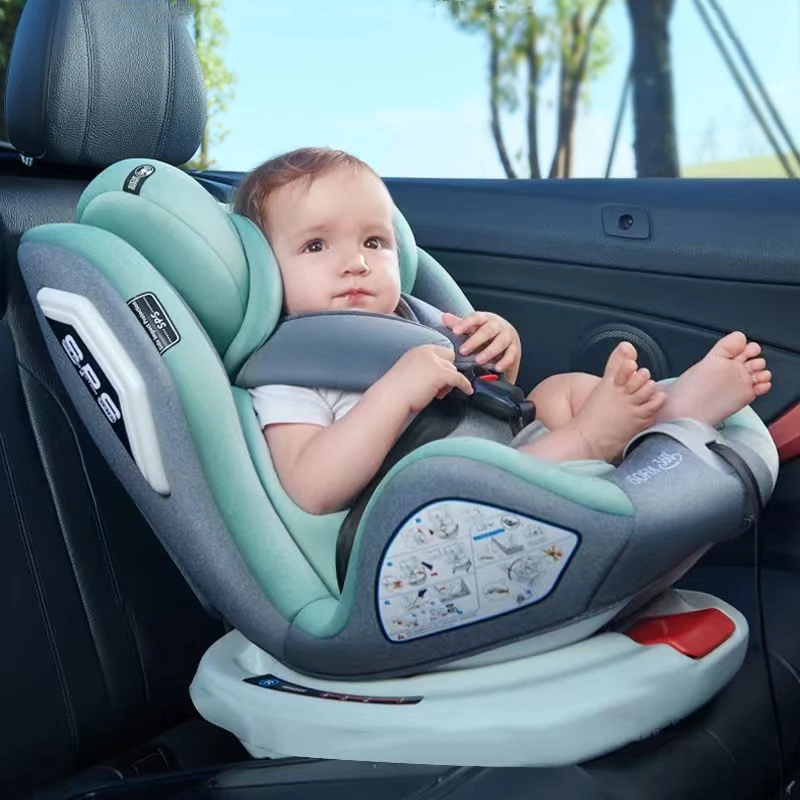
And this is the rule new parents break most often: never install a rear-facing infant seat in the front passenger seat if the airbag is active. The back seat is the only safe place for it, ideally in the middle or on the side away from the door.
Rear-facing is not just a safety recommendation. A newborn’s neck and spine are not built to handle the forces of even a moderate frontal crash, and rear-facing distributes those forces across the back of the seat. Keep them rear-facing as long as the seat’s height and weight limits allow, ideally until at least 12 to 24 months of age.
The certifications that actually matter
Do not just buy any cheap seat online. Uncertified seats are illegal in Malaysia and unsafe in any car. What you are looking for is an orange sticker showing one of two UN safety standards.
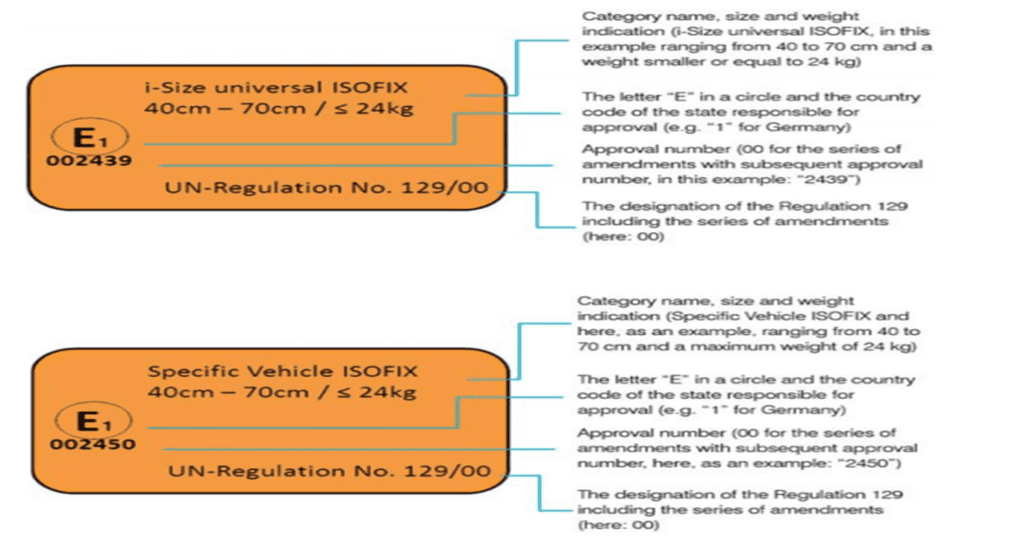
ECE R129, also called i-Size, is the newer, stricter standard. It is height-based rather than weight-based, and it has better side-impact protection. If you are buying new, this is the one to get.
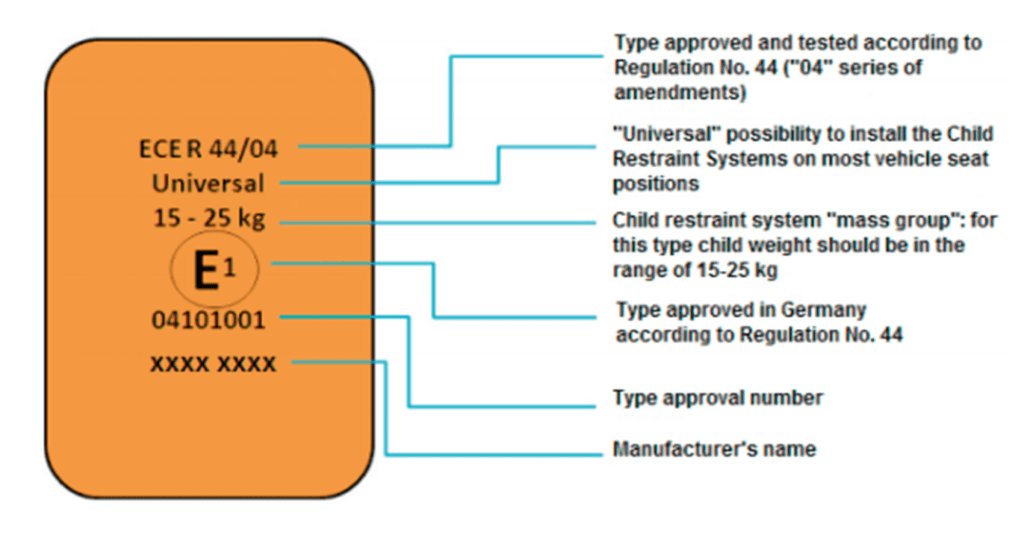
ECE R44/04 is the older weight-based standard. Still legal and widely accepted in Malaysia, but i-Size is the safer long-term bet.
If you are buying second-hand, check that the orange sticker is still attached and legible. And never use a seat that has been in a crash, even a minor one. The plastic and foam can deform in ways you cannot see, and the structural integrity is compromised.
Installing it properly
Two install methods are legal and safe in Malaysia.
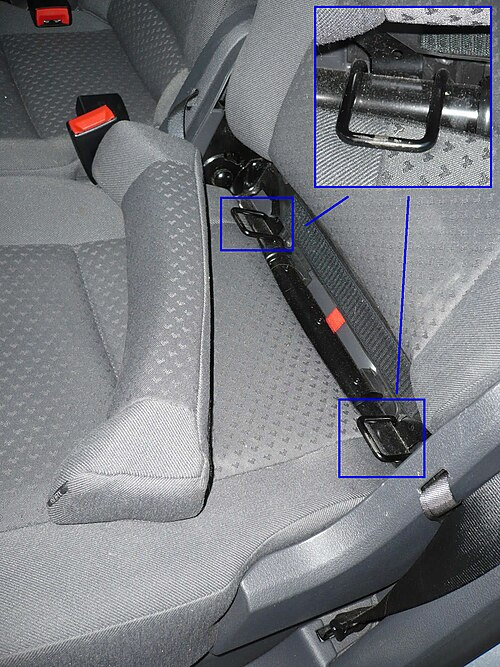
ISOFIX uses rigid anchor points built into the back seats of most cars made since the mid-2010s. Look for the ISOFIX labels on the back of your car’s rear seats. This is usually easier and reduces the chance of getting the install wrong.
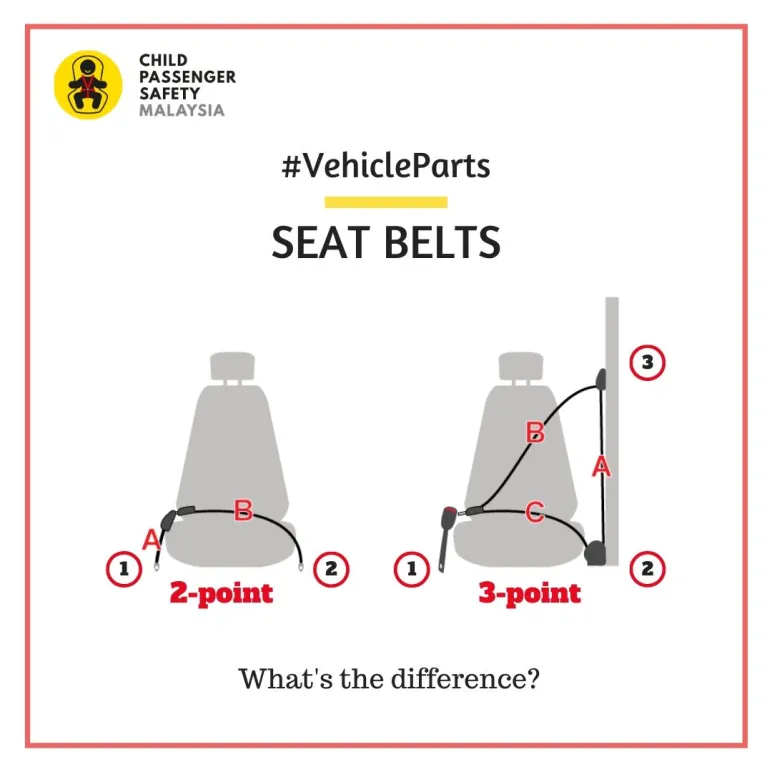
A 3-point seatbelt install uses the car’s regular shoulder-and-lap belt. This is also completely legal and safe if you strap it tightly and correctly.
Whichever method you use, follow the seat manufacturer’s manual to the letter. The most common failure mode I keep hearing about from parents is thinking they have over-tightened, when in reality the install is barely adequate. Quick test: if you can wobble the seat more than about an inch at the belt path, it is not tight enough.
What about Grab and taxis
The CRS law mainly applies to private cars. Taxis and e-hailing vehicles like Grab are currently exempt from providing car seats, which means you will need to bring your own infant carrier or pre-book a service that supplies one. Some e-hailing platforms in Malaysia now offer child-seat add-ons in selected cities, but availability is patchy.
One more thing worth thinking ahead about: hospital discharges. Bring the infant carrier on the day you bring baby home, even if the ride is short. The first ride is the one most new parents forget to plan for.
Our take
The Malaysian CRS law is one of the clearest wins for child safety in recent years, but the law alone does not keep a baby safe. The right seat, correctly installed, does.
The biggest practical mistake I see new parents make is buying a seat that is technically certified but a poor fit for their car, then installing it loosely because the harness feels too tight. Spend an hour at a baby shop, or with a child passenger safety technician if you can find one. The hour you invest now is the one that matters at 60 km/h on the highway.
Versi Bahasa Malaysia: Kereta Bayi Wajib Secara Undang-Undang Di Malaysia: Apa Yang Perlu Diketahui Oleh Ibu Bapa Baharu