
YTL Foundation’s ilmu Fellowship Sends 25 Malaysian Leaders to Oxford in Inaugural Run

TLDR
- YTL Foundation has launched the inaugural ilmu Fellowship — a 10-month leadership programme for 25 Malaysian emerging leaders from government, business and civil society
- Fellows will attend a four-day residential session at Oxford’s Blavatnik School of Government, with retreats, coaching and peer learning back in Malaysia
- The programme is delivered with Acumen, PEMANDU Associates and leadership coach Alvin Ung, and has explicit backing from Malaysia’s Minister of Higher Education and the British High Commissioner
- Themes include Malaysia’s social contract, Adaptive Leadership and Good Society Readings — anchored in YTL Foundation’s existing leadership library
- Nominations for the first cohort close 14 August 2026 via ilmufellowship.com
YTL Foundation — the philanthropic arm of Bursa-listed YTL Corporation — has spent nearly three decades running education programmes through schools, scholarships and a FrogAsia-backed digital learning stack. Its latest move, the ilmu Fellowship, is a deliberate pivot toward cross-sector leadership development.

The inaugural cohort runs for ten months and brings together 25 emerging leaders from government, business and civil society. The structure mixes Malaysian retreats and coaching with a four-day residential at Oxford’s Blavatnik School of Government, Europe’s first major school dedicated to public policy. Fellows do not leave their day jobs — they carry the work back into their own organisations, which the Foundation says is the whole point.
Curriculum themes draw on YTL Foundation’s existing leadership library. Good Society Readings sits alongside Adaptive Leadership frameworks and a module on Malaysia’s social contract. The intention, per programme director Dato’ Kathleen Chew, is to develop leaders who can “bridge perspectives, foster collaboration and put the nation’s long-term interests above institutional boundaries.”
Who Is Delivering It
The Fellowship is a partnership rather than a solo YTL play. The Foundation is working with the Blavatnik School of Government at Oxford, Acumen Inc., PEMANDU Associates and Malaysian leadership coach Alvin Ung. Acumen in particular is not a casual collaborator — the Foundation has run an Acumen-linked SEA Fellowship track since 2024, and Acumen founder Jacqueline Novogratz toured Malaysia, Singapore and Vietnam with the Foundation earlier in 2026.
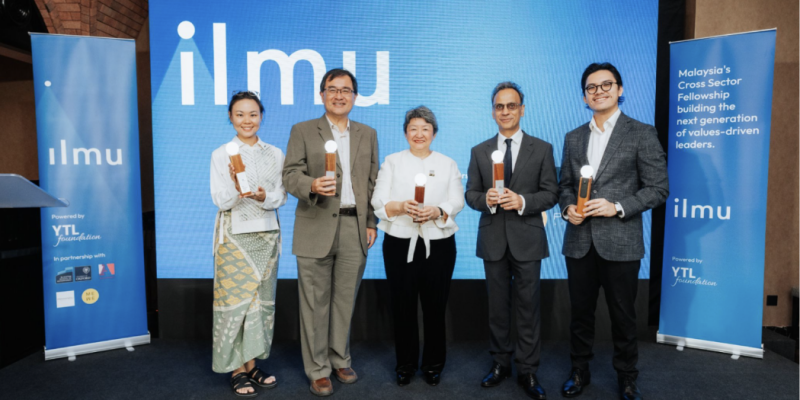
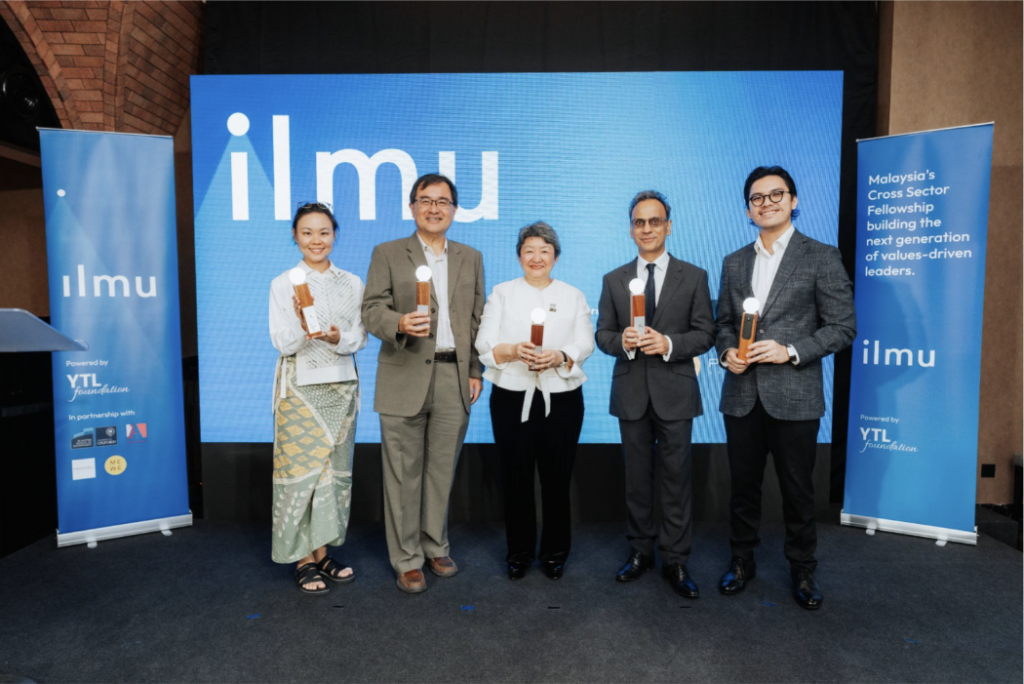
Backing at the launch was unusually senior for a CSR initiative. Higher Education Minister Dato’ Seri Diraja Dr. Zambry Abd Kadir framed the Fellowship as a direct response to the complexity facing Malaysian leaders, while British High Commissioner His Excellency Ajay Sharma CMG positioned it within a longer-running UK-Malaysia education relationship. A fireside chat moderated by PEMANDU CEO Leon Jala — with Tan Sri Datuk Nallini Pathmanathan, Keeran Sivarajah and Dato’ Hamdan Abdul Majeed — gave the rollout additional weight.
Why YTL Is Doing This Now
The timing is hard to miss. YTL Corporation is in the middle of a high-stakes build-out across data centres (via its YTL Data Centre Holdings partnership with NVIDIA in Johor), 5G (Yes, run by YTL Communications) and power generation. The company’s profile on Bursa has rarely been higher, and scrutiny of how its philanthropy lines up with its core businesses is real.
The ilmu Fellowship sits squarely inside the Foundation’s education pillar, which already includes the Learn From Home programme with YTL Communications and FrogAsia, Leaps Academy, and a long-running scholarship track that has sent Malaysian students to places like Oxford before. What’s new is the framing: this is not a classroom programme, not a scholarship, and not a one-off donation. It is an explicit attempt to shape the leadership pipeline that, in ten years, will be running institutions the Foundation’s scholarship alumni work in today.
Our Take
There is a fair amount of corporate-CSR boilerplate to wade through in the launch material. Phrases like “values and character” and “principled leaders” do a lot of heavy lifting without telling readers what Fellows will actually do day-to-day. Cross-sector fellowships are also easy to launch and easy to forget. Plenty of well-funded leadership programmes run for a cohort or two and then quietly disappear.
What makes ilmu worth watching is the partner stack. Acumen has a track record of running tough, outcome-oriented leadership programmes across South and Southeast Asia. Oxford’s Blavatnik School is a serious policy institution, not a content mill. And the Foundation’s existing scholarship alumni feed directly into the kind of mid-career talent the Fellowship targets. If the first cohort closes nominations on 14 August and a second cohort actually runs in 2027, this becomes a meaningful pipeline. If not, it becomes a glossy brochure from a Bursa heavyweight with deep pockets. We will be watching which one it turns out to be.