
Vietjet Chairwoman Dr Nguyen Thi Phuong Thao Opens Trading at London Stock Exchange

TLDR
- Dr Nguyen Thi Phuong Thao opened LSE trading alongside Lady Mayor Dame Sue Langley and LSE CEO Dame Julia Hoggett
- The visit marks her second engagement with the London Stock Exchange in the past year
- FTSE 100 closed 1.24% higher on the day, hitting a four-month high
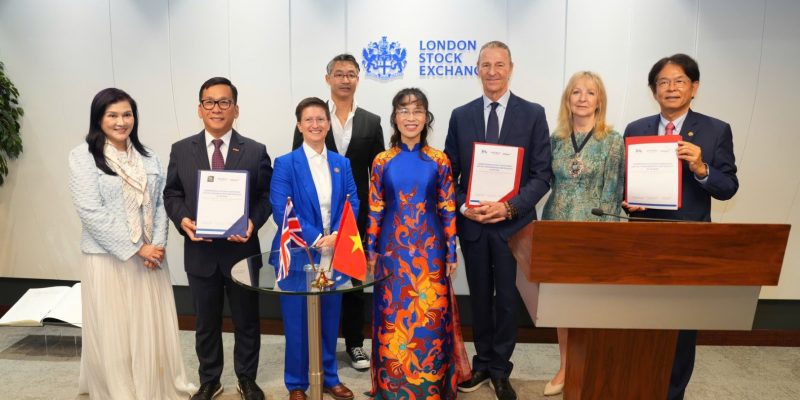
- Vietjet, HDBank and Dragon Capital signed a trilateral cooperation agreement during the visit
- The pact targets international capital mobilisation for Vietnamese infrastructure
- Vietjet operates direct Kuala Lumpur–Ho Chi Minh City and Kuala Lumpur–Hanoi routes, deepening Malaysia–Vietnam ties
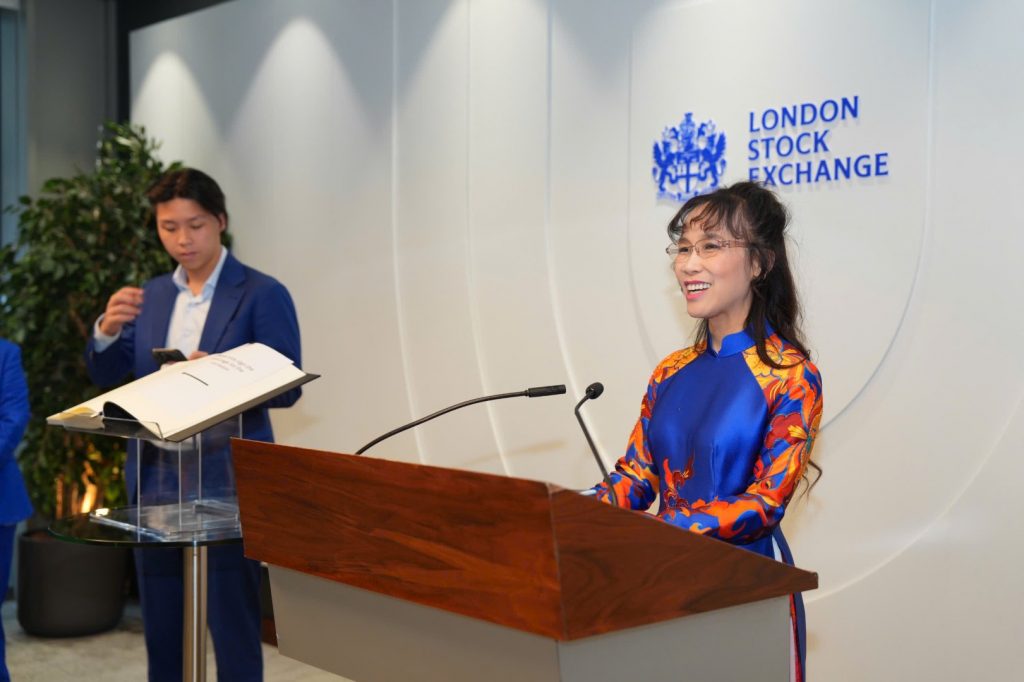
Dr Thao, who also serves as Permanent Vice Chairwoman of HDBank, joined the LSE opening ceremony alongside Dame Sue Langley, the Lady Mayor of the City of London, and Dame Julia Hoggett, Chief Executive Officer of the London Stock Exchange plc. The visit was her second engagement with the LSE in the past twelve months, a signal that Vietnamese corporates are no longer treating London as a one-off destination but as a recurring capital-markets partner.

Both City of London figures used the occasion to highlight Vietnam’s economic trajectory. Dame Hoggett pointed to Dr Thao’s cross-sector influence — banking, aviation, technology and investment — as evidence of the country’s broadening growth story, while Dame Langley framed Vietnam as a natural partner for London given the city’s depth of capital, governance standards and regulatory predictability.
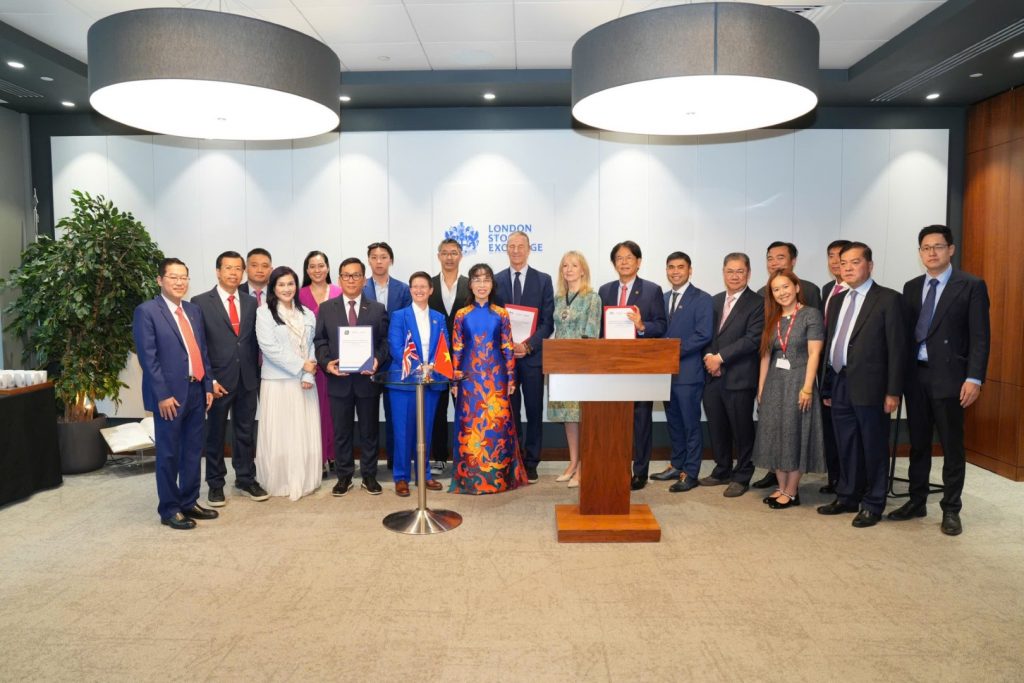
Markets appeared to take the cue. London’s benchmark FTSE 100 Index closed 1.24% higher on the day, reaching its highest level in four months — though it would be a stretch to attribute the entire move to a single opening ceremony.
The Trilateral Cooperation Agreement
The more substantive output of the visit was a trilateral cooperation agreement signed by Vietjet, HDBank and Dragon Capital, aimed at mobilising international capital for Vietnam’s infrastructure build-out. The signing was witnessed by both Dame Langley and Dame Hoggett, lending it institutional weight.
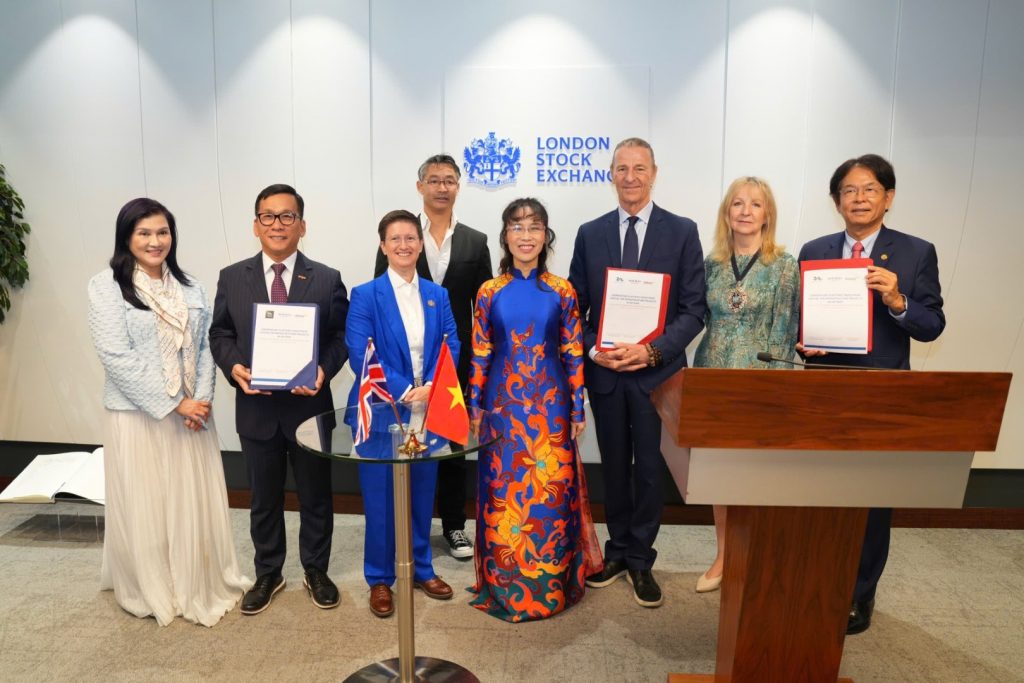
For Dragon Capital, the largest foreign-owned fund manager in Vietnam with a multi-decade track record, the agreement formalises a role the firm has been edging toward for years — connecting Vietnamese projects to international institutional money. Dominic Scriven, Dragon Capital’s Chairman, framed the development as part of a broader uptick in Vietnamese corporate interest in London’s financial centre. The LSE, founded in 1801, lists more than 1,700 companies with combined market capitalisation exceeding US$5.5 trillion and remains one of the world’s largest international bond markets — useful plumbing for the kind of large-ticket infrastructure financing the agreement targets.
What It Means for Malaysia
For Malaysian readers, the headline is connectivity. Vietjet already operates direct flights from Kuala Lumpur to both Ho Chi Minh City and Hanoi, and the carrier’s expansion in the region is one of the quieter forces deepening Malaysia–Vietnam bilateral trade and tourism flows. As Vietnamese corporates deepen their London linkages and as Malaysia and Vietnam continue to tighten their own economic ties, low-cost point-to-point air routes become a more important enabler of business travel, diaspora visits and SME exports.
The LSE event is also a useful reminder that the next wave of Southeast Asian corporate capital formation will not stop at Singapore or Hong Kong. London remains an attractive venue for firms seeking dollar- and sterling-denominated funding, ESG-aligned listings and access to European institutional pools — and Vietnamese groups are increasingly competing with their Malaysian, Indonesian and Thai peers for that attention.
Our Take
An opening bell is symbolic, not substantive, but the surrounding agreement is the real story. Vietjet, HDBank and Dragon Capital now have a structured vehicle to channel international capital into Vietnamese infrastructure, and the LSE provides a credible listing venue if any of those projects eventually need public-market funding. Dr Thao’s second LSE visit in a year suggests the relationship is moving from courtship to execution.
For Malaysia, the more interesting read-across is regional. If Vietnamese corporates can credibly access London capital, Malaysian issuers will face stiffer competition for the same pools of investor attention. The response should be similar — clearer ESG disclosures, deeper institutional investor engagement, and listings that tell a growth story rather than just a yield story.