
Qualcomm and ASUS Bring AI Pharmacists to 50+ Taiwan Community Pharmacies

TLDR
- Qualcomm and ASUS launched a Pharmaceutical AI Agent that runs locally on edge devices, not the cloud
- Targeting 50+ demonstration pharmacies across Chiayi, Tainan, Kaohsiung, and Pingtung in southern Taiwan
- Hardware stack pairs ASUS Zenbook A16 AI PCs with Snapdragon X2 Elite Extreme and Aetina MegaEdge AIP-FR68 edge boxes
- GPT-OSS open-weight model compressed from 120B → 20B parameters for on-device inference, even offline
- AI handles drug-drug interactions, duplicate therapies, and inappropriate medication use for an aging population
- All inference runs on-device — no cloud transmission of sensitive medical data, reinforcing sovereign AI in healthcare
An AI Pharmacist Built for the Counter
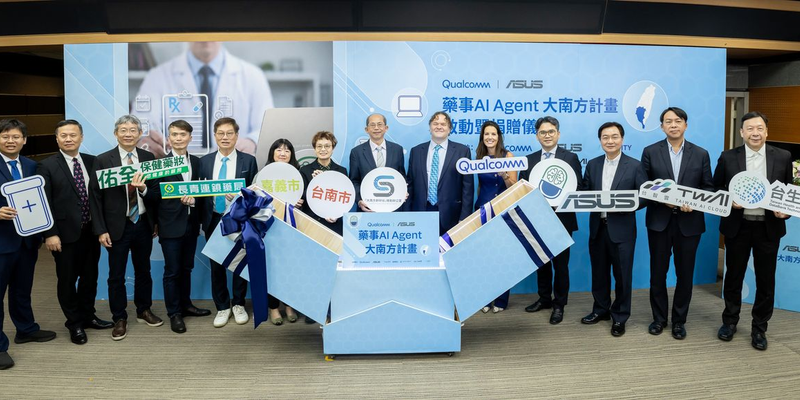
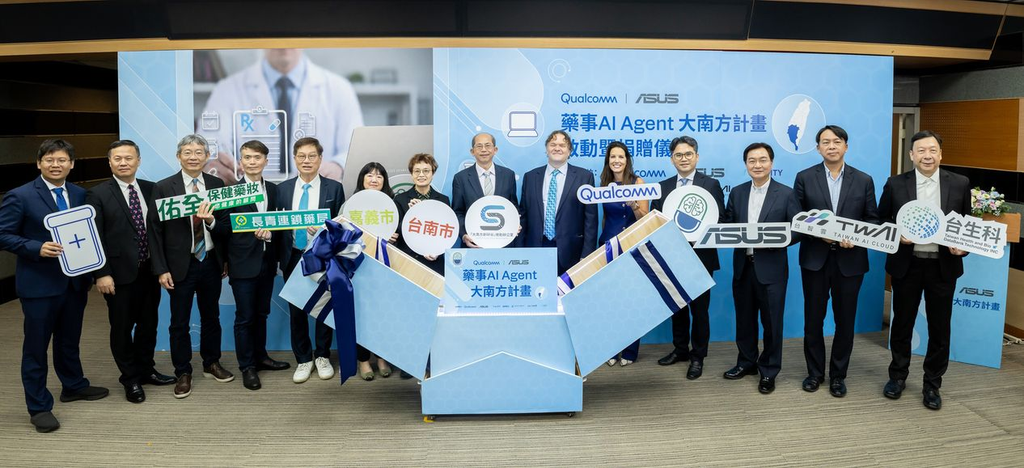
Qualcomm and ASUS Group jointly announced the Pharmaceutical AI Agent program on September 3, the first AI assistant specifically designed for community pharmacists that runs locally on edge devices rather than in the cloud. The initiative supports the smart healthcare implementation under Taiwan’s Executive Yuan-led Southern Taiwan Silicon Valley Program, and is being deployed with help from ASUS subsidiaries Taiwan AI Cloud (TWAI) and Taiwan Health and Bio DataBank Technology (THBC).

Unlike general drug information search tools or generative AI chatbots, the agent focuses on the actual workflows of frontline pharmacists. It uses AI to integrate multiple sources of medication information, helping pharmacists spot potential risks such as drug-drug interactions, duplicate therapies, and inappropriate medication use, while supporting patient counselling and education at the counter. The first phase targets more than 50 demonstration pharmacies across Chiayi, Tainan, Kaohsiung, and Pingtung, with initial partners including Evergreen Pharmacy and Yes Chain Pharmacy.
The Hardware Stack
The deployment combines two Qualcomm-powered endpoints donated to demonstration pharmacies. The primary pharmacist-facing device is the ASUS Zenbook A16 AI PC built on the Qualcomm Snapdragon X2 Elite Extreme processor. Heavier inference work runs on Aetina MegaEdge AIP-FR68 on-prem edge AI boxes powered by the Qualcomm Cloud AI 100 Ultra accelerator, with both endpoints designed to keep sensitive medical data entirely on-site.
The technical centrepiece is the compression of GPT-OSS, an open-weight language model, from a 120-billion-parameter cloud model down to a 20-billion-parameter model capable of running entirely on the Zenbook A16. Combined with the Taiwan Food and Drug Administration’s open-access drug package insert database, the agent can cross-check prescription information against a tailored local formulary in real time. Through on-device edge AI computing, the system can perform inference locally even in offline environments, which protects sensitive medical data that would otherwise need to be transmitted to external clouds.
Why Now: Super-Aged Society, Polypharmacy Pressure
Taiwan officially became a super-aged society in 2025, with the population aged 65 and above exceeding 4.67 million. Survey data shows nearly 40 percent of older adults take multiple medications, and chronic disease management is becoming the norm rather than the exception. The result is a heavier cognitive load on community pharmacists who must reconcile complex prescription information and counsel patients within tight time windows, a workload that traditional paper-based checks struggle to keep up with.
The Pharmaceutical AI Agent is designed for that specific bottleneck. Pharmacists need to integrate and cross-check information across multiple prescriptions quickly, and the agent’s offline inference capability ensures pharmacies in connectivity-poor areas still get the same level of medication safety support as urban locations.
Sovereign AI in Action
The initiative is framed around Taiwan’s national push to become an “AI island,” with sovereign AI models deployed across healthcare, education, finance, and the judiciary. Chen-Hao Chang, Deputy Minister of the National Science and Technology Council, said the program represents another important step in putting sovereign AI into practice in smart healthcare, and that the deployment model is meant to be validated, replicated, and scaled beyond southern Taiwan.
Neil Wu, Vice President of Sales at Qualcomm, framed Qualcomm’s commitment in operational terms: “Following our Remote Healthcare Program in 2023, we once again have the support of ASUS Group this year, and work alongside with the ecosystem partners TWAI and THBC, to bring edge AI technologies to frontline pharmacy services.” Peter Wu, CEO of TWAI, added that ASUS’s broader “AI City” vision makes community pharmacies a natural testbed for sovereign AI deployment at city scale, with the Pharmaceutical AI Agent extending an existing ASUS-Tainan City Government collaboration into frontline healthcare.
Our Take
For Malaysian readers, the most interesting part of this story is not the headline partnership — it is the technical architecture. The compression of GPT-OSS from 120 billion parameters down to 20 billion for on-device inference is a strong signal that on-prem edge AI is now a viable deployment pattern for regulated, privacy-sensitive workloads, not just a marketing term. If Qualcomm and ASUS can deliver a working 20-billion-parameter model that handles real polypharmacy interactions on a Zenbook laptop without round-tripping to the cloud, the same architectural pattern applies directly to Malaysian hospital information systems, clinical decision support in rural clinics, and any setting where patient data sovereignty matters.
The political framing as “sovereign AI” also reflects a regional trend worth tracking. As more Southeast Asian governments push for AI infrastructure that keeps local data local, this Taiwan deployment reads less like a one-off CSR programme and more like a template. Watch for whether Malaysian or Indonesian health authorities run similar pilots in 2026 to 2027, because the technology is no longer the bottleneck.