
RHB PAY Becomes Malaysia’s First Bank-Owned Unified Payment Gateway

TLDR
- RHB Banking Group just rolled out RHB PAY, Malaysia’s first unified payment gateway owned by a local bank
- The internally built platform routes online collections straight into RHB accounts with automated reconciliation
- Day-one integrations cover card payments, FPX, and DuitNow Pay through PayNet’s national rails
- A Q4 2026 phase two adds e-wallets, QR payments, Direct Debit, and Auto Debit for merchants
- Target customers are mid-sized enterprises, corporates, and government-linked companies that want fewer middlemen

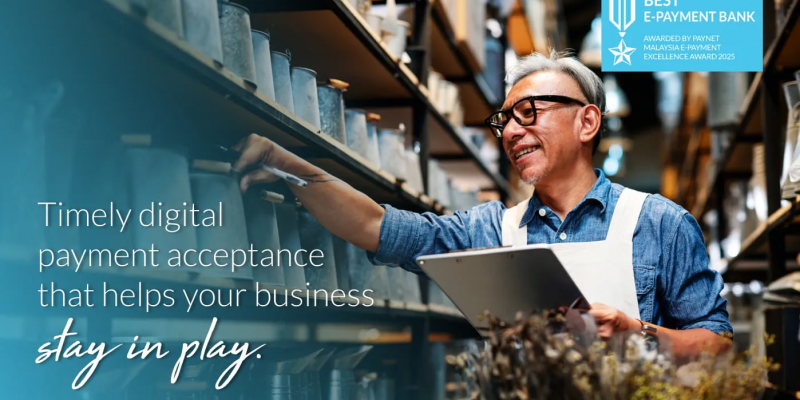
RHB Banking Group has officially launched RHB PAY, a unified online payment gateway that lets businesses collect digital payments straight into their RHB accounts without routing funds through third-party processors. The bank is positioning the platform as Malaysia’s first unified online payment gateway owned end-to-end by a local bank, taking direct aim at the long-standing gap between merchant acquirers and the corporate accounts where revenue lands.
The launch lands at a moment when Malaysia’s digital payments market is growing faster than ever. According to Bank Negara Malaysia data cited by Asian Banking & Finance, digital transactions in the country hit 18.4 billion in 2025, a 25% jump from 14.7 billion the year before. With that volume, Malaysian banks have a clear incentive to keep more of the processing infrastructure in-house rather than ceding the economics to specialist payment service providers.
What the Gateway Actually Does
RHB PAY is built in-house rather than white-labelled from a third-party processor, which RHB says lets it combine bank-grade security with automated reconciliation and faster fund settlement. For the finance teams at mid-sized enterprises, corporates, and government-linked companies, the pitch is straightforward: collections show up faster, the matching against invoices is handled by software instead of clerks, and there is no separate processor settlement window to manage.
The gateway is also designed to remove friction that smaller businesses usually hit when stitching together multiple payment methods. Instead of integrating with several acquirers or fintech aggregators, merchants connect once through RHB and get access to the major payment rails through a single integration.
Launch Integrations and Phase Two Roadmap
At launch, RHB PAY supports three payment methods that cover most Malaysian consumer transactions today: card payments, FPX online banking, and DuitNow Pay via PayNet’s national infrastructure. That is enough for a wide swathe of e-commerce checkouts, billing portals, and government service payments from day one.
A second phase scheduled for Q4 2026 will broaden the platform with e-wallets, QR payments, Direct Debit, and Auto Debit. Adding those rails matters because Malaysian consumers increasingly expect wallet options like Touch ‘n Go eWallet, Boost, ShopeePay, and GrabPay at checkout, and Direct Debit plus Auto Debit will open recurring billing use cases like utilities, insurance premiums, and subscription services.
Our Take
RHB’s move is the clearest signal yet that Malaysian incumbent banks are no longer content to be the boring back-end of someone else’s payment stack. By owning the gateway, RHB keeps the merchant discount revenue, the data, and the customer relationship, instead of watching them leak to specialist acquirers and fintech aggregators. For merchants, the trade-off is classic build-versus-buy: deeper integration and tighter security versus the flexibility of switching processors if a better deal appears.
For Helloexpress readers, the practical takeaway is that any business currently paying third-party gateway fees should keep an eye on RHB PAY’s pricing once published. If the bank undercuts the aggregators by even a fraction of a percent on the combined MDR-plus-fixed-fee stack, it will put real pressure on the existing payment gateway players operating in Malaysia. The Q4 2026 phase two will be the real test, because that is when the platform goes head-to-head with e-wallet-heavy checkouts and starts competing on user experience, not just settlement speed.
Keyword: RHB PAY Malaysia