
Multiway Robotics Deploys Autonomous Forklifts at Malaysian Manufacturer Warehouse

TLDR
- China-based Multiway Robotics deploys autonomous forklifts and WMS software at a Malaysian manufacturer’s 5,000-location warehouse
- Storage density jumps by more than 30% across raw material, finished goods and quarantine zones
- Three forklift models handle narrow-aisle stacking, pallet transport and empty-pallet automation around the clock
- Real-time fleet coordination ties directly into the customer’s ERP and warehouse management systems
- Part of a broader Southeast Asia push as regional manufacturers automate to tackle labour costs and supply chain volatility
Shenzhen-based Multiway Robotics has completed the deployment of a fully autonomous warehouse automation system for an unnamed Malaysian manufacturing company, combining a fleet of self-driving forklifts with proprietary warehouse management software to overhaul operations across more than 5,000 storage locations.

The project covers raw material warehouses, finished goods storage, material preparation areas and quarantine zones — a full end-to-end installation that the company says delivers more than 30 percent higher storage density than the previous manual setup. For a Malaysian manufacturer operating in a sector where every square metre of floor space matters, that kind of density gain translates directly into cost savings and faster turnaround.
Three Forklifts, One Orchestration Layer
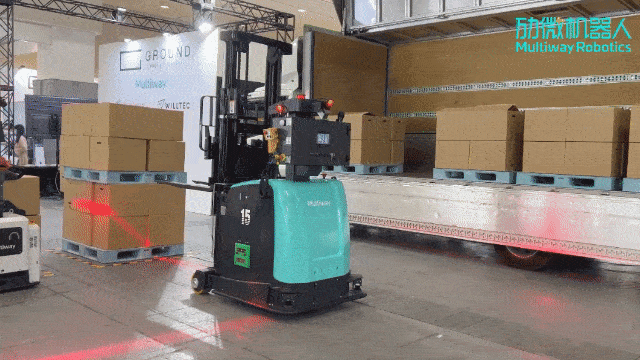
At the heart of the deployment is a coordinated fleet of three autonomous forklift models, each tuned for a specific task inside the facility. The MW-K16 is a very narrow aisle (VNA) forklift that operates in aisles as tight as 1,750 mm and can lift pallets to heights of up to nine metres — critical for high-density storage in facilities where expanding the building footprint is not an option.
The X20 autonomous pallet truck handles the long-haul work, moving materials between receiving, production, storage and shipping areas without human intervention. The MW-SL14 stacker rounds out the lineup by automating empty pallet stacking, destacking and transfers — a job that traditionally eats up significant worker hours in any busy warehouse.
All three vehicles support 24-hour operation with automatic charging, and come equipped with obstacle detection, anti-collision protection, emergency stop functions, and sound-and-light warning systems to keep human workers safe in shared spaces.
The Software Stack That Ties It All Together
Hardware is only half the story. Multiway’s Warehouse Management System (WMS) and Robot Control System (RCS) act as the brain of the operation, providing real-time visibility of inventory, storage locations and material status while coordinating fleet movements, optimising routes and managing automatic charging cycles.
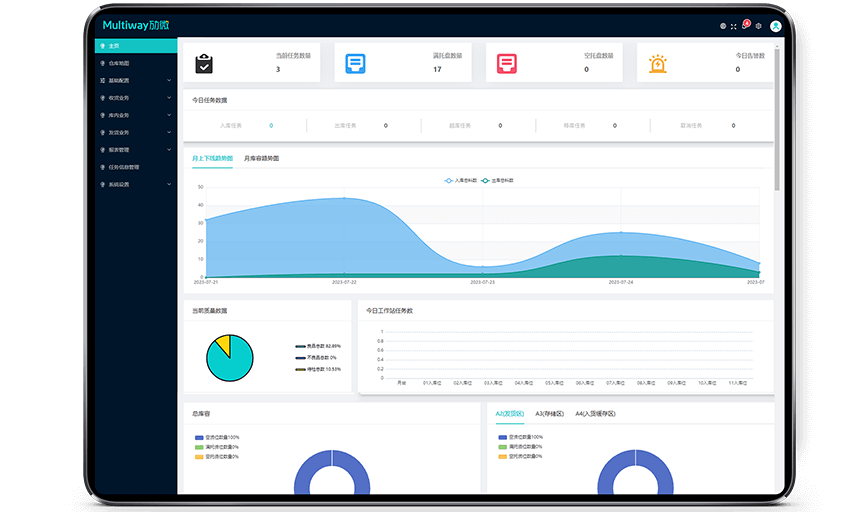
The platform also synchronises warehouse data with the customer’s enterprise resource planning (ERP) system, which means production planners and warehouse operators are working off the same numbers in real time. For Malaysian manufacturers dealing with multi-site operations and complex Bill-of-Materials flows, that level of integration is no longer a nice-to-have — it’s table stakes.
Why This Matters for Malaysia
The deal lands at a moment when Southeast Asian manufacturers are accelerating warehouse automation investments to offset rising labour costs, persistent worker shortages in logistics roles, and ongoing supply chain disruptions. Malaysia in particular has been pushing hard to position itself as a regional advanced manufacturing hub, with Industry 4.0 adoption high on the agenda under the national MyDigital blueprint.
Multiway says it has now delivered automation solutions to more than 1,000 enterprise customers across more than 20 industries globally — including food, pharmaceuticals, automotive, machinery manufacturing, new energy and cold chain logistics. The Malaysian deployment adds another flagship reference in a region where the company is clearly ramping up activity.
Our Take
This is a quietly significant win for Malaysian manufacturing, even though the customer isn’t named. A 30 percent storage density gain without expanding the building is the kind of result that CFOs notice — and it typically pays back the automation investment in under three years for facilities of this scale.
More broadly, the deal is another data point confirming that the warehouse automation wave that started in China and the US is now firmly reaching Southeast Asia. For Malaysian factories weighing their own Industry 4.0 roadmaps, Multiway’s playbook — autonomous forklifts + unified WMS + ERP integration — is becoming the template worth studying.
If you’re a Malaysian manufacturer still running manual forklift operations across thousands of pallet positions, this is the moment to start the conversation with automation vendors. The technology is mature, the ROI math is increasingly obvious, and the gap between automated facilities and manual ones is only going to widen.