

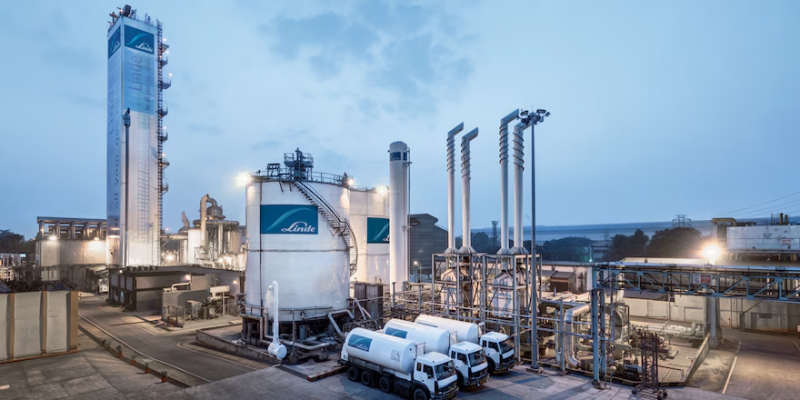
Linde Pours US$1 Billion Into Phoenix Industrial Gas Complex For New US Semiconductor Fabs

TLDR
- Linde commits US$1 billion in Phoenix to expand an on-site industrial-gases complex for a major US semiconductor fab customer
- Sister deal sees Linde LienHwa put roughly US$800 million into new air separation and hydrogen units in Taiwan for the same customer
- Combined US$1.8 billion spend covers two new SPECTRA air separation units in Arizona and multiple gas/hydrogen units across Taiwan
- Fabs will get ultra-high-purity nitrogen, oxygen and argon for advanced-node production, including AI chips
- Deal cements Linde’s role as the silent backbone of advanced semiconductor manufacturing, with PX supplying gases to TSMC-scale fabs
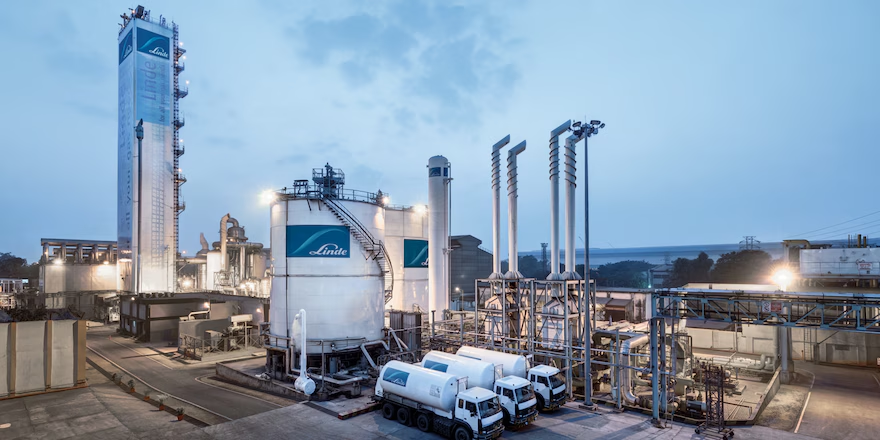
Industrial gas giant Linde is putting US$1 billion on the table to expand its on-site gas complex in Phoenix, Arizona, in a long-term supply agreement tied to one of the world’s largest semiconductor manufacturers. Arizona’s semiconductor corridor has become the most contested piece of industrial real estate in the United States, and Linde clearly wants to own the air its fabs breathe.
The investment will fund two new SPECTRA air separation units and supporting infrastructure, sitting alongside three existing units already at the site. Once complete, the upgraded Phoenix complex will feed ultra-high-purity nitrogen, oxygen, and argon to two new semiconductor fabrication facilities operated by the customer. Linde says the build will make Phoenix one of its largest single-customer electronics investments globally.
Why The Gas Supply Matters
Advanced semiconductor manufacturing is unusually gas-hungry. Nitrogen blankets process chambers and tools, ultra-pure oxygen drives plasma etching and oxidation steps, and argon is the carrier gas for deposition and sputtering. The purity demanded at sub-3nm nodes is unforgiving, a single rogue impurity can kill an entire wafer batch worth hundreds of thousands of dollars.
That is why Linde’s SPECTRA technology is pitched on three metrics: purity, reliability, and operating efficiency. Fabs cannot tolerate downtime, and they cannot tolerate a single out-of-spec gas delivery. Building the air separation units on-site, owned and operated by Linde, is the cleanest way to control both variables at once. The model has worked for decades in petrochemicals and steel, and it is now standard for chip fabs.
Taiwan Ties: The $800M Counterpart
In a parallel announcement, Linde LienHwa, Linde’s joint venture partner in Taiwan, will spend approximately US$800 million to build, own and operate several air separation and hydrogen production units for the same customer at multiple Taiwan sites. The Taiwan spend targets new semiconductor manufacturing and advanced packaging facilities, extending the relationship across both leading-edge and back-end processes.
Taken together, the two investments total roughly US$1.8 billion and cover the same customer across two major global manufacturing regions. For Malaysia, the spill-over matters: Penang and Kulim remain critical nodes in the global semiconductor packaging and test supply chain, and any major customer expanding US and Taiwan capacity usually pulls Malaysian partners along with it. Local OSAT and equipment suppliers in Bayan Lepas should be watching which gases, chemicals and tooling contracts open up next.
Our Take
Industrial gas contracts rarely make headlines, but in semiconductors they are the invisible spine of every fab. Linde’s $1.8 billion bet shows how serious the gas industry is taking the AI-chip build-out, and how concentrated the supplier base is becoming for the highest-purity inputs. With the same customer anchoring both Phoenix and Taiwan, Linde is now structurally tied to one of the most strategically important chipmakers on the planet.
For Malaysian readers, the lesson is geographic proximity is not enough. The real money and the highest-purity volumes are still concentrated in Phoenix and Hsinchu delivers the most cutting-edge node capacity. The opportunity for Malaysia lies lower down the stack, in advanced packaging, test, and the unglamorous chemistry and facility services that any fab expansion pulls in its wake. Linde does not list a Penang mega-deal here, but the appetite for this scale of infrastructure spend is the signal worth tracking.


[…] 📖 Baca versi English: Linde Pours US$1 Billion Into Phoenix Industrial Gas Complex For New US Semiconductor Fabs […]