

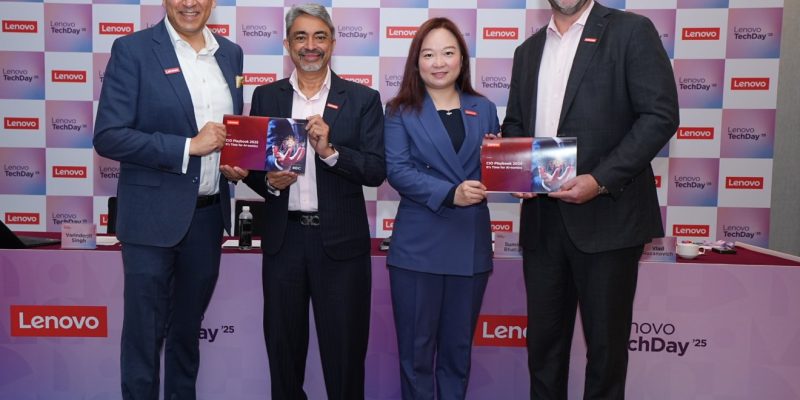
Lenovo Study: ASEAN+ Leads in Hybrid AI Infrastructure Adoption

TL;DR:
- ASEAN+ leads in hybrid AI infrastructure adoption, surpassing global and AP averages.
- AI adoption in ASEAN+ remains in early stages, with ROI being a major challenge.
- AI governance, risk, and compliance (GRC) is a top priority for AP CIOs.
- Generative AI is transforming enterprise workflows, with hybrid infrastructure being preferred.

A recent study by Lenovo reveals that organizations in the ASEAN+ region are leading in hybrid infrastructure adoption for AI workloads, surpassing both global and Asia Pacific (AP) averages. The study, titled “CIO Playbook 2025 – It’s Time for AI-nomics,” highlights the accelerating shift towards ROI-driven AI investments.

AI Adoption: Early Stages and ROI Challenges
Despite increased AI spending, adoption in ASEAN+ remains in its early stages. 47% of organizations are either evaluating or planning to implement AI within the next 12 months. This is lower than the AP average of 56% and the global average of 49%. ROI challenges are a significant barrier to faster adoption. Singapore stands out as a regional leader in AI maturity and infrastructure, while other ASEAN+ nations face resource and expertise constraints.
AP organizations anticipate a 3.6x ROI from AI projects, requiring a strategic approach to scaling and building internal capabilities. ASEAN+ organizations are focusing on optimizing supply chains, improving regulatory compliance, and boosting employee productivity. They are also addressing challenges such as data management, AI expertise, and data security.
Organizational Readiness and Governance
Ethical issues and biases remain top AI risks. However, only 24% of global and 25% of AP organizations have fully enforced AI governance, risk, and compliance (GRC) policies. In ASEAN+, 24% of CIOs report full implementation, aligning with global trends. Effective AI governance requires explainability, ethical frameworks, accountability, model governance, enhanced privacy, security, and human oversight.
“Business priorities are shifting in Asia Pacific,” said Sumir Bhatia, President, Asia Pacific Infrastructure Solutions Group, Lenovo. “For 2025, governance, risk, and compliance have jumped 12 spots to become the top priority, highlighting the focus on secure and responsible AI. Employee productivity has also climbed from #7 to #2, underscoring its growing importance. Lenovo is committed to making AI accessible, ethical, and impactful — helping businesses of all sizes thrive in the AI era.”
Generative AI and Infrastructure Preferences
Generative AI (GenAI) is transforming enterprise workflows, commanding 42% of AI implementation spending in ASEAN+ for 2025. In AP, IT Operations is the top use case, while in ASEAN+, Customer Service leads. AP emphasizes cybersecurity and software development, whereas ASEAN+ prioritizes IT Ops and Engineering/R&D.
65% of AP organizations prefer on-premise or hybrid solutions for AI workloads, driven by the need for secure, low-latency environments and operational flexibility. 19% still rely on public cloud services. ASEAN+ follows a similar trend, with 68% opting for hybrid or on-prem.
“Hybrid architectures offer the best of both worlds—scalability and control,” noted Varinderjit Singh, General Manager, Malaysia. “Globally, 63% of organizations choose on-premise and hybrid infrastructures for AI, and ASEAN+ is leading with a higher adoption rate. This demonstrates a clear focus on driving innovation while ensuring security and compliance for the unique demands of AI. With its end-to-end cutting-edge AI solutions, smarter infrastructure, and strategic partnerships, Lenovo is driving Smarter AI for all.”
AI PCs and Skilled Partnerships
AI-powered PCs are gaining traction in AP, with 43% of organizations seeing productivity gains. In ASEAN+, 65% of organizations are in the planning stage for AI PC adoption.
34% of AP CIOs and 44% of ASEAN+ CIOs utilize professional AI services to navigate complexities. 56% of ASEAN+ CIOs are exploring or planning to engage these services. These collaborations help bridge capability gaps and enable team upskilling.
“AI adoption is not just about the short-term gains. Organizations need to invest in the efficiency of the design, deployment and integration of AI solutions to their operations that enable tracking of the impact. Professional AI services play a key role here and help organizations successfully adopt AI through outcome-led approach. Solutions like Lenovo’s AI Fast Start further accelerate this process, helping businesses quickly pilot, optimize, and scale AI initiatives with expert guidance and tested frameworks,” said Fan Ho, Executive Director and General Manager, Solutions and Services Group, Lenovo Asia Pacific.