

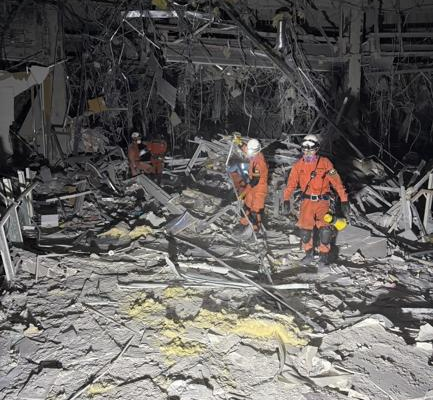
Kumamoto Quake Disrupts Japan Semiconductor Hub, Rattles Asia Chip Supply Chain

TLDR
- A magnitude 7.1 earthquake struck Kumamoto Prefecture on 28 July, knocking out production at several semiconductor plants on Kyushu — Japan’s “Silicon Island”.
- Kyushu accounts for 36% of Japan’s integrated circuit (IC) output, worth ¥1.93 trillion (~$12.4 billion) in 2025.
- TSMC subsidiary JASM’s Kumamoto No.1 fab halted lines, with Sony and other chipmakers also pausing for damage assessment.
- Industry growth has surged nearly 50% in five years, backed by ¥68 trillion ($435 billion) in planned public-private investment through fiscal 2040.
- Prolonged disruption could ripple into smartphones, autos, and image sensors — sectors where Kyushu is a key global supplier.
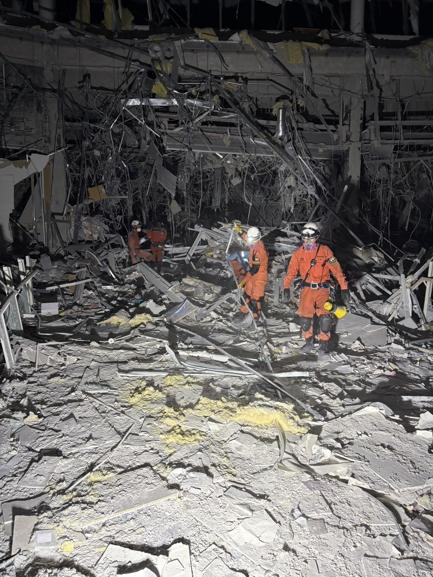
A magnitude 7.1 earthquake that struck Kumamoto Prefecture on 28 July has sent shockwaves through Japan’s semiconductor industry, with manufacturers scrambling to inspect equipment and resume operations on Kyushu — the southwestern island that produces more than a third of the country’s integrated circuits.

TSMC subsidiary Japan Advanced Semiconductor Manufacturing (JASM) suspended production at its Kumamoto No.1 factory in Kikuyo, while Sony halted operations at its nearby image sensor plant. Other chipmakers in the cluster have followed suit, pausing lines as engineers run safety checks on lithography, etching, and metrology tools that are notoriously sensitive to vibration.
According to the Kyushu Bureau of Economy, Trade and Industry, the region produced ¥1.93 trillion (about $12.4 billion) worth of ICs in 2025, accounting for 36% of Japan’s total output. The cluster has grown nearly 50% over the past five years, driven by global chip demand and TSMC’s 2021 decision to anchor its Japan expansion in Kumamoto.
Why the Cluster Matters
Known as Japan’s “Silicon Island,” Kyushu is home to roughly 1,000 semiconductor-related companies, many clustered in Kumamoto Prefecture. The region produces everything from advanced logic chips that serve as the brains of smartphones, to power semiconductors used in electric vehicles, to image sensors for cameras and automotive ADAS systems.
That concentration is now a double-edged sword. Disasters like the Kumamoto quake expose the systemic risk of clustering so much of a strategic supply chain in a single seismic zone. Taito Kobayashi, deputy senior researcher at Itochu Research Institute, noted that Kyushu’s strengths — abundant high-purity water, deep supplier networks, and tight industry collaboration — remain intact. But the event is likely to push Japanese policymakers to harden disaster-response protocols for fabs running 24/7.
Japan’s national growth strategy has earmarked up to ¥68 trillion (about $435 billion) in public and private investment for the semiconductor sector through fiscal 2040, giving the industry long-term momentum even as short-term recovery work continues.
What It Means for the Region
The ripple effects are likely to reach the wider Asia semiconductor supply chain — including Malaysia’s Penang cluster, which handles advanced packaging and back-end test for many of the same global chipmakers. A prolonged Kyushu disruption could accelerate diversification toward ASEAN back-end hubs, but it could also strain capacity if front-end wafers are slow to flow through.
For now, chip buyers and OEMs in smartphones, automotive, and imaging are watching the resumption timeline closely. Sony has said it will gradually restart its Kumamoto plant from 4 August, while JASM has begun phased production but paused expansion construction due to ongoing aftershocks.
Our Take
The Kumamoto quake is a stress test for an industrial logic that has powered Japan’s chip revival: concentrate advanced fabs where the water, suppliers, and engineering talent are deepest, and back them with state money. That model has delivered impressive growth, but it concentrates seismic risk in a way that few other supply chain clusters face.
For Malaysia — where Penang houses back-end packaging and test for many of the same global customers served by Kyushu — the lesson is clear. The region is a natural swing supplier when Japan trips, but only if its own power, water, and talent pipelines hold. Expect Japanese chipmakers and their customers to ask sharper questions about geographic redundancy over the next 12 months, and expect Penang, Kulim, and Singapore to be in more of those conversations.







[…] 📖 Baca versi English: Kumamoto Quake Disrupts Japan Semiconductor Hub, Rattles Asia Chip Supply Chain […]