

Biwin Unveils World’s First VPG800 CFexpress Card and Ultra-Compact NVMe Solutions at COMPUTEX 2026

TLDR
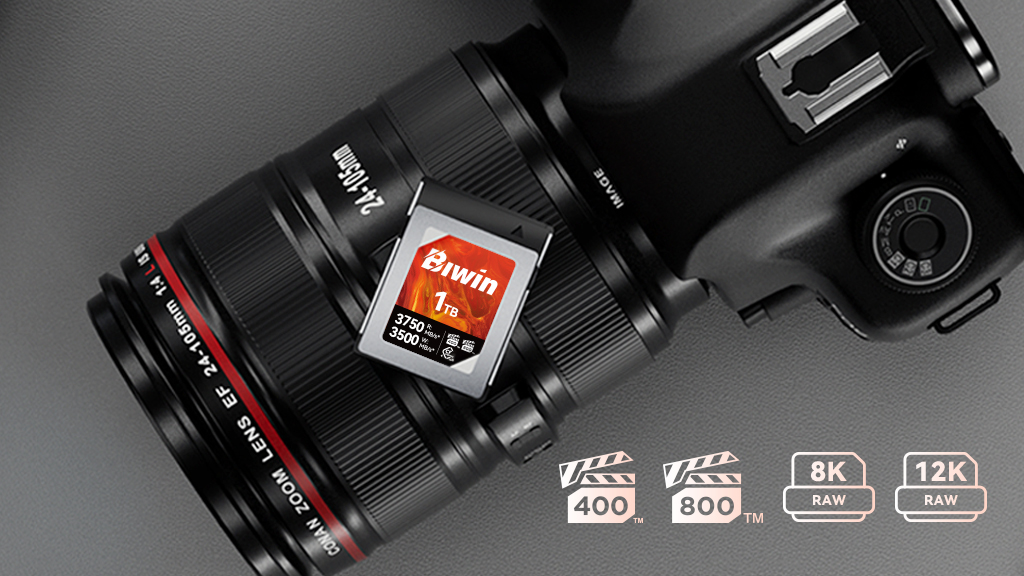
- Amber CB500 CFexpress Type B is the world’s first VPG800-certified card — guarantees 800 MB/s minimum sustained write speed
- CB500 delivers up to 3,750 MB/s read and 3,500 MB/s write, enabling 8K and 12K RAW video capture
- Amber ME300 microSD Express Card brings PCIe NVMe to microSD form factor — up to 900 MB/s read, 800 MB/s write
- Biwin CL100 Mini SSD is roughly the size of a microSD card but delivers up to 3,700 MB/s read with IP68 rating
- Biwin RD510 Mini SSD Reader with USB4 interface and active cooling complements the CL100
- All products on display at Biwin Booth #R0102, 4F, Hall 2, COMPUTEX 2026

The CB500: A New Standard for Professional Media Cards
The Amber CB500 CFexpress Type B memory card is the headline product from Biwin’s second COMPUTEX 2026 announcement, and the VPG800 certification is the headline within the headline. VPG — Video Performance Guarantee — is a specification set by the Compact Flash Association that certifies a card can sustain a minimum write speed under real-world recording conditions. VPG800 means the CB500 guarantees a sustained write speed of at least 800 MB/s, making it the first CFexpress Type B card in the world to achieve this certification.
That guarantee matters enormously for professional video work. When shooting 8K RAW or 12K RAW on cinema cameras like the RED V-Raptor or ARRI Alexa 35, bitrates routinely exceed 600 MB/s. A card that merely claims high peak write speeds can still drop frames if it thermal-throttles or runs out of SLC cache during an extended take. VPG800 removes that uncertainty — it’s a promise that the card will keep up, take after take, in a 90-degree Celsius ambient environment.
The CB500’s actual performance numbers back up the certification. Read speeds reach 3,750 MB/s with write speeds at 3,500 MB/s — fast enough to clear the camera buffer quickly and offload footage to a workstation in a fraction of the time compared to older CFexpress or CFast cards. The aluminum alloy shell with heat-dissipation design is clearly there to support sustained recording sessions, not just burst performance.
Durability credentials include shock resistance, extreme temperature tolerance, X-ray protection, and magnetic interference shielding — the full professional media card checklist. For filmmakers and cinematographers who shoot in variable environments, this is a card that won’t fail them on a critical take.
ME300: PCIe NVMe Lands on microSD
The Amber ME300 microSD Express Card is Biwin’s answer to the growing demand for faster removable storage in handheld gaming devices and mobile productivity tools. It marks the arrival of SD 7.1 microSD Express — which brings PCIe NVMe architecture into the microSD form factor — in a product with meaningful real-world performance.
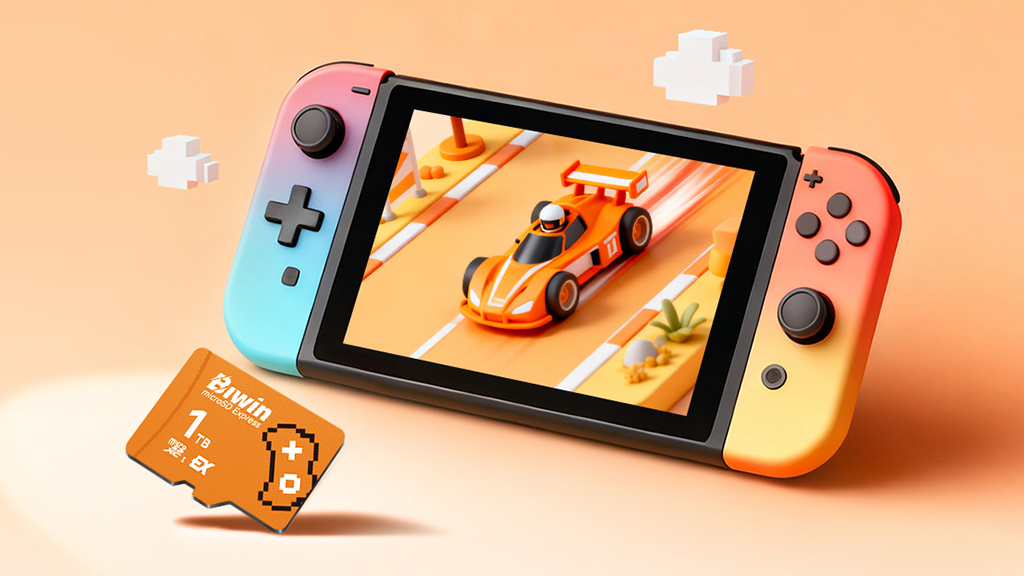
Read speeds top out at 900 MB/s with write speeds at 800 MB/s. That’s roughly triple the speeds of the fastest UHS-II microSD cards and significantly faster than most internal eMMC storage found in budget Android phones and handheld gaming devices. For a Nintendo Switch 2 or ROG Ally 2 owner, this means near-instant game loading times compared to the stock internal storage.
The 1 TB maximum capacity addresses a genuine pain point: modern game installations are enormous, and 256 GB or 512 GB microSD cards fill up quickly. Having 1 TB of fast removable storage in a format smaller than a thumbnail is genuinely useful for the target audience.
Backward compatibility with UHS-I devices is the pragmatic touch here — the ME300 will work in older devices, just at reduced speeds. For users who want to move the card between a new handheld device and an older laptop, that flexibility matters.
CL100 Mini SSD: SSD Performance in a microSD Form Factor
The Biwin CL100 Mini SSD is arguably the most technically interesting product in this announcement. It delivers read speeds of up to 3,700 MB/s and write speeds of 3,400 MB/s — full PCIe Gen4×2 NVMe 1.4 performance — in a form factor approximately the size of a microSD card. That engineering achievement is significant: it means ultra-thin laptops, handheld gaming devices, and mobile workstations can now offer removable SSD-class storage expansion where previously only slow microSD or a permanent soldered chip were options.
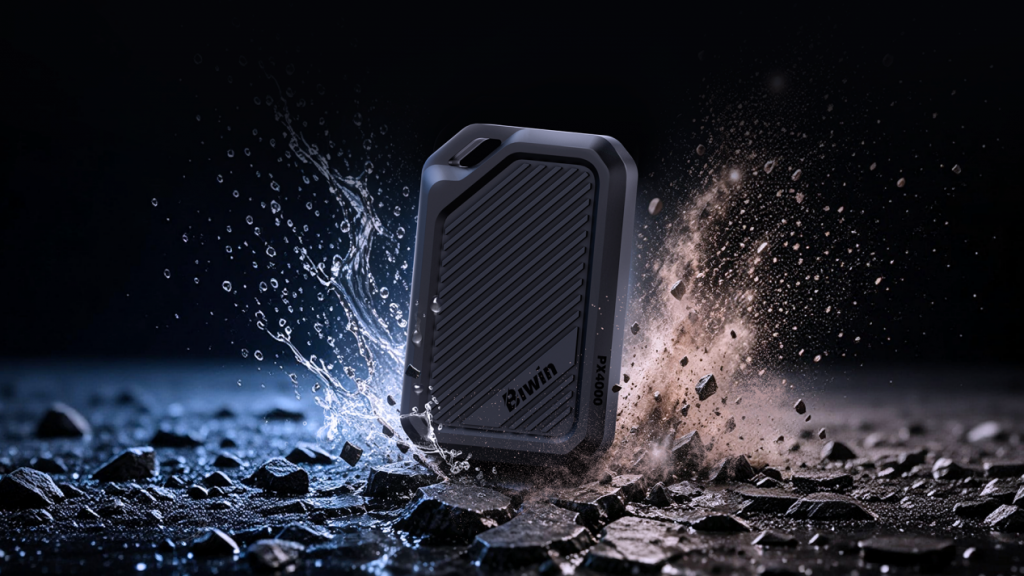
The CL100 uses a SIM-like plug-and-play installation design, making it easy to insert and remove without tools. Capacities range from 512 GB to 2 TB. Despite the tiny size, durability is solid: IP68 dust and water resistance and up to 3-meter drop protection. For field work or travel, that combination of speed and ruggedness is valuable.
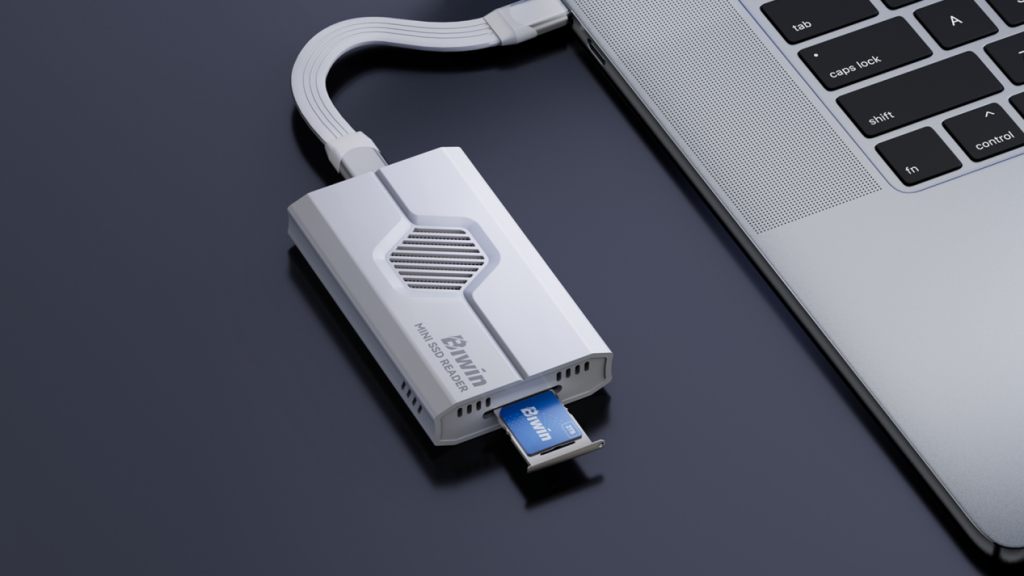
The RD510 Mini SSD Reader accompanies the CL100 as a USB4-powered accessory with an active cooling fan. The USB4 interface ensures the reader doesn’t become the bottleneck when transferring large files from the CL100 to a laptop or workstation. The built-in cooling fan is a thoughtful addition — high-speed USB4 transfers generate heat, and managing thermals ensures consistent performance during extended file transfers.
Our Take
Biwin’s second COMPUTEX 2026 announcement is more specialized than the first, targeting professional filmmakers and high-end mobile users rather than mainstream PC builders — but the technical achievements are arguably more impressive.
The CB500’s VPG800 certification is not a marketing badge — it’s a rigorous specification that requires a card to maintain 800 MB/s sustained write speed in a 90°C environment while recording. Being the first in the world to achieve this is a legitimate technical milestone, and it signals that Biwin is serious about competing in the professional media market against established names like Sony, SanDisk Professional, and Lexar. For cinematographers shooting 12K RAW, this card deserves serious consideration.
The ME300 and CL100 both address a common frustration in modern mobile devices: limited, slow, or non-expandable internal storage. Handheld gaming devices especially are trending toward slimmer designs with no upgrade path, and a removable storage solution that delivers SSD-class speeds in a microSD-sized form factor is a genuine solution to that problem. The IP68 rating on the CL100 is the differentiator that makes it genuinely useful for field work rather than just desk use.
For Malaysian buyers, the practical products here are the ME300 and CL100 — they’ll be available through consumer retail channels once launched. The CB500 is more niche, but for the local film production community and professional videographers working with cinema cameras, it’s worth noting as a future purchase option.
Biwin is clearly building a reputation for pushing storage form factors to their limits. Worth watching post-COMPUTEX for pricing and regional availability.