
ASUS ExpertCenter Pro ET900N G3 Lands With NVIDIA GB300 Superchip — Deskside AI Supercomputer Brings 20 PFLOPS to Malaysian Enterprises

TLDR
- ASUS ExpertCenter Pro ET900N G3 is a deskside AI supercomputer built on NVIDIA DGX Station GB300 architecture with GB300 Grace Blackwell Ultra Desktop Superchip
- Delivers up to 20 PFLOPS of AI performance and 748GB of coherent unified CPU-GPU memory, capable of running frontier AI models up to 1 trillion parameters
- ASUS’s internal vLLM stress test hit approximately 864 tokens/second output and around 1,600 tokens/second combined throughput on the Qwen open-source model
- Now available to order worldwide via ASUS business channels; regional pricing is through local ASUS representatives
Data-Center AI Performance at the Deskside
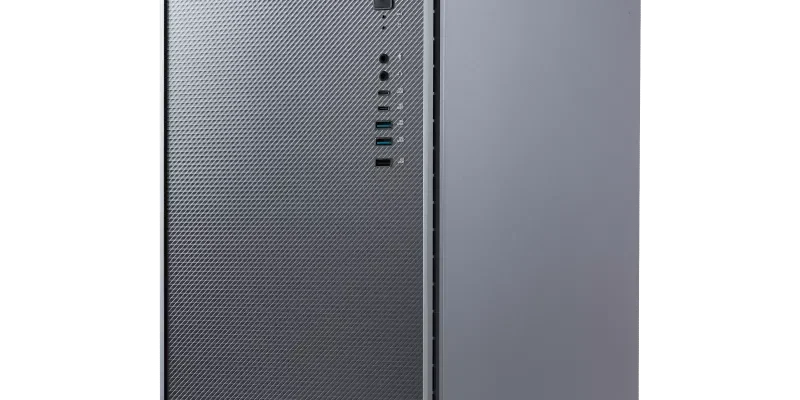
ASUS just put a piece of data-centre-class AI infrastructure within reach of Malaysian enterprises, AI developers, and researchers with the new ExpertCenter Pro ET900N G3. The system is built on NVIDIA’s DGX Station GB300 architecture and powered by the NVIDIA GB300 Grace Blackwell Ultra Desktop Superchip, connected through NVIDIA NVLink-C2C high-bandwidth interconnect technology. That combination delivers up to 20 PFLOPS of AI performance in a deskside form factor, which is the kind of throughput that previously required either a hyperscale data centre or a server rack in a dedicated machine room.
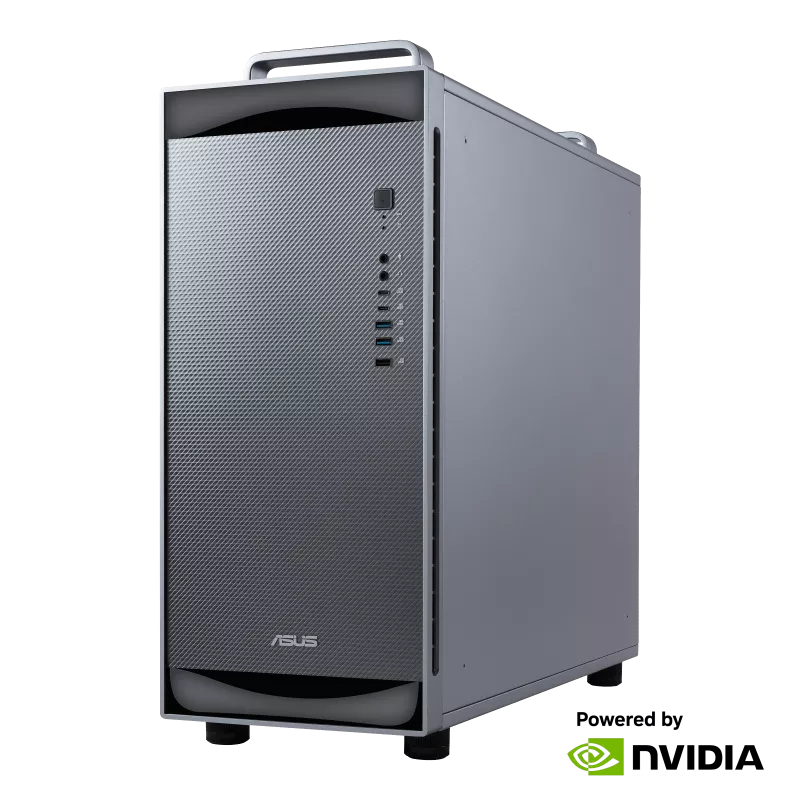
The most interesting spec is the 748GB of coherent unified memory spanning CPU and GPU. That memory capacity is what enables local AI development at frontier model scale — the system can run models up to 1 trillion parameters without the workflow bottlenecks that hit conventional workstations when they run out of VRAM. For Malaysian organisations evaluating local AI deployment versus cloud-only approaches, the memory ceiling is the single biggest factor that determines whether a use case is feasible in-house, and 748GB puts a serious range of frontier models within reach.
Engineered for Local AI Workflows and Agentic AI
The ET900N G3 is built for a specific set of AI workloads: large language model fine-tuning, generative AI, physical AI research, deep learning, and autonomous AI agents. The system supports the full NVIDIA AI software stack, providing a turnkey environment for machine learning, analytics, and AI experimentation. As organisations increasingly adopt agentic AI and autonomous assistants, ASUS is positioning the ET900N G3 for secure, local AI execution that keeps sensitive data on-premises while reducing dependency on cloud infrastructure.
ASUS’s own engineering teams stress-tested the system using vLLM, achieving approximately 864 tokens per second output throughput on the massive Qwen open-source AI model, with combined input and output processing reaching around 1,600 tokens per second. For context, those numbers are meaningful for organisations running production LLM inference, fine-tuning pipelines, or agentic AI workflows that demand sustained token throughput. The system also supports NVIDIA NemoClaw workflows, enabling enterprises to build and deploy always-on AI assistants and autonomous agents within more secure local environments.
Enterprise-Grade Architecture for Real Workloads
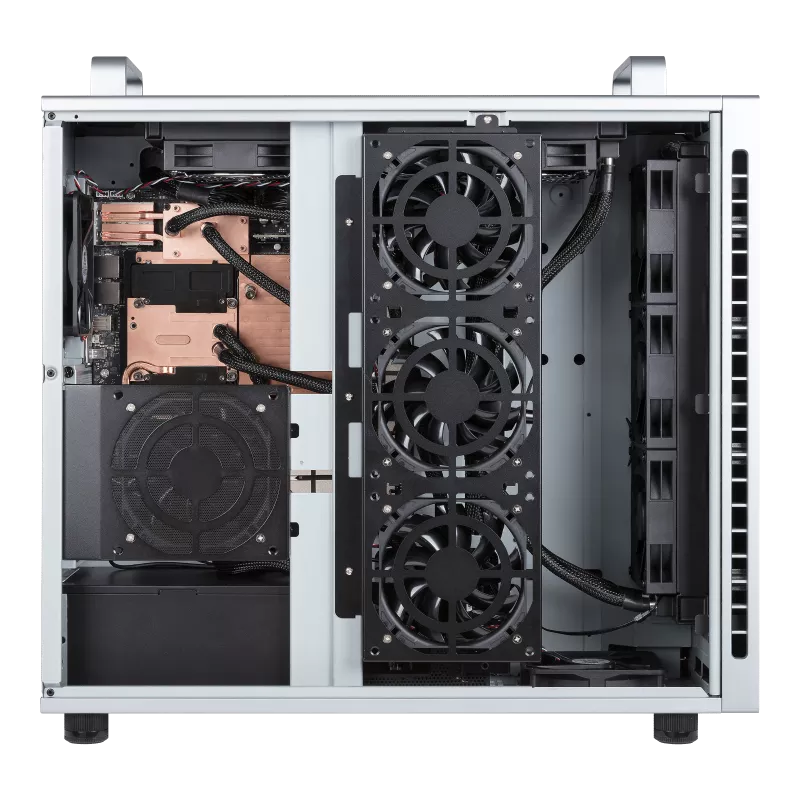
Built on NVIDIA DGX Station architecture, the ET900N G3 combines powerful AI acceleration with enterprise-class scalability and connectivity. The system is designed to support interconnected AI workflows, enabling organisations to scale compute performance as AI requirements grow. The deskside form factor matters for Malaysian buyers who cannot or do not want to deploy dedicated data-centre infrastructure — it brings the same architecture into an office environment without the power, cooling, or rack-space requirements of a full server installation.
The target use cases are broad: AI research labs, enterprise AI deployment, content creation at scale, simulation workloads, and next-generation autonomous AI applications. For Malaysian enterprises in financial services, healthcare, government, and manufacturing, the appeal is the same — local execution with strong governance over sensitive data, lower latency for real-time AI operations, predictable operational costs versus cloud-bill variability, and the option to run frontier-scale models without sending proprietary data to external infrastructure.
Availability, Pricing, and Where to Order
The ASUS ExpertCenter Pro ET900N G3 is now available to order worldwide, with regional availability and configurations handled through local ASUS representatives. Pricing is not publicly listed, which is consistent with how enterprise AI infrastructure is sold — buyers work with the vendor on configuration, deployment, support contracts, and integration. Malaysian organisations looking to evaluate the system are directed to the ASUS ExpertCenter Pro ET900N G3 product page and the Contact Me form for the ET900N G3, which routes inquiries to the ASUS commercial team for the region.
Our Take
The ET900N G3 sits in a very specific niche — the deskside AI supercomputer — and it is not a product for casual buyers. The 20 PFLOPS performance ceiling and 748GB coherent memory are overkill for general business use, but for organisations running frontier model fine-tuning, large-scale inference, or agentic AI workflows, they are exactly what is needed to keep workloads on-premises. The 864 tokens-per-second throughput ASUS measured on Qwen with vLLM is the kind of number that makes local LLM serving economically viable for production deployments, especially when cloud inference costs scale unpredictably with usage.
For Malaysian enterprises, the on-premises angle is the strategic play. Sovereign data requirements, regulated industries, and the increasing cost of cloud inference at scale all push toward local infrastructure, and the deskside form factor removes the data-centre barrier to entry. The future Windows-based AI development and agentic environment support is worth watching, because it will determine whether the ET900N G3 becomes a long-term platform or a one-generation workstation. Our recommendation: Malaysian organisations in financial services, healthcare, government, and manufacturing should request a configuration and pricing quote through ASUS commercial, and benchmark the 748GB coherent memory against their largest current model workloads — if you are hitting memory ceilings on existing workstations, the ET900N G3 will be a meaningful jump. For broader ASUS enterprise coverage, the ExpertBook PM3 and ExpertCenter P500SV launch in Malaysia covers the mainstream business laptop and desktop line, while the ExpertCenter D8 SFF launch from 2023 is the historical reference for how ASUS positions its enterprise desktop family in Malaysia.
What is your reaction?