

CelcomDigi MSCI Downgrade: Telco Pledges Better ESG Disclosure After Methodology Tightening

TLDR
- CelcomDigi slipped from AA to A on MSCI’s ESG rating after a methodology shift that puts privacy and data security under a sharper lens.
- MBSB Research kept its BUY call on the telco with a RM3.54 target price, citing a strong five-year ESG roadmap launched in 2024.
- Group holds a 3.9 FTSE4Good Bursa Malaysia score, a Medium Risk Sustainalytics rating of 23.4, and cut combined Scope 1 and 2 emissions by 4% across FY2024 and FY2025.
- S.A.F.E. Internet and related programmes have reached more than 18 million Malaysians through scam awareness, online safety and digital literacy campaigns.
- Analysts expect CelcomDigi to claw back to AA as it improves disclosure around data protection and governance.

CelcomDigi has dropped one notch on MSCI’s ESG rating scale, sliding from AA to A, and the reason is not so much a sudden sustainability stumble as a change in how the index giant scores telcos. MBSB Investment Bank Research, in a note dated 3 August 2026, said the downgrade stems from MSCI’s revised methodology and a sharper focus on privacy and data security rather than any meaningful deterioration in CelcomDigi’s day-to-day ESG performance.

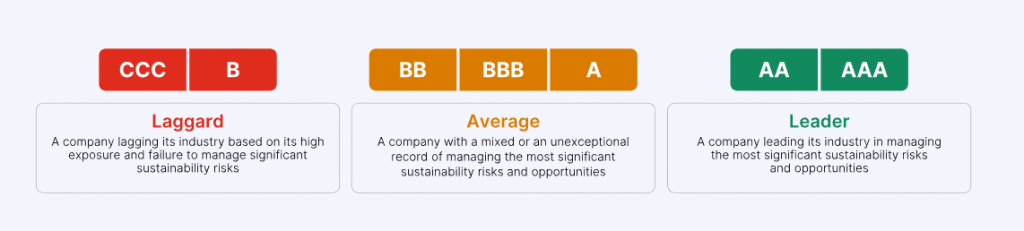
That distinction matters. MSCI’s 2026 refresh tightens expectations around customer data handling, network cybersecurity disclosures and supply chain privacy practices across the global telecom sector. CelcomDigi, like many incumbents, still reports against older templates that leave MSCI’s new questions partly unanswered. The result is a one-letter downgrade that MBSB Research expects the telco to reverse within a reporting cycle or two once disclosures catch up.
A Five-Year Roadmap That Already Delivers
The downgrade lands awkwardly because CelcomDigi’s underlying ESG work is substantial. The group launched a five-year sustainability strategy in 2024 built around four pillars: inclusive and safe digital access, a sustainable value chain, stronger governance, and reduced environmental impact. Each pillar has measurable targets, and MBSB Research’s note sketches out a few of the headline numbers.
On the social side, the S.A.F.E. Internet programme and a wider cluster of digital literacy, scam awareness and SME digitalisation initiatives have collectively reached more than 18 million Malaysians. That is a striking number for a country of roughly 34 million people, and it puts CelcomDigi alongside Maxis’s eKelas and TM’s various community programmes as one of the more active telco-led digital inclusion efforts in the country.
On the environmental side, combined Scope 1 and Scope 2 emissions fell 4% across FY2024 and FY2025, with further reductions targeted as the network consolidation programme between Celcom and Digi matures and older 3G layers are switched off. Governance remains anchored to the Malaysian Code on Corporate Governance with continuing emphasis on board oversight, risk management and data protection.
What Needs to Improve
The gap between CelcomDigi’s real-world ESG work and its MSCI score is essentially a disclosure problem. Telcos globally are being asked to publish far more granular data on how customer data is stored, who has access to it, how breach response works, and how third-party vendors are vetted. CelcomDigi already has the infrastructure, the S.A.F.E. Internet reach, and the policy stack, but the next reporting cycle needs to surface that work in MSCI’s preferred format.
MBSB Research kept its BUY recommendation with an unchanged RM3.54 target price, pointing to 20% share price upside and a 25.4% expected total return. The stock slipped 1.68% to RM2.93 in morning trade on the day of the note, suggesting the market treated the downgrade as noise rather than a fundamental shift.
Our Take
The CelcomDigi downgrade is a textbook case of how ESG ratings can lag real performance. The telco’s emissions are falling, its digital inclusion reach is genuinely impressive at 18 million Malaysians touched, and its governance scaffolding is sound. What it lacks is the granular privacy and data security narrative that MSCI’s new methodology wants to see on the page.
That is worth flagging because it cuts both ways. Disclosure improvements are good, and Malaysian telcos should absolutely publish more on how customer data is handled. But investors and the public should be wary of treating a one-notch MSCI move as a verdict on whether a telco is doing the right thing on the ground. It is, more accurately, a verdict on whether the telco is telling the story MSCI wants to read.
For Malaysian users, the practical takeaway is simpler. CelcomDigi’s S.A.F.E. Internet and digital literacy programmes are real, locally run and free to access. If you have not already, the telco’s online safety portal is worth a look, especially with scam volumes continuing to climb.
Keyword: CelcomDigi MSCI ESG rating