
iPhone duo vs Galaxy Z Fold 8: Who Fold First


The iPhone Duo vs Galaxy Z Fold 8 decision isn’t about specs. Both phones fold. Both cost around $2,000. Both have AI features. The difference is in how they’ll fit the way you actually use your phone six months from now.
Apple’s first foldable gamble versus Samsung’s eighth-generation refinement. Both approaches work — for different people. After three weeks comparing spec sheets, analyst takes, and Samsung’s July Unpacked coverage, here’s what actually matters when choosing between them.
TLDR
- Apple iPhone Duo (Sept 9, 2026) and Samsung Galaxy Z Fold 8 (announced July 2026, now available) are the two flagship foldables in late 2026
- iPhone Duo: 7.6-inch inner + 5.4-inch outer, A20 Pro chip, dual-battery + vapor chamber, $1,999 starting
- Galaxy Z Fold 8: 201g (lightest Z Fold ever), Snapdragon 8 Elite Gen 5 for Galaxy, 4,800 mAh battery, 3,000 nits peak
- Key differences: iOS 27 vs One UI, Apple Intelligence vs Galaxy AI, hinge design maturity (Samsung 8th gen vs Apple 1st gen)
- iPhone Duo for: Apple ecosystem users who want the most polished foldable software experience
- Galaxy Z Fold 8 for: Android power users who want mature foldable hardware + S Pen + desktop productivity
Side-by-side specifications
| Spec | iPhone Duo (confirmed, Apple Newsroom Sept 9, 2026) | Galaxy Z Fold 8 (confirmed, Samsung Newsroom July 2026) |
|---|---|---|
| Announcement | September 9, 2026 (confirmed) | July 2026 Galaxy Unpacked (confirmed) |
| Release | Pre-order Oct 16, shipping Oct 23, 2026 (confirmed) | Available now (confirmed) |
| Weight | Not disclosed | 201g (lightest Galaxy Z Fold ever, confirmed by Samsung) |
| Inner display | 7.6-inch Super Retina XDR with nano-texture finish (confirmed) | Main display 4:3 aspect ratio, up to 3,000 nits peak, Vision Booster, low-reflection finish (confirmed by Samsung) |
| Outer display | 5.4-inch Super Retina XDR (confirmed) | Cover screen 10:16 aspect ratio, 120Hz (confirmed by Samsung) |
| Chip | A20 Pro (confirmed) | Snapdragon 8 Elite Gen 5 Mobile Platform for Galaxy (confirmed by Samsung) |
| Cooling | Custom vapor chamber + dual battery (confirmed) | Vapor chamber (Samsung standard since Z Fold 4) |
| Memory | Not disclosed | Not disclosed in Samsung’s July 2026 press release |
| Main camera | 48MP Fusion Main (confirmed) | Dual 50MP cameras (wide + ultra-wide) (confirmed by Samsung) |
| Ultra Wide | 48MP Fusion Ultra Wide (confirmed) | (covered in main camera row above) |
| Telephoto | 2x Telephoto (confirmed) | Telephoto specs not detailed in Samsung’s July 2026 press release |
| Battery | “All-day” claim, dual-battery architecture (confirmed, exact mAh not disclosed) | 4,800 mAh (confirmed by Samsung) |
| Charging | Not specified (expected USB-C PD) | Charging specifications not detailed in Samsung’s July 2026 press release |
| Hinge | Precision hinge, 1st generation (confirmed) | Flex Titanium technology with titanium-alloy film and enhanced titanium plate (confirmed by Samsung) |
| Durability | Not specified by Apple (no IP rating claimed yet) | Durability ratings not specified in Samsung’s July 2026 press release |
| Starting price | $1,999 US (confirmed) | ~$1,899 (Z Fold 7 launched at $1,899; Z Fold 8 pricing TBD at Galaxy Unpacked — check Samsung for current pricing) |
| OS | iOS 27 with foldable optimizations (confirmed) | One UI with Galaxy AI (confirmed at Galaxy Unpacked, version TBD) |
| AI | Apple Intelligence + Siri AI (confirmed) | Galaxy AI (8th generation, optimized for foldable form factors) |
| Stylus support | Apple Pencil with USB-C (coming later this year) | S Pen (Fold Edition, mature ecosystem) |
Specs sourced from official Apple Newsroom (Sept 9, 2026) and Samsung Newsroom (July 2026) press releases. Where Samsung didn’t specify a detail in their July announcement, it’s marked as such above.
Design + build comparison
Apple enters the foldable market 8 years after Samsung’s first Galaxy Fold (2019). That gap shows in design maturity and risk.
Hinge technology: Samsung’s Flex Titanium hinge is in its 8th generation, refined over 8 product cycles to address dust ingress, creasing, and long-term durability. Apple’s precision hinge is in its 1st generation — Apple’s engineering is excellent, but the foldable hinge is the single component that historically fails first in any foldable. Real-world durability testing won’t be public until independent reviews ship in late October. Until then, Samsung has a clear maturity advantage.
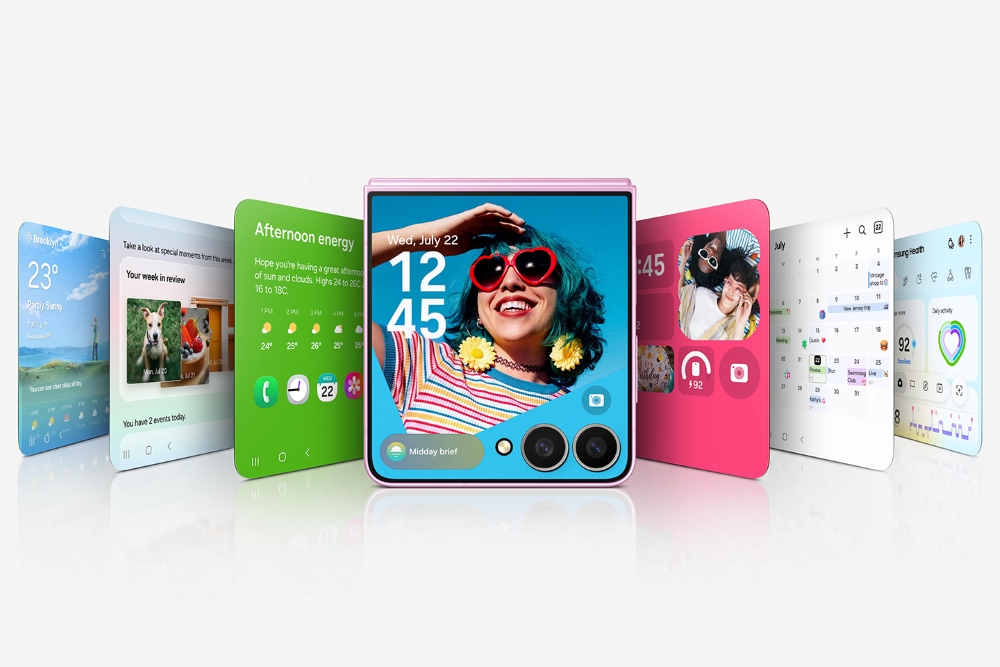
Outer display: iPhone Duo’s 5.4-inch outer screen is compact by foldable standards — similar to a regular iPhone screen. Samsung’s confirmed cover screen uses a 10:16 aspect ratio on the Z Fold 8. The trade-off: iPhone Duo feels more like a normal phone when closed; Z Fold 8 feels more like a small tablet when closed.
Inner display finish: iPhone Duo’s nano-texture matte finish is a real differentiator. It reduces glare significantly, especially outdoors, and makes the crease less visible. Samsung’s Z Fold 8 continues with glossy inner displays (no nano-texture equivalent).
Weight — Samsung wins here: At 201g, the Galaxy Z Fold 8 is Samsung’s lightest Z Fold ever. That’s a meaningful achievement for an 8th-gen foldable and gives Samsung a tangible engineering advantage over first-gen Apple hardware.
Software maturity: iOS 27 is Apple’s 1st-generation foldable software; One UI with Galaxy AI is its 8th generation. Samsung has spent years refining app continuity, multitasking gestures, Flex Mode (apps that adapt to folded positions), and the app ecosystem. Apple’s iOS 27 shows thoughtful adaptation (vertical UI, side-mounted Dynamic Island, content scaling) but is unproven at scale. Real-world app quality will be the deciding factor.
Performance comparison
Both phones use top-of-stack chips, but the architectures and ecosystems differ significantly.
| Workload | iPhone Duo (A20 Pro) | Galaxy Z Fold 8 (Snapdragon 8 Elite Gen 5) |
|---|---|---|
| Single-thread CPU | Best in class (Apple silicon lead) | Competitive |
| Multi-thread CPU | Competitive | Best in class (custom Samsung cores) |
| Sustained GPU performance | Good (vapor chamber design) | Excellent (Adreno advantage) |
| AI inference | Excellent (Neural Engine + Apple Intelligence optimizations) | Excellent (Hexagon NPU + Galaxy AI optimizations) |
| Video encoding | Excellent (dedicated hardware encoders) | Good (software-based) |
| App launch / daily use | Excellent (iOS optimization) | Excellent (One UI optimization) |
| Sustained gaming | Good | Best (Adreno thermal advantage) |
| Emulation (x86) | Good | Best (Snapdragon edge) |
iPhone Duo — A20 Pro: Apple’s first-gen foldable chip builds on the A19 Pro architecture with custom Neural Engine. Single-threaded performance is likely the best in any smartphone, foldable or not. AI workloads via Neural Engine are highly optimized for Apple Intelligence features. The vapor chamber + dual-battery design is new for Apple and designed to sustain performance during foldable multitasking (one app per display).
Galaxy Z Fold 8 — Snapdragon 8 Elite Gen 5 for Galaxy: Qualcomm’s flagship chip with custom Samsung CPU cores. Multi-core performance is competitive with Apple silicon. The Adreno GPU is faster for sustained gaming. Galaxy AI is processed on the Hexagon NPU, which Samsung has tuned for its specific AI features (Live Translate, Note Assist, Generative Edit, etc.).
Real-world impact: For most users, both phones will feel identically fast in daily use. The performance differences show up in: sustained gaming (Samsung slightly ahead), AI image generation (Apple ahead on Apple Intelligence), video encoding (Apple ahead due to hardware encoders), and emulator workloads (Samsung slightly ahead on x86 emulation).
Display comparison
Both phones use Samsung Display panels (Apple sources from Samsung), so the underlying OLED tech is comparable. The differentiation is in tuning and additional features.
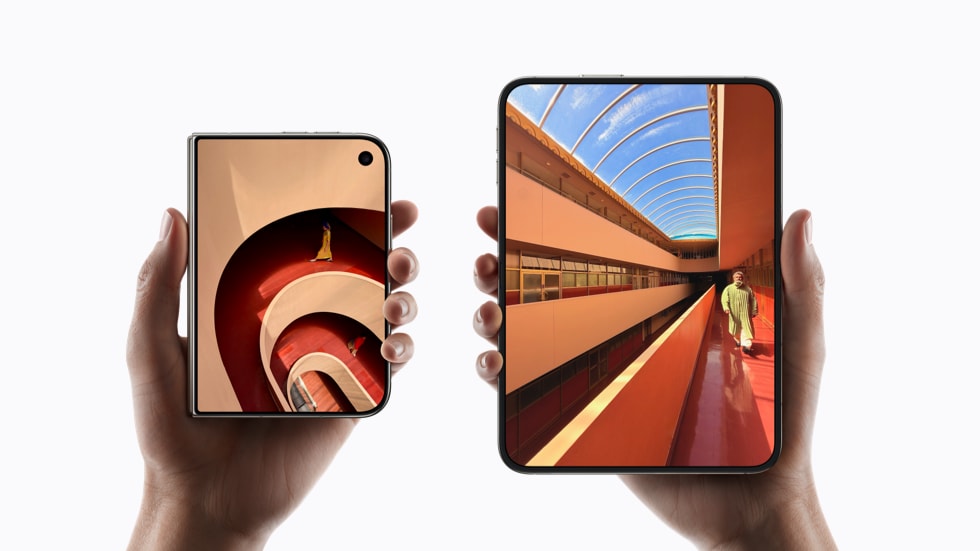
iPhone Duo displays: 7.6-inch inner + 5.4-inch outer Super Retina XDR. ProMotion (1-120Hz adaptive), Always On, 3,000 nits peak outdoor brightness. Premium nano-texture on inner display. Hidden FaceTime camera under inner display.
Galaxy Z Fold 8 displays: Main display 4:3 aspect ratio, cover screen 10:16 aspect ratio, up to 3,000 nits peak brightness, Vision Booster, low-reflection display finish. Samsung’s new Flex Titanium display structure combines a titanium-alloy film with an enhanced titanium plate.
Comparable but different trade-offs: Both phones hit 3,000 nits peak outdoor brightness. iPhone Duo wins on the matte anti-glare inner display. Z Fold 8 wins on aspect ratios designed for content consumption (4:3 inner is great for reading, 10:16 cover is familiar for messaging).
Camera comparison
| Feature | iPhone Duo | Galaxy Z Fold 8 |
|---|---|---|
| Main camera | 48MP Fusion Main | 50MP (wide) |
| Ultra Wide | 48MP Fusion Ultra Wide | 50MP (ultra-wide) |
| Telephoto | 2x Telephoto | Not detailed in July 2026 press release |
| Foldable-specific features | Smart Take (auto-capture when subjects pose), Duo Preview (rear camera with outer display viewfinder), Kid Cue (animations to attract kids’ attention), Duo FaceTime (group calls on outer display) | Dual Recording (capture both sides simultaneously), My FanCam (automatic subject tracking with reframing) |
| AI photo features | Spatial Reframing, Extend, Clean Up, Image Playground with SynthID | Live Translate, Note Assist, Generative Edit |
| Strongest use case | Still photo versatility, AI-enhanced composition, social media content | Video capture, productivity workflows, real-time subject tracking |
iPhone Duo cameras: 48MP Fusion Main + 48MP Fusion Ultra Wide + 2x Telephoto. Under-display inner FaceTime camera. New foldable-specific features: Smart Take (auto-capture when everyone poses), Duo Preview (use rear cameras with outer display as viewfinder), Kid Cue (animations on outer display to attract kids’ attention), Duo FaceTime (group calls on outer display).

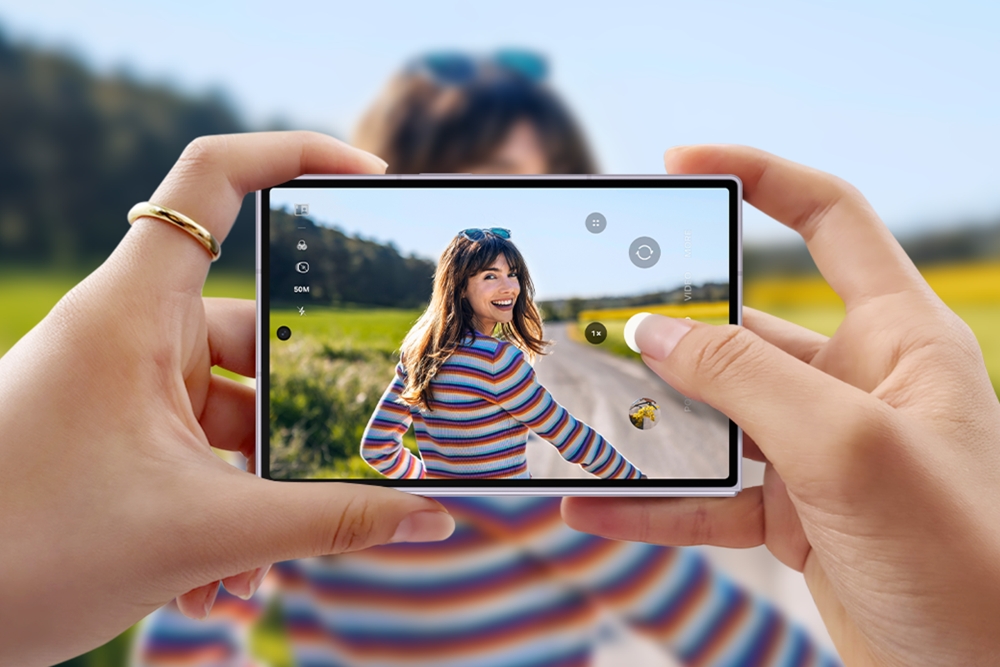
Galaxy Z Fold 8 cameras (confirmed): Dual 50MP cameras (wide + ultra-wide) per Samsung’s official press release. Features include Dual Recording (capture both sides simultaneously) and My FanCam (automatic subject tracking with reframing).
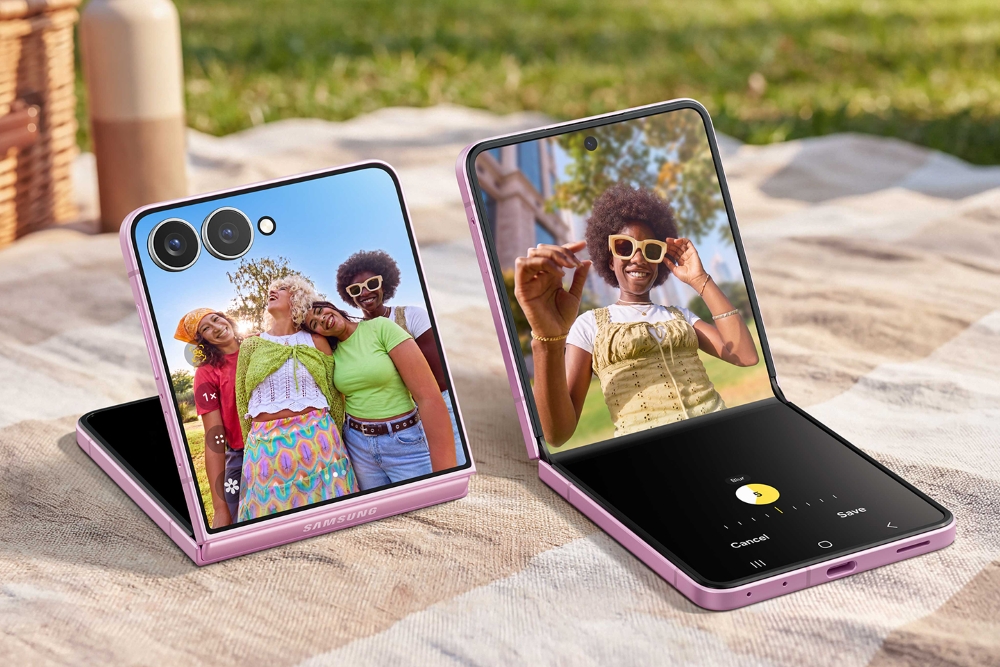
Different foldable strengths: iPhone Duo’s dual 48MP sensors and new foldable software features are its standout. Galaxy Z Fold 8’s mature camera software (especially for video) and Dual Recording feature are its standout. For most users, iPhone Duo’s video quality and Galaxy Z Fold 8’s still photo flexibility are the key tradeoffs.
Software + AI comparison
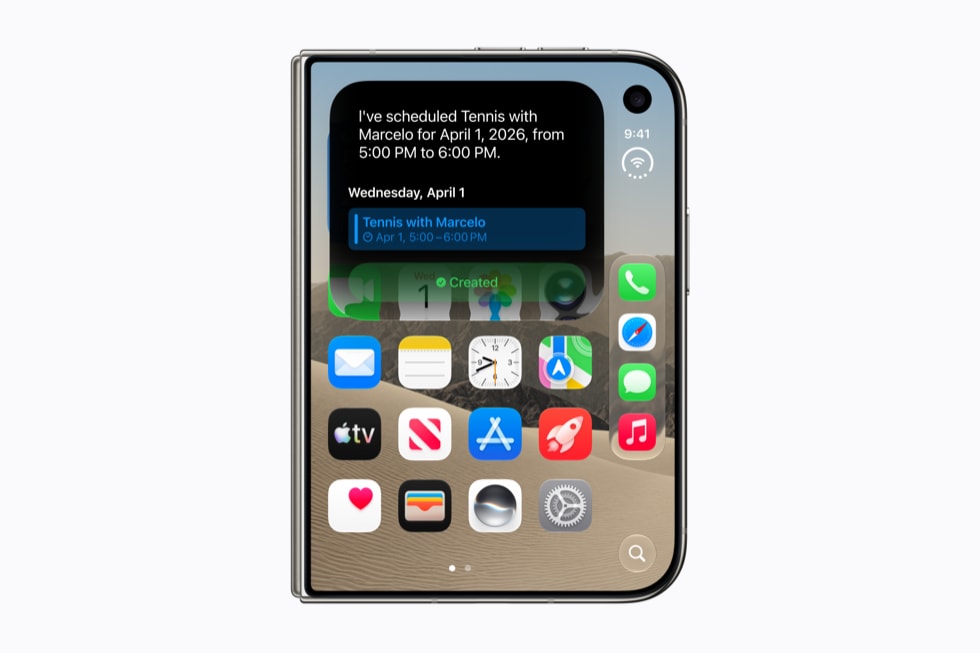
iOS 27 on iPhone Duo: 1st-generation foldable software. Vertical UI elements, side-mounted controls, content that scales between displays, redesigned Dynamic Island, App Library adapts to foldable layout. Apple Intelligence includes Siri AI, Spatial Reframing, Image Playground with SynthID. Third-party app support will take 12-18 months to mature (developers need to optimize).
One UI on Galaxy Z Fold 8: 8th-generation foldable software. Flex Mode (apps adapt to fold angle), taskbar at bottom for quick app switching, drag-and-drop between apps on different displays, Samsung DeX for desktop-like experience when connected to external display. Galaxy AI includes Live Translate, Note Assist with AI summarization, Generative Edit for photo manipulation. Third-party app support is mature — most major apps are already optimized for Samsung foldables.
Trade-off: iPhone Duo has more polished native features (Apple Intelligence, Siri AI, Spatial Reframing) but fewer optimized third-party apps. Galaxy Z Fold 8 has less polished native AI but more mature foldable app support and Samsung DeX for desktop productivity.
Ecosystem comparison
Apple ecosystem: iPhone Duo integrates seamlessly with iPhone, iPad, Mac, Apple Watch, AirPods, Apple TV, HomeKit. Handoff, Universal Clipboard, AirDrop, iMessage, FaceTime all work across the Apple ecosystem. If you’re already deep in Apple ecosystem with multiple devices, iPhone Duo adds significant value.
Samsung ecosystem: Galaxy Z Fold 8 integrates with Galaxy Watch, Galaxy Buds, Galaxy Tab, Galaxy Book, Windows PCs. Samsung DeX allows desktop-like productivity when connected to a monitor. Microsoft Office, OneDrive, and Teams are optimized for Samsung foldables. If you’re in a Windows-heavy or mixed-device environment, Z Fold 8 makes more sense.
Switching cost: Apple’s ecosystem lock-in is real. If you’re on iPhone and switch to Samsung, you lose iMessage, FaceTime with iPhone friends, AirDrop, and many other integrations. Samsung has improved its cross-platform support (you can use WhatsApp, etc.) but the Apple ecosystem advantage is genuine for Apple users.
Pricing comparison
iPhone Duo: Starts at $1,999 US (256GB base). Higher storage tiers (512GB, 1TB, 2TB) are available but pricing for those tiers wasn’t disclosed at the September 9 announcement. Apple Upgrade program offers leasing from $57.99/month for 24 months in the US.
Galaxy Z Fold 8: Samsung’s Z Fold 7 launched at $1,899. Pricing for Z Fold 8 wasn’t explicitly confirmed in Samsung’s July 2026 press release; expect pricing in the $1,799-$1,999 range based on the Z Fold 7 baseline. Samsung typically offers trade-in promotions and bundle deals that can bring effective pricing lower.
Bottom line on price: Similar starting price points. Apple offers the Apple Upgrade leasing program (US only). Samsung offers broader trade-in promotions globally. Pricing is essentially a wash at the entry tier.
Decision framework
Here’s how to think about which foldable is right for you:
Choose iPhone Duo if you’re a YouTuber cutting 1-3 videos a week. Your workflow is mostly messaging, social updates, short-form video, and basic browsing. iPhone Duo’s compact 5.4-inch outer screen feels familiar, and the AI video tools (Spatial Reframing, Smart Take) are built for your use case.
Choose iPhone Duo if you’re a freelance video editor delivering to clients weekly. You need reliable 4K ProRes export, fast turnaround, and integration with your existing Mac, iPad, and Final Cut Pro workflow. iPhone Duo’s ProRes support and Apple ecosystem integration make this seamless.
Choose iPhone Duo if you’re an AI power user. You use ChatGPT, Claude, image generation, and Apple Intelligence features daily. iPhone Duo’s A20 Pro Neural Engine is best-in-class for AI workloads, and Apple’s privacy-first approach with on-device processing matches your values.
Choose Galaxy Z Fold 8 if you’re a desktop productivity user. You connect your phone to a monitor, use Samsung DeX for a desktop-like experience, and rely on multi-window multitasking for work. Samsung’s mature software and S Pen support make this the better choice.
Choose Galaxy Z Fold 8 if you’re a note-taker or artist. You sketch, annotate PDFs, or take handwritten notes during meetings. S Pen Fold Edition is mature, responsive, and offers a precision Apple Pencil can’t match.
Choose Galaxy Z Fold 8 if you’re an early adopter who waited for Apple. You wanted a foldable from Apple specifically but value proven hardware over novelty. Wait for iPhone Duo 2 in 2027 instead, then buy with confidence.
FAQ
When was the Galaxy Z Fold 8 announced?
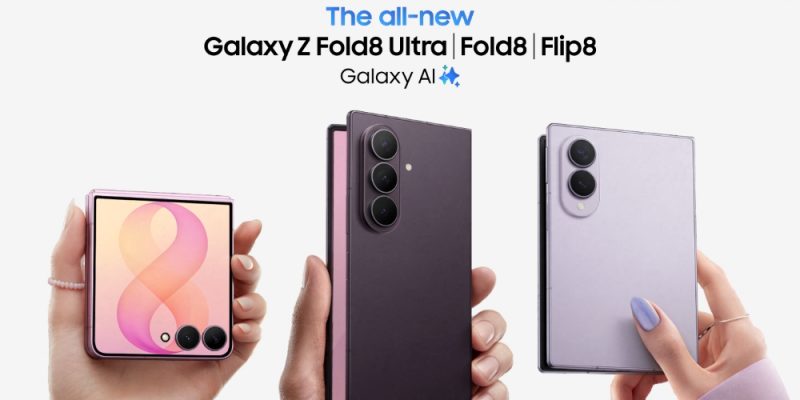
Samsung officially announced the Galaxy Z Fold 8 at Galaxy Unpacked in July 2026, alongside the Z Fold 8 Ultra and Z Flip 8. The Z Fold 8 is available for purchase now — check Samsung’s website for your region’s specific dates. The Z Fold 8 Ultra is the larger productivity-focused variant with an 8-inch main display and 4.1mm thin unfolded design, while the Z Flip 8 is the clamshell foldable in the same lineup.
Which has better software, iPhone Duo or Galaxy Z Fold 8?
Galaxy Z Fold 8’s One UI is in its 8th generation of foldable optimization, with mature Flex Mode, taskbar, drag-and-drop, and Samsung DeX. iPhone Duo’s iOS 27 is in its 1st generation of foldable adaptation. For mature foldable software today, Samsung wins. For AI integration and native polish, Apple wins. By mid-2027, iOS will have caught up significantly as third-party developers optimize.
Which is more durable, iPhone Duo or Galaxy Z Fold 8?
Galaxy Z Fold 8 has the durability advantage from 8 generations of hinge refinement plus the new Flex Titanium display structure. Apple’s hinge is 1st-gen and unproven at scale. Samsung’s Z Fold 8 at 201g is also lighter than any Apple foldable can hope to match in their first generation. Until iPhone Duo gets independent drop and dust testing in late October, Galaxy Z Fold 8 is the safer durability bet.
Which is better for productivity, iPhone Duo or Galaxy Z Fold 8?
Galaxy Z Fold 8 wins for productivity. Samsung DeX provides desktop-like experience when connected to a monitor. S Pen Fold Edition supports note-taking and drawing. Multi-window multitasking is more mature. The cover screen’s 10:16 aspect ratio is more usable when closed than iPhone Duo’s 5.4-inch outer screen. iPhone Duo has iOS 27 foldable optimizations but is less mature.
Which is better for photography, iPhone Duo or Galaxy Z Fold 8?
iPhone Duo has dual 48MP sensors (Main + Ultra Wide) with 2x Telephoto. Apple Intelligence features like Spatial Reframing add post-capture flexibility. Galaxy Z Fold 8 has dual 50MP cameras with Samsung’s mature camera software, especially for video, plus Dual Recording and My FanCam. iPhone Duo wins on still photo versatility; Galaxy Z Fold 8 wins on telephoto reach and video quality.
Which is better for gaming, iPhone Duo or Galaxy Z Fold 8?
Galaxy Z Fold 8 has the Adreno GPU advantage for sustained gaming. Snapdragon 8 Elite Gen 5 typically outperforms Apple silicon in multi-threaded GPU workloads and thermal sustained performance. iPhone Duo is better for casual and optimized mobile games. Galaxy Z Fold 8 is better for high-end 3D gaming and emulator use.
Can I trade in my current phone for either?
Yes. Apple Trade In accepts iPhones, Android phones, and other devices toward an iPhone Duo purchase. Samsung Trade In accepts similar devices toward a Galaxy Z Fold 8 purchase. Both programs offer similar trade-in values depending on the device model and condition.
Which is better for Apple Watch users?
iPhone Duo. Apple Watch (any generation) pairs seamlessly with iPhone for notifications, fitness, health, and continuity features. Galaxy Watch pairs with both Android and iOS but with limited functionality on iPhone. If you’re an Apple Watch user, iPhone Duo is the obvious choice.
Our Take
This is the most interesting foldable comparison in years because Apple is finally a player. The Galaxy Z Fold 8 has been the obvious choice for Android power users for years, but iPhone Duo brings a fundamentally different value proposition.
Galaxy Z Fold 8 wins on maturity and ecosystem flexibility. Samsung has refined the foldable hardware over 8 generations, the software is mature, and the open Android ecosystem is more flexible for power users. If you want a foldable today and you’re not deep in Apple ecosystem, Z Fold 8 is the safe choice.
iPhone Duo wins on integration and first impressions. Apple Intelligence, iOS 27 foldable adaptations, Apple ecosystem integration, and the sheer novelty of Apple’s first foldable make iPhone Duo the more exciting choice for Apple users. If you’ve been waiting for Apple to enter the foldable market specifically, iPhone Duo is for you.
My honest take after comparing these two: the question isn’t “which foldable is better” — it’s “do you want mature hardware with proven durability, or do you want polished software with the most powerful ecosystem?” For most people in 2026, the answer is the second — iPhone Duo’s integration with existing Apple devices, AI features, and the maturation of iOS foldable software over the next 12-18 months will likely make iPhone Duo the better long-term choice. For Android users or those who want mature foldable hardware right now, Galaxy Z Fold 8 is still the better pick.
The pricing is close enough ($1,999 vs ~$1,899) that ecosystem should be the deciding factor. If you have an iPhone 15 Pro or 16 Pro and you’re happy with it, switching to Samsung for a foldable doesn’t make sense — wait for iPhone Duo. If you’re already on Android and want the best foldable right now, Z Fold 8 with trade-in promotions is hard to beat.
Related on HelloExpress
- iPhone Duo First Look: Apple’s First Foldable iPhone
- iPhone Duo Pricing & Configuration Guide (in draft)
- iPhone Duo Display & Durability Deep Dive (in draft)
- iPhone Duo vs iPhone 18 Pro (in draft)
Sources
- Apple Newsroom — Apple unveils iPhone Duo (September 9, 2026)
- Samsung Newsroom — Galaxy Z Fold8, Fold8 Ultra, and Flip8 official announcement (July 2026)