
Proton eMas 5 And eMas 7 EV Motors Now Locally Assembled In Tanjong Malim

TLDR
- Proton’s Tanjong Malim engine plant now assembles EV drive motors for the eMas 5 and eMas 7, ending reliance on fully imported units
- Locally assembled motors are already fitted to customer cars rolling out of showrooms this week
- The four-year-old plant has absorbed a RM121 million upgrade and is targeting 400,000 engines per year by 2028
- New CKD eMas 7 PHEV was line-off today with locally built DHE engine, DHT transmission, and motor
The single most important component in any electric car is not the touchscreen, battery, or software — it is the electric drive unit, the motor that turns electrons into motion. As of this week, that motor is now being assembled in Malaysia for the country’s two best-selling EVs: the Proton eMas 5 and eMas 7.

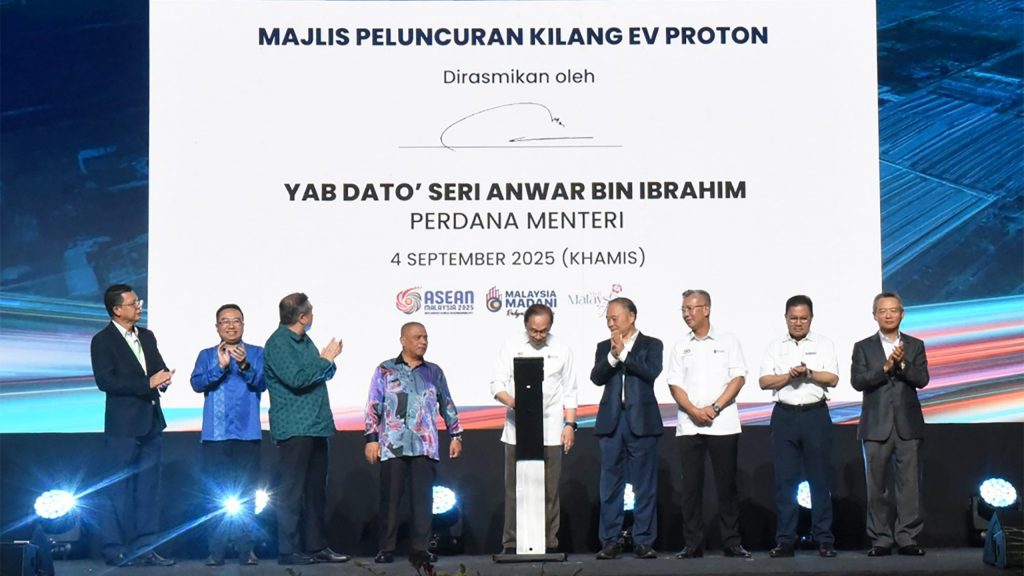
Proton confirmed the milestone at its four-year-old Tanjong Malim engine plant on 31 July 2026, alongside the line-off ceremony for the yet-to-be-launched CKD eMas 7 PHEV. The PHEV is the headline act, but the quieter story is that the pure-electric eMas 5 and eMas 7 SUVs are already shipping to Malaysian buyers with locally assembled drive units tucked under their floors.
What CKD Actually Means Here
CKD — Completely Knocked Down — is the industry term for taking a vehicle apart into pieces and rebuilding it locally. Proton has been doing CKD assembly for the eMas 7 since January and the eMas 5 since KLIMS 2026 in June, but the motor itself was still imported from Geely supply lines in China. That changes now.

The Tanjong Malim facility is now producing dedicated hybrid engines (DHE), dedicated hybrid transmissions (DHT), and electric drive units (EDU). For EV buyers, the practical takeaway is that more of the bill of materials carries Malaysian content, giving Proton more leverage on pricing and protecting the lineup from currency swings. The eMas 5 starts from RM59,800 on-the-road; the eMas 7 from RM103,800 — prices that should hold steady, or improve, as the supply chain shortens.
The RM121 Million Plant Expansion
Proton has poured more than RM121 million into the Tanjong Malim plant to make this happen. The investment lifts annual capacity from 240,000 engines to a target of 400,000 by 2028 — a 67 percent jump designed to absorb Malaysian demand and feed Proton’s export markets simultaneously.
The plant now works with eight local vendors alongside eight foreign suppliers, supporting production for the domestic market and for export destinations including Vietnam, South Africa, and Mexico, where the same Geely-derived powertrains ship under other brand badges. The CKD eMas 7 PHEV line-off today adds locally assembled front massage seats to the Premium and Premium Plus variants, with pricing expected closer to launch.
Why This Matters For Malaysian Buyers
Local motor assembly means shorter wait times for new eMas 5 and eMas 7 orders, faster warranty service since replacement motors no longer need to clear customs, and a more resilient supply chain during regional disruptions. Proton says the locally built motors are already fitted to cars being delivered to customers this week, so buyers picking up a new eMas from a Proton showroom right now are already driving Malaysian-assembled EV hardware.
The timing also lines up with the government’s push to develop a domestic EV ecosystem. As Proton scales toward 400,000 engines a year, the Tanjong Malim site becomes one of the most important pieces of automotive infrastructure in Southeast Asia — a status that should keep the eMas range competitive against the wave of Chinese EV brands entering the Malaysian market.
Our Take
Localising the electric motor is the unglamorous work of building a real auto industry, and it matters more than any single product launch. Proton’s eMas lineup already leads Malaysian EV sales by a wide margin, but the long-term battle is not about who has the flashiest showroom — it is about who controls the supply chain. By bringing the drive unit home to Tanjong Malim, Proton is quietly turning a vulnerability into a strength.
For buyers, the short-term effect is steady pricing and faster deliveries. The longer-term play is more interesting: as capacity ramps toward 400,000 units a year, Proton will have room to push eMas pricing down without sacrificing margin, or to absorb the kind of supply shocks that have disrupted competitors during chip shortages. The eMas 7 PHEV line-off today is the headline, but the real story is what is humming along the assembly line next to it.