
AirTrunk Locks In US$2.325B Green Financing for Johor Bahru Data Centre

TLDR
- AirTrunk secured US$2.325 billion (≈RM9.5 billion) in green financing for its JHB2 hyperscale data centre campus in Johor Bahru.
- Largest green project finance deal for a single data centre in Malaysia to date, and AirTrunk’s biggest single-asset financing.
- JHB2 targets a design PUE of 1.37 with advanced water-efficient cooling — among the more efficient hyperscale builds in Asia.
- Margin savings will bankroll MY community work — recycled water in schools via Gravity Water, MERCY Malaysia disaster relief, and STEM education with UTM.
- Thirty Malaysian and international lenders, including CIMB, HSBC and DBS, plus the World Bank Group’s IFC, signed on.
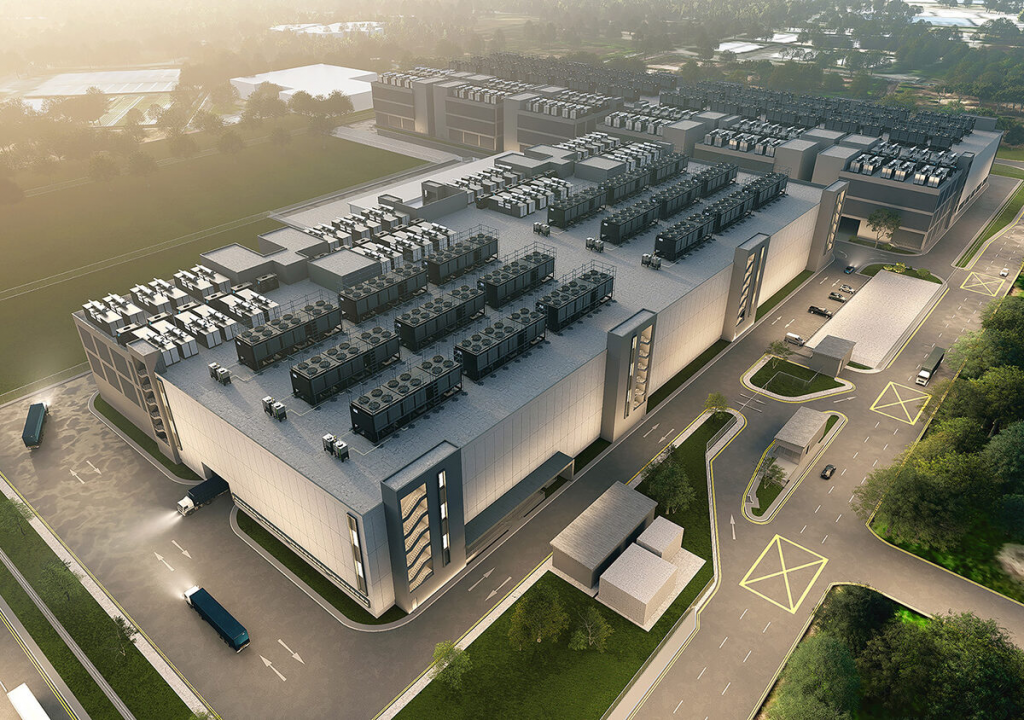
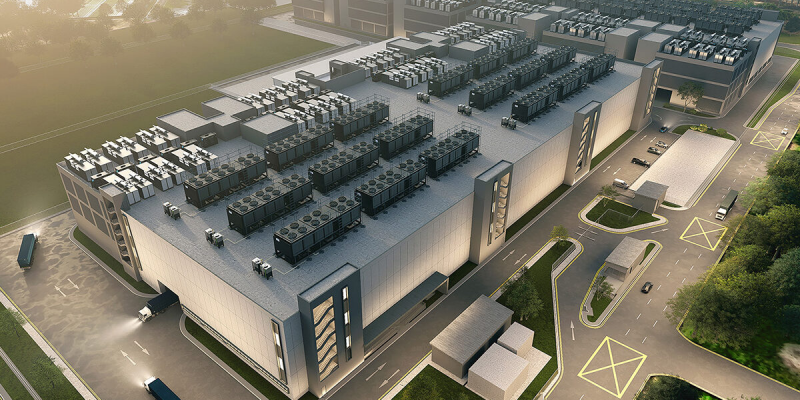
Asia-Pacific hyperscale data centre operator AirTrunk has closed a US$2.325 billion (roughly RM9.5 billion) green financing facility for its JHB2 campus in Johor Bahru — the largest green project finance deal for a single data centre in Malaysia, and AirTrunk’s biggest single-asset financing to date. Structured under its Green Financing Framework, the deal signals how seriously capital markets are starting to grade sustainability credentials across the region’s cloud and AI backbone.

Johor — close to Singapore, with available land and grid capacity — has emerged as Malaysia’s fastest-growing data centre corridor. Tying capital to clear environmental performance targets is one way to stop that growth from outrunning the country’s power and water budgets.
What the Money Buys
The JHB2 campus is designed to hit a Power Usage Effectiveness (PUE) of 1.37, well inside the range considered efficient for hyperscale facilities, where legacy data centres typically run at 1.5–1.8. AirTrunk is also deploying advanced water-efficient cooling to ease pressure on local water supplies, a hot-button issue in Johor.
BNP Paribas, Crédit Agricole CIB, DBS, HSBC, ING, Mizuho, MUFG, Société Générale, SMBC and UOB acted as Global Coordinators, with CIMB, IFC and Standard Chartered among the Mandated Lead Arrangers. The IFC’s debut as an AirTrunk lender — structured around its Blue Finance Guidelines Version 2.0 — adds a development-finance stamp that purely commercial lenders don’t carry.
Real Community Programs in Malaysia
Beyond the headline facility, margin savings from the green loan will fund Malaysian community programmes: recycled-water initiatives via Gravity Water and Water Watch Penang, disaster relief with MERCY Malaysia, and STEM outreach alongside Universiti Teknologi Malaysia (UTM). AirTrunk Vice President Pei Jet (PJ) Lim framed the deal as proof that “digital infrastructure can be developed responsibly,” while Senior Director of Treasury Loans Edmund Tan pointed to the company’s net-zero-by-2030 pathway.
Our Take
Look past the celebratory quotes. The interesting piece is the structure, not the size. A green loan of this scale ties future borrowing costs to measurable KPIs — PUE, water use, progress toward net zero. If JHB2 slips on efficiency targets, AirTrunk pays for it twice: once in higher power and water bills, and again in interest margin. That kind of accountability has been rare in the Southeast Asian data centre boom, where sustainability often gets reduced to glossy ESG reports rather than binding financial terms.
The MY-specific community work is worth taking seriously — recycled-water programmes in schools and disaster relief with MERCY Malaysia are tangible benefits tied to a Johor campus that will draw heavily on local resources. Critics will still note that even a PUE of 1.37 means real electricity demand, and “net zero by 2030” for a hyperscaler remains a claim, not a delivered outcome. But the lender list — and the margin-penalty mechanics — make this the strongest signal yet that Malaysian digital infrastructure investment is being forced to back its sustainability pledges with money on the table.