

Huawei Malaysia Launches Four AI-Ready Data Centre Solutions In Johor Bahru

TLDR
- Huawei Malaysia launched four AI-ready data centre solutions in Johor Bahru on 31 July 2026
- PowerPOD 5.0 cuts power infrastructure delivery from 60 days to two weeks
- SmartLi 5.0 and UPS5000-H-800k deliver battery storage and uninterrupted power for AI workloads
- Thermal Management Unit balances cooling performance with electricity use for high-powered AI servers
- Johor is positioned as a regional hub driven by cloud, hyperscale and AI infrastructure investments
- Launch comes amid Malaysia’s push to anchor the Johor-Singapore digital corridor
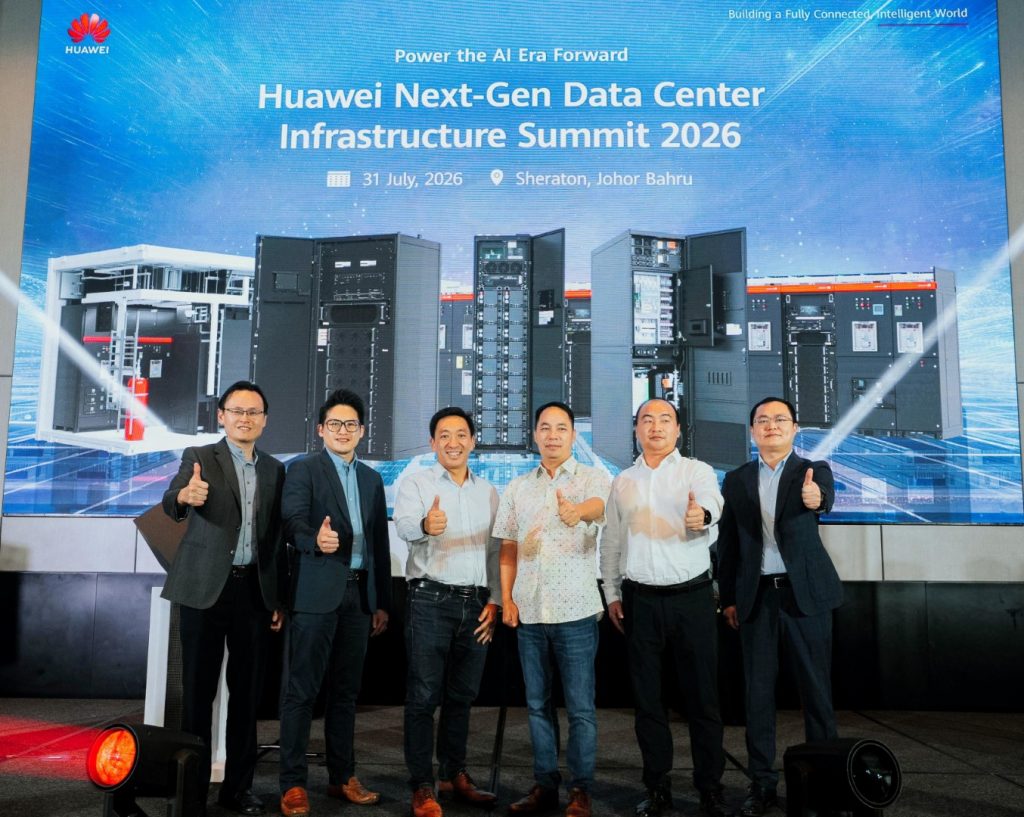
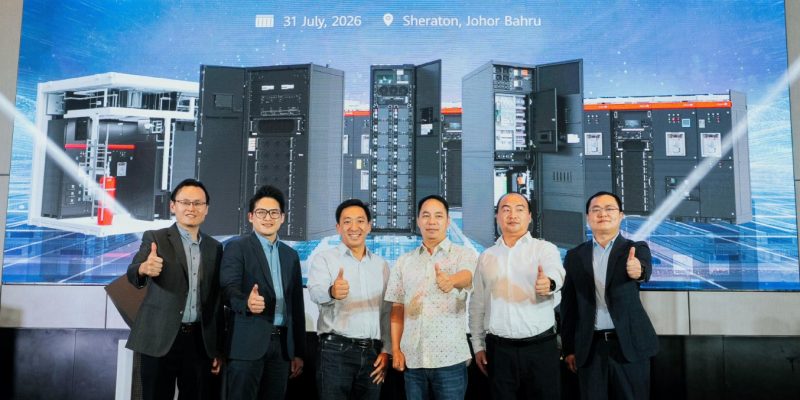
Huawei Technologies (Malaysia) Sdn Bhd has rolled out a portfolio of four AI-ready data centre (AIDC) solutions designed to reinforce Malaysia’s digital infrastructure at a time when AI workloads are reshaping how facilities are designed, built and operated. The launch took place at the Huawei Next-Gen Data Center Infrastructure Summit 2026 in Johor Bahru on 31 July 2026, drawing representatives from government agencies, energy utilities, hyperscale operators and technology organisations across the region.

The new portfolio brings together Huawei’s PowerPOD 5.0 integrated power system, UPS5000-H-800k intelligent power protection solution, SmartLi 5.0 intelligent energy storage solution and Thermal Management Unit (TMU) integrated cooling system. Taken together, the suite forms a grid-interactive stack that links intelligent power supply, battery energy storage and advanced cooling in a single architecture, addressing the higher rack power densities and more demanding computational loads that AI workloads now impose on traditional data centre facilities.

The ‘Token Factory’ Era And Why It Matters
Huawei Digital Power framed the launch as the start of a “Token Factory” era, in which data centres increasingly resemble industrial facilities that convert electricity and data into AI-generated outputs such as text and images. Tokens, the small units of data that power generative AI models, are set to become a primary measure of how efficiently a data centre performs, the company said.
Chong Chern Peng, Executive Vice President of Huawei Digital Power Malaysia, said the rapid growth of AI workloads is forcing operators to rethink how data centres are designed, built and operated. “Every watt of electricity now has to deliver greater value, every system must be more dependable and every facility must be built faster,” Chong said. “With these new solutions, we aim to equip data centre owners and operators in Malaysia with the intelligent infrastructure needed to operate efficiently, reliably and sustainably in the AI era.”
Chong added that Malaysia — particularly Johor — is well positioned to strengthen its role as a regional data centre hub, driven by growing investments in cloud, hyperscale and AI infrastructure. Huawei said it remains committed to working with customers, industry partners and stakeholders to build intelligent, energy-efficient and future-ready infrastructure that supports the country’s AI ambitions over the long term.
Inside The Four New Solutions
The PowerPOD 5.0 prefabricated power system is the headline announcement. Huawei says the solution reduces the delivery period for data centre power infrastructure from 60 days to two weeks, a significant acceleration that helps operators bring new capacity online more quickly. Beyond construction speed, the platform simplifies build-out, supports scalability and offers AI-enabled full-link visualisation that helps predict operational risks and enables preventive maintenance.
For power protection, the UPS5000-H-800k delivers uninterrupted power to critical equipment during grid fluctuations or outages. Its high-power-density design supports the high-density AI computing demands that newer racks impose, while helping operators use available floor space more efficiently. The SmartLi 5.0 intelligent energy storage solution takes care of operations during power disruptions, with a modular architecture that allows capacity to be expanded online without interrupting operations. Its cell-to-system protection design is intended to prevent a fault in one battery cell from spreading across the wider system.
Rounding out the portfolio, the Thermal Management Unit (TMU) provides integrated thermal management for high-powered AI servers. The system balances cooling performance with electricity consumption, conducts automatic leak checks and uses predictive maintenance capabilities to flag potential coolant issues before they affect operations. Together, the four solutions form an integrated infrastructure portfolio designed to help customers accelerate deployment, improve scalability, enhance operational efficiency and strengthen business continuity.
Why Johor, Why Now
The summit brought together a broad cross-section of the Malaysian and regional data centre ecosystem, including Invest Johor, the Centre for Technology Excellence Sarawak (CENTEXS), Eden Inc Bhd, DCD Technology Sdn Bhd, NTT Global Data Centers Holding Asia, Pekat Group Bhd, the Johor Town and Country Planning Department (PLANMalaysia Johor), Sarawak Digital Economy Corporation Bhd (SDEC), Tenaga Nasional Bhd (TNB), TM Nxera, CCIE Engineering (M) and Vantage Data Centers.
That lineup reflects the increasingly national scope of Malaysia’s data centre build-out, even as Johor — and the wider Johor-Singapore Special Economic Zone — continues to attract the bulk of hyperscale investment. The combination of land availability, grid access from TNB, subsea cable landings and proximity to Singapore has made southern Malaysia the de facto landing pad for new AI and cloud capacity in Southeast Asia. Against that backdrop, vendors that can deliver prefabricated power, modular storage and integrated cooling on aggressive timelines have a clear advantage.
Our Take
Huawei’s Johor launch is less about any single product and more about timing. The data centre industry is moving from a build-everything-on-site model to a prefab, modular, AI-aware model, and the company’s claim of cutting power infrastructure delivery from 60 days to two weeks with PowerPOD 5.0 is the kind of figure that hyperscale operators will pay close attention to. If the timeline holds in real deployments, it meaningfully changes the economics of phased capacity rollouts.
For Malaysia, the broader signal is that the country is no longer positioning itself as just a real-estate play for foreign hyperscalers — it is increasingly being sold as a complete AI infrastructure ecosystem, with local utilities, state agencies and Malaysian engineering firms all sitting at the same table as the global vendors. That coordination matters because the bottleneck for AI capacity in the region is increasingly power and cooling, not compute or land.
The caveat is the usual one: prefab power and modular storage are not new categories, and competitors including Schneider Electric, Vertiv, Eaton and ABB all have overlapping offerings. Huawei’s differentiation will come down to integration with its wider cloud and networking stack, plus how aggressively it prices into the Malaysian market. For local buyers — from colocation operators in Johor to enterprise on-prem builds — the launch is at minimum a useful new option to put on the RFP shortlist.






[…] 📖 Baca versi English: Huawei Malaysia Launches Four AI-Ready Data Centre Solutions In Johor Bahru […]