

19 Malaysian Firms Make Forbes Asia Best Under A Billion 2026 List as AI Boom Lifts Local Tech

TLDR
- Malaysia’s representation on Forbes Asia’s 2026 Best Under A Billion list more than doubled to 19 companies
- Over half of the Malaysian firms on the list benefitted directly from the country’s AI infrastructure boom
- Cable maker Southern Cable Group debuted on the list, with data centres driving 15 per cent of its RM1.8 billion 2025 revenue
- China leads the 200-company roster with 28 firms, followed by India at 27 and Malaysia third
- Software companies and semiconductor-component suppliers make up 25 per cent of all qualifiers
Malaysian Firms More Than Double on Forbes Asia’s Best Under A Billion List
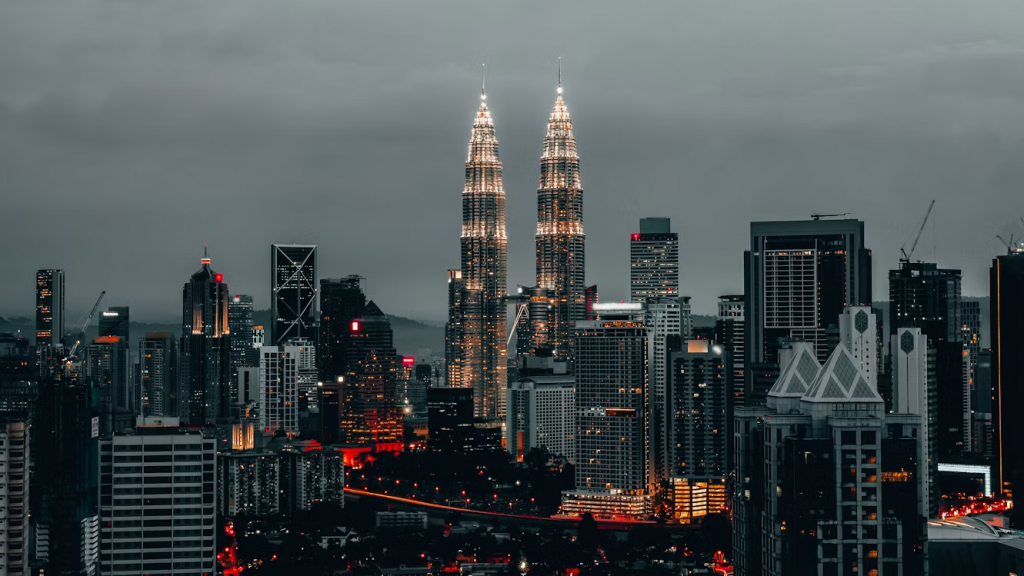
Forbes Asia unveiled its 2026 Best Under A Billion list on 4 August, and Malaysian firms emerged as one of the biggest winners of the year. The annual roll call highlights 200 publicly listed small and mid-sized companies across the Asia-Pacific region, and Malaysia’s contingent more than doubled from the previous edition to 19 companies.

The Best Under A Billion list spotlights publicly listed firms drawn from roughly 19,000 candidates across the Asia-Pacific region with annual sales above US$10 million (around RM40.9 million) and below US$1 billion (about RM4.09 billion). To qualify, companies must post positive earnings over their most recent fiscal year and demonstrate a strong financial track record relative to peers. The 2026 edition leans heavily into the global technology cycle, with software companies and suppliers of semiconductor tools and components accounting for 25 per cent of all entries on the list.
China retained the top spot with 28 companies, followed closely by India at 27. While Malaysia sits a step behind these two giants in absolute numbers, its jump from the previous edition is significant. It is the clearest signal yet that Malaysia’s decade-long bet on positioning itself as a regional hub for AI infrastructure and data-centre investment is starting to show up in the financial statements of mid-cap local suppliers.
The AI Infrastructure Boom Connection
In its official statement, Forbes Asia noted that over half of the Malaysian firms on this year’s list benefitted directly from the country’s artificial intelligence infrastructure boom. The framing is not corporate puffery — it points to a real cascade effect that has been building for the past two years. Global cloud players including Microsoft, Google, AWS, ByteDance and a string of Chinese AI cloud providers have poured billions into Johor and Cyberjaya, and that capex is now flowing downstream to Malaysian mid-caps.
New hyperscale data centres need cabling, power equipment, cooling systems, networking gear and semiconductor-adjacent components in enormous volumes. Malaysian manufacturers and component suppliers with existing relationships to those builders have ridden the wave. Forbes also noted that other qualifiers outside the AI supply chain are capitalising on the accelerating adoption of electric vehicles and renewable energy by meeting demand for specialised equipment and services in those sectors.
Southern Cable Group’s Standout Debut
One notable debut on the 2026 list is Southern Cable Group, a manufacturer of low- and high-voltage power cables. The company credits the booming data centre industry for its 2025 performance, with that segment alone contributing 15 per cent of its RM1.8 billion revenue. Southern Cable’s inclusion highlights how Malaysia’s traditional electrical manufacturing sector is being reshaped by the demands of large-scale AI compute facilities, which require massive volumes of cabling for power distribution and high-speed networking between server racks.
Our Take
The doubling of Malaysian representation on the 2026 list is more than a feel-good headline — it is a concrete signal that Malaysia’s decade-long push to attract hyperscale data-centre investment is finally generating meaningful local value capture. For years, critics questioned how much of the multi-billion ringgit buildout actually flowed to Malaysian companies, with the bulk seemingly going to land, power utilities and global contractors. Now, mid-cap Malaysian firms are clearly winning meaningful revenue from the buildout, and the financial performance is strong enough to pass Forbes’ selection filters.
That said, the “AI boom” framing has real limits worth flagging. Most of the Malaysian qualifiers are supplying picks and shovels — cables, components, electrical equipment — rather than building frontier AI products themselves. The risk is that the 19-firm surge reflects a single cycle of hyperscale capex, not durable AI-native competitiveness. Watch whether Malaysia can convert this supplier-side momentum into original AI product companies over the next two to three years. For now, the data-centre tailwind is real, and these 19 firms are the clearest local winners of the buildout.
Keyword: Malaysian AI firms Forbes






[…] 📖 Baca versi English: 19 Malaysian Firms Make Forbes Asia Best Under A Billion 2026 List as AI Boom Lifts Local Tech […]