


South Korea Central Bank Calls for Circuit Breakers After US$43 Billion Bithumb Error

TLDR
- Event: A Bithumb employee accidentally credited users with approximately US$43 billion in Bitcoin during a promotional event on February 6.
- Market Impact: Panic selling caused the Bitcoin-to-won trading pair to drop more than 17%, with forced liquidations compounding the damage.
- Slow Response: Bithumb took 40 minutes total to detect and correct the error — 20 minutes to notice, another 20 to respond.
- Regulatory Push: The Bank of Korea wants mandatory circuit breakers on Korean exchanges, pausing trading for 20 minutes during abnormal conditions.
- Bigger Picture: South Korea’s incoming Digital Asset Basic Act aims to bring crypto oversight in line with traditional financial markets.
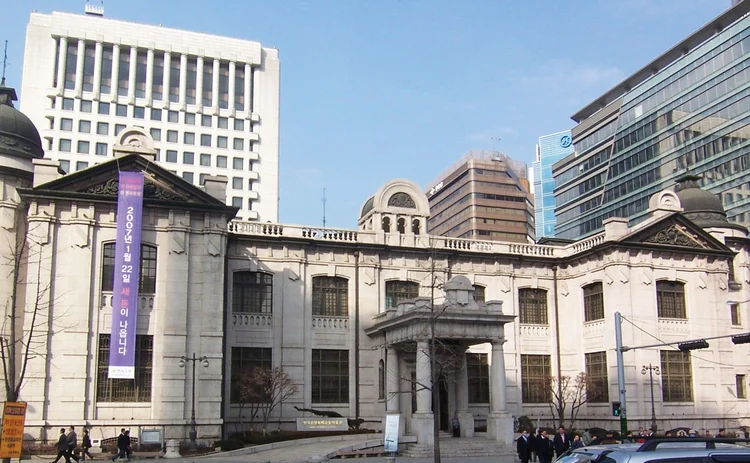
South Korea’s central bank is pushing for mandatory circuit breakers on cryptocurrency exchanges following a catastrophic operational error at Bithumb in February, where a single employee input mistake resulted in approximately US$43 billion in erroneous digital asset credits.

The Bithumb Incident That Triggered Regulatory Action
The Bank of Korea outlined its proposal for exchange-level circuit breakers in its 2025 Payment and Settlement Report, citing the February 6 incident at Bithumb as clear evidence that the digital asset market lacks the protective guardrails present in traditional finance. On that date, a Bithumb employee conducting a promotional event mistakenly transferred 620,000 Bitcoin instead of South Korean won during what was intended to be a routine promotional credit exercise. The input error incorrectly credited user accounts with approximately US$43 billion in digital assets — a figure that dwarfs the market capitalisation of many regulated financial institutions.
The resulting market reaction was severe. Panic selling erupted across the platform, and the Bitcoin-to-won trading pair dropped more than 17% within hours. The forced liquidation of over-leveraged positions compounded the selloff, amplifying the market impact far beyond what a simple input error should have caused. Critically, Bithumb took 40 minutes to respond — 20 minutes to detect the mistake and another 20 minutes to mount a full corrective response. The central bank described this delay as unacceptable for a market of systemic importance.
Why Traditional Safeguards Are Needed in Crypto
The Bank of Korea’s report was direct in its assessment: the primary cause was the absence of internal control systems designed to prevent operational risks of this magnitude. Unlike regulated banks and securities firms, cryptocurrency exchanges in South Korea operate under considerably lighter regulatory requirements. The central bank recommended that exchanges implement automated trading halt mechanisms — circuit breakers — that would pause activity for 20 minutes when abnormal price swings or bulk orders are detected. The logic mirrors the approach used in equity markets: pause, assess, resume in an orderly fashion.
The Financial Services Commission has already moved to tighten oversight, mandating that exchanges implement real-time systems to verify internal ledgers against blockchain balances by May 2026. The upcoming Digital Asset Basic Act is expected to codify circuit breaker requirements into law, formalising the alignment between digital asset regulation and traditional financial market standards. These measures reflect a broader shift in how regulators across Asia are approaching the digital asset sector — bringing it in line with established financial market norms rather than treating it as an exception.
Broader Implications for Asian Crypto Markets
This regulatory development in South Korea reflects a broader trend across Asia’s major economies, where regulators are moving to bring cryptocurrency operations in line with established financial sector norms. Hong Kong’s Securities and Futures Commission already enforces stringent operational controls for licensed virtual asset trading platforms operating in the city. The message from regulators across the region is consistent: the era of lightly regulated crypto exchanges is ending, and exchanges that fail to adopt institutional-grade risk controls will face mounting pressure.
For South Korea, the Bithumb incident appears to have accelerated a regulatory conversation that was already underway. The Digital Asset Basic Act represents the country’s most ambitious effort yet to create a comprehensive legal framework for digital assets, with circuit breakers positioned as a cornerstone safeguard. Meanwhile, Bithumb continues to face scrutiny beyond the central bank’s report. Authorities have summoned two Bithumb executives for questioning as part of ongoing investigations related to allegations involving a South Korean lawmaker, according to the Seoul Economic Daily. No charges have been filed at the time of publication.
Our Take
The Bithumb incident is a textbook case of why crypto markets need better institutional guardrails. Forty minutes to respond to a US$43 billion error is indefensible by any standard of financial market hygiene. The Bank of Korea’s call for circuit breakers is measured and sensible — it essentially asks exchanges to do what equity exchanges have done for decades: pause trading when things look abnormal and give humans time to assess before the situation worsens.
The broader push toward the Digital Asset Basic Act is the more significant story here. If passed, it would represent South Korea’s most comprehensive attempt to regulate digital assets comprehensively, moving beyond reactive measures toward a structured legal framework. The circuit breaker proposal is a symptom of a larger problem: the digital asset sector globally has been operating with regulatory standards well below what traditional financial institutions are required to maintain.
For traders and investors watching these developments — particularly those with exposure to Asian crypto markets — the implications are clear. The era of lightly regulated crypto exchanges in South Korea is drawing to a close. Similar shifts are underway across the region, and investors would do well to factor increasing regulatory scrutiny into their risk assessments. When South Korea, Hong Kong, and other major Asian markets are all moving in the same regulatory direction, the message is unmistakable.