
Memories.ai Brings Private Personal AI Memory To Snapdragon-Powered Devices — PCs, Phones, And Smart Glasses

TLDR
- Memories.ai announced at Snapdragon Summit 2026 that its personal AI assistant Luci now runs natively across the full Snapdragon device ecosystem — PCs, smartphones, and smart glasses
- Luci uses two on-device models — OmniCaptioner and OmniRetriever — to create a continuous, searchable personal memory from what your devices see and hear, running entirely on the Qualcomm Hexagon NPU
- The full pipeline runs at hundreds of millions of parameters, not billions, and a full day of continuous memory fits in roughly 2 GB of local storage
- Privacy architecture keeps all personal content on-device; the cloud is used only to synchronise context metadata across your devices, never to store raw footage or personal data
- Malaysia pricing and availability for Memories.ai Luci on Snapdragon devices have not been announced
What Memories.ai Actually Announced
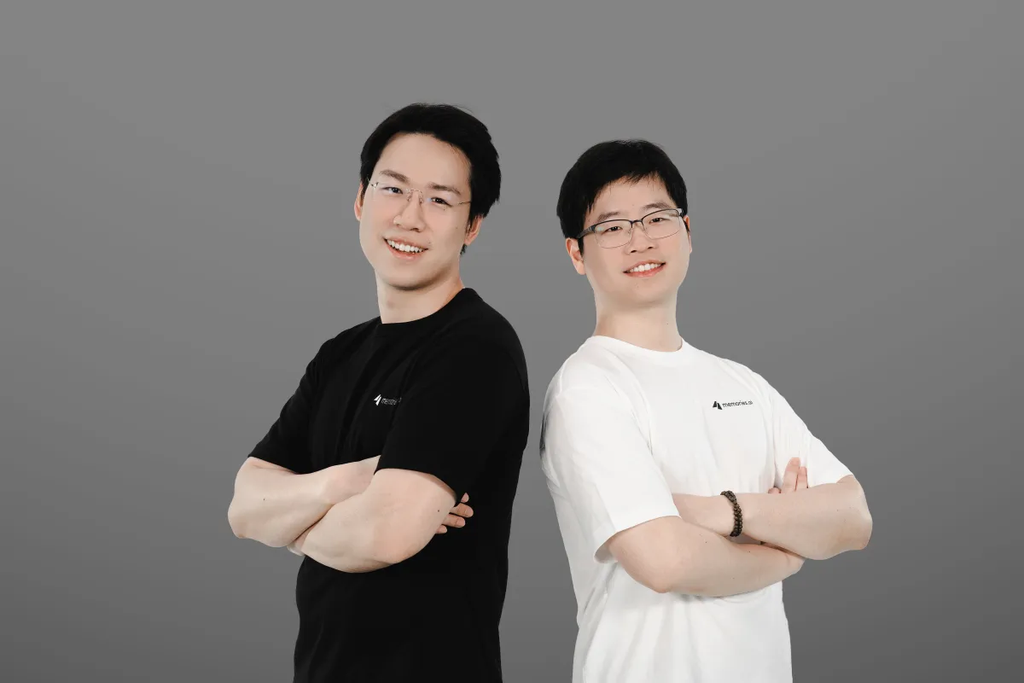
At Snapdragon Summit 2026 in Maui, Hawaii, Memories.ai revealed that Luci — the company’s personal AI assistant — now runs natively on every major device category powered by Snapdragon platforms. That means the same continuous memory engine that previously worked only on desktop now extends to Snapdragon-powered smartphones and smart glasses, creating a single memory layer that follows you across every device you carry.
The pitch is simple: today’s AI can write, reason, and code, but it forgets everything the moment a conversation ends. It doesn’t know who you met yesterday, what was on the whiteboard in your last meeting, or what you actually meant by “that thing we discussed last week.” Luci is Memories.ai’s attempt to close that gap by giving AI a persistent, private memory of a person’s actual life — not just the current chat window.
How The On-Device Memory Pipeline Works
The technical architecture behind Luci is what makes the cross-device story plausible rather than aspirational. Two models do the heavy lifting. OmniCaptioner watches and listens to what’s happening around the device — screen activity, conversations, environmental context — and converts each moment into a compact, structured description. OmniRetriever then takes those descriptions and indexes them into a searchable personal memory that lives entirely on the device.
The clever part is that the expensive visual processing happens once, at the moment of capture. Everything downstream — indexing, retrieval, answer generation — is lightweight enough to run on the Qualcomm Hexagon NPU at hundreds of millions of parameters rather than billions. Memories.ai says a full day of continuous memory fits in roughly 2 GB of local storage, which is a meaningful number for anyone worried about their phone filling up with AI context.
The Privacy Architecture
The privacy model is the other half of the story. Because all the personal content processing happens on-device, the raw footage, conversations, and screen activity never leave the phone or laptop. The cloud’s only role is synchronising context metadata — the structured descriptions, not the underlying content — across your devices when needed. That’s a different architecture from cloud-first AI assistants that send everything to a server for processing, and it’s the reason Memories.ai can claim “private personal AI” without the usual asterisk.
For users in Malaysia and across Southeast Asia, where data privacy concerns are rising alongside AI adoption, the on-device-first approach is a meaningful differentiator. The question is whether the on-device performance is good enough to compete with cloud-based alternatives that have access to far more compute.
Why Snapdragon Matters For This Story
The Snapdragon partnership is not incidental — it’s the reason Luci can run across multiple device categories with a consistent experience. The Hexagon NPU inside Snapdragon processors is specifically designed for the kind of always-on, low-power inference that a continuous memory engine demands. Running the same pipeline on a laptop NPU and a phone NPU and glasses NPU requires a consistent hardware abstraction layer, and Snapdragon’s unified architecture across device categories makes that possible.
Qualcomm’s involvement also gives Memories.ai something it couldn’t build alone: distribution. Every new Snapdragon-powered phone, PC, and smart glasses shipped in 2026 and beyond is a potential Luci device, which means the addressable market for Memories.ai’s personal AI grows automatically with Snapdragon’s own shipment volume.
Our Take
Memories.ai’s Snapdragon Summit announcement is the kind of cross-device AI story that sounds inevitable in hindsight but is genuinely hard to build. The on-device memory pipeline, the privacy architecture, and the Snapdragon hardware dependency all have to work together for the “personal intelligence, everywhere” pitch to land — and the fact that it apparently does work across phones, PCs, and glasses is a meaningful technical achievement.
The bigger question is whether consumers actually want a continuous AI memory of their lives, or whether that feels creepy rather than helpful. The privacy-first on-device architecture helps address the creepiness factor, but the product still has to prove that persistent memory creates enough value to justify the cognitive overhead of knowing your devices are always watching. That’s a product-market fit question, not a technology question — and it’s the one that will determine whether Memories.ai becomes a mainstream AI layer or a niche privacy-focused tool.