

MCMC–Huawei Programme Graduates 66 More Digital Leaders, Bringing Malaysia Closer to 300-Leader Target

TLDR
- The fourth cohort of MCMC-Huawei Malaysia’s Digital Leadership Excellence (DLE) Programme graduated 66 senior leaders on 29 July 2026
- The cohort completed a six-day industrial immersion in China, the capstone of a four-month blended curriculum
- Programme total now stands at 242 leaders across four cohorts; a fifth and final cohort will run in July 2026 to hit the 300-leader national target
- Capstone projects cover AI disaster resilience, public complaints platforms, food security, traffic data, healthcare and crisis-resilient micro-enterprise infrastructure
- Participants came from government, regulators, enforcement, academia and industry — a deliberate cross-sector mix to mirror how Malaysia’s digital challenges actually cut across silos
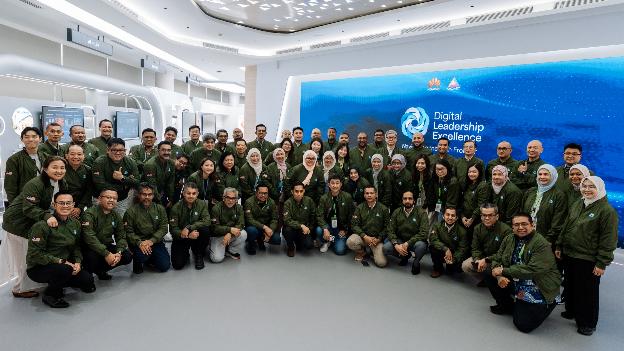
The Malaysian Communications and Multimedia Commission (MCMC) and Huawei Technologies (Malaysia) Sdn Bhd marked the conclusion of the fourth cohort of their joint Digital Leadership Excellence (DLE) Programme on 29 July 2026. 66 senior leaders from across government, industry and academia finished a six-day industrial immersion in China, taking the programme’s total cohort count to 242 leaders since its 2024 launch.

The cohort structure has scaled deliberately since the inaugural run. The first cohort produced 50 graduates in 2024, followed by 60 in the second and 66 in the third. With the fourth cohort closing at the same number, the fifth and final cohort — which commences in July 2026 — needs to take at least 58 more leaders to hit the programme’s stated target of training 300 senior leaders by year-end. That target was set when the programme was first announced in response to Prime Minister Dato’ Seri Anwar Ibrahim’s call for stronger digital leadership at the 2023 Malaysia ICT Summit hosted by Huawei.
Why Cross-Sector Matters
What makes the DLE programme structure distinctive is its cross-sector composition. Rather than running a tech-industry leadership track in parallel with a government track, MCMC and Huawei deliberately mixed policymakers, regulators, enforcement agencies, academics and industry leaders into a single cohort. The reasoning is straightforward: Malaysia’s hardest digital problems — from cross-agency data sharing to AI governance to crisis-resilient infrastructure — do not respect sector boundaries, so the training cohort shouldn’t either.
Royal Malaysia Police’s Head of Digital Forensic, ACP Muhammad Zulkifly bin Mohd Isa, captured the experience in a quote that highlighted exactly that point. He described the programme as an “eye-opening journey” where exposure to Huawei’s ecosystem and China’s deployment scale “inspired me to think beyond boundaries, strengthen my leadership mindset and contribute meaningfully to Malaysia’s digital future.” From the private-sector side, MEASAT Satellite Systems Chief Commercial Officer Ganendra Selvaraj noted the cohort’s selectivity — only 0.001% of Malaysians are chosen — and emphasised the value of “the knowledge exchanged between participants of diverse backgrounds and Huawei’s openness to share their digital journey.”
The Curriculum: AI, 5G, IoT and an Industrial Immersion
The fourth cohort’s blended-learning curriculum ran for four months and combined instructor-led modules, peer learning and applied project work across three technical pillars: artificial intelligence, 5G connectivity and the internet of things. The capstone was the industrial immersion in China, where participants visited research facilities and large-scale digital deployments to observe how advanced infrastructure is designed, governed and applied at national scale.
The capstone projects were explicitly aligned with national priorities under the Thirteenth Malaysia Plan (13MP). The cohort produced concepts covering AI-driven disaster resilience, a unified public complaints platform, food intelligence and security, traffic data services, healthcare delivery and crisis-resilient infrastructure for micro-entrepreneurs. That last category is particularly significant: it positions the programme’s outputs in the same orbit as the government’s broader push to digitise the B40 and micro-enterprise economy.
What Huawei Malaysia Brings to the Table
For Huawei Malaysia, the DLE programme is the most visible piece of its long-running soft-power investment in Malaysia. The Shenzhen-based parent has spent three decades building ICT infrastructure globally and operates in more than 170 countries, but its Malaysia presence has historically been more transactional — selling gear to telcos and enterprises. The DLE programme, alongside other initiatives such as the Huawei ASEAN Academy and the Seeds for the Future scholarship, is part of a clear strategy to build long-term institutional relationships rather than just customer pipelines.
Huawei Malaysia Executive Vice President of Public Affairs and Communications Eric Du framed the fourth cohort’s completion in those terms. “The DLE programme equips Malaysian leaders to turn digital potential into real outcomes for their institutions,” he said, adding that Huawei is “proud to see the fourth cohort return with fresh perspectives and practical insights that will strengthen their organisations.” The phrasing — “real outcomes,” “strengthen their organisations,” “lasting national value” — is the language of long-horizon partnership rather than short-term sales.
Our Take
The DLE programme is a quietly useful piece of Malaysian digital policy infrastructure. It does not produce flashy prototypes or headline-grabbing AI demos; it produces 300 senior public-sector and industry leaders who, over the next decade, will sit on procurement boards, regulatory working groups and digital transformation committees. That is a much more durable form of capacity-building than any single technology rollout.
The honest caveat is the usual one for Huawei-led training programmes: the curriculum is necessarily shaped by Huawei’s own infrastructure stack, ecosystem and reference deployments. Participants get exposure to AI, 5G and IoT as Huawei builds them, not as a neutral third party might frame them. For Malaysian leaders, the value is real but it should be balanced against the implicit vendor perspective baked into the syllabus. The right read is: take the operational patterns and cross-sector collaboration model, but treat the specific technology recommendations with the same scrutiny you’d apply to any vendor’s reference architecture.
The bigger story is the cross-sector design. Most national digital training programmes in Malaysia split cleanly between government cohorts and industry cohorts, which means the people who actually need to collaborate on shared digital infrastructure rarely end up in the same room. The DLE programme’s deliberate mixing is the right answer to that problem, and it’s the part of the model worth replicating regardless of who the technology partner is.