

i2Cool Brings UNESCO-Endorsed Electricity-Free Cooling to Malaysian Pilot Pipeline

TLDR
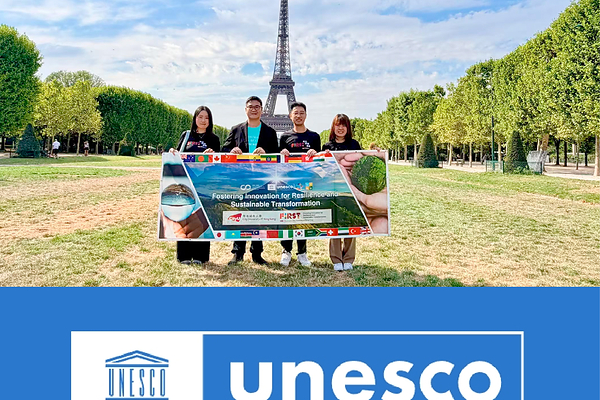
- Hong Kong climate-tech firm i2Cool showcased its electricity-free cooling technology at UNESCO’s Global Conference in Paris on 15–17 July 2026.
- The work sits under CityUHK’s FIRST Programme, endorsed by UNESCO for the International Decade of Sciences for Sustainable Development (2024–2033).
- Passive radiative cooling coatings and films cut surface temperatures without compressors, refrigerants, or any electricity draw.
- A pilot at Beima Primary School in Shandong showed a 20.1°C maximum temperature gap between coated and uncoated roof areas.
- Malaysia is already part of the pilot map — i2Cool’s i2Film was applied at Dorsett Putrajaya earlier this year, with FIRST school projects planned locally.
i2Cool Brings Zero-Electricity Cooling to UNESCO’s Climate Stage
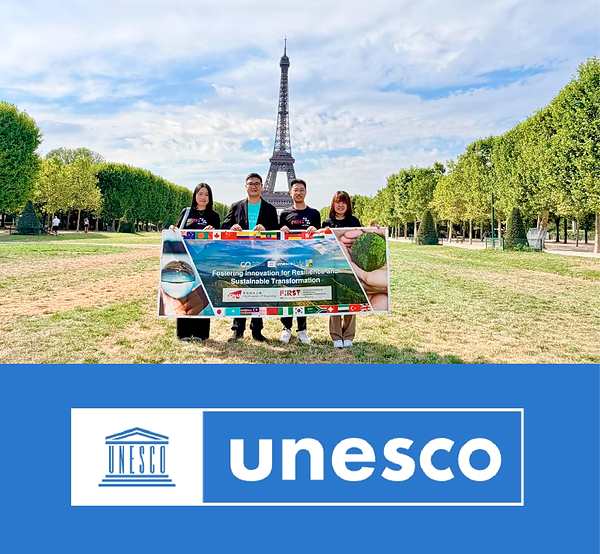
Hong Kong-based climate-tech company i2Cool used the opening ceremony of UNESCO’s 2026 Global Conference in Paris to put a deceptively simple idea on the international stage: buildings can stay cooler without air-conditioning, without refrigerants, and without drawing a single watt of electricity. The technology, passive radiative cooling, was developed by researchers at City University of Hong Kong’s School of Energy and Environment and has been commercialised as coatings, window films, membranes, textiles and ceramics.

Co-founders Ir Prof. Edwin Chi-Yan Tso and Prof. Martin Y.H. Zhu attended the Paris conference under the Fostering Innovation for Resilience and Sustainable Transformation Programme, branded FIRST. Led by CityUHK, FIRST has been endorsed by UNESCO as an official initiative under the International Decade of Sciences for Sustainable Development (2024–2033), aligning work with several UN Sustainable Development Goals including clean water, affordable energy, sustainable cities and climate action.
How Zero-Electricity Cooling Actually Works
The physics is unglamorous but powerful. i2Cool’s materials reflect a high proportion of incoming sunlight while emitting absorbed heat through the mid-infrared atmospheric window — essentially radiating warmth straight into the cold sky. There is no compressor, no refrigerant cycle, no power cable. The result is a measurable drop in surface and indoor temperatures that happens passively, day and night.
That makes the technology relevant for schools, community halls and public buildings where reliable electricity is patchy or air-conditioning is unaffordable. FIRST has assembled a network of more than 45 partner organisations across 25 countries, with pilot activities conducted or planned in Hong Kong, mainland China, Vietnam and Malaysia.
What the Malaysia Connection Looks Like
Malaysia already has a real-world deployment under its belt. Earlier this year, i2Cool’s electricity-free cooling window film, branded i2Film, was applied at Dorsett Putrajaya, demonstrating the technology is compatible with Malaysian tropical conditions and commercial hospitality use. That rollout gave the company a working case study ahead of planned school-level projects that FIRST is now bringing online in Malaysia.
The Paris conference showcased i2Cool’s Chong Gene Hang College project in Hong Kong — a campus climate-action rollout that paired physical installation of i2Film on windows with STEM and ESG-focused climate workshops for students. The model is explicitly designed to be replicated, and i2Cool has flagged Malaysian schools as part of the next wave of FIRST deployments.
Real Numbers from a Real Roof
The strongest evidence so far comes from Beima Primary School in Longkou, Shandong Province, where i2Cool partnered with Towngas volunteers to coat approximately 960 square metres of the school roof. On-site testing recorded a maximum temperature difference of 20.1°C between coated and uncoated sections of the same roof. For a school in a hot-summer region, that is the difference between a classroom that needs constant mechanical cooling and one that simply stays liveable on a passive surface.
The FIRST Programme and its applications are also featured in UNESCO’s 2026 global report, Science at a Turning Point: International Decade of Sciences for Sustainable Development.
Our Take
This is one of those rare CSR stories that survives the usual corporate-skeptic gut check. Passive radiative cooling is a real, peer-reviewed technology with measurable thermal gains, and i2Cool has third-party deployment data to show it. The UNESCO endorsement is procedural rather than promotional — it recognises FIRST as an initiative aligned with the International Decade framework, not as a product endorsement. So far, so substantive.
The honest caveat is scale. A 20.1°C roof delta on a single school in Shandong is compelling, but Malaysia-wide adoption would still need local distribution, installer training and buy-in from state education authorities. The technology reduces cooling load and improves thermal comfort, but peak-heat indoor spaces will still need backup cooling on the worst days. For Malaysian policymakers looking for low-cost ways to make rural and B40 schools more thermally comfortable, this is exactly the kind of technology worth piloting. Whether i2Cool can move from demonstration projects to programme-level rollout will be the real test over the next 12 to 24 months.



[…] 📖 Baca versi English: i2Cool Brings UNESCO-Endorsed Electricity-Free Cooling to Malaysian Pilot Pipeline […]