
AGIBOT Debuts A3 Ultra Humanoid and G2 Max Industrial Robot at WAIC 2026

TLDR
- AGIBOT launched four new robots at WAIC 2026 in Shanghai, expanding its industrial embodied AI line-up
- Flagship A3 Ultra is a 1.74 m, 51-DoF humanoid powered by NVIDIA Thor, with up to 8 hours of runtime
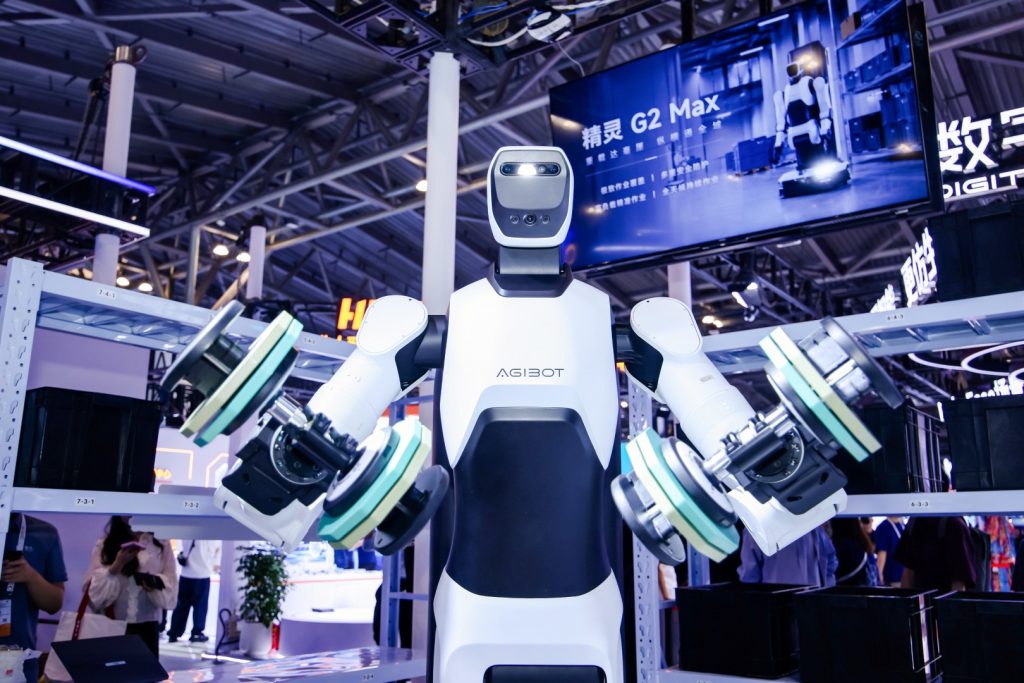
- G2 Max is a force-controlled mobile robot built for palletising, material handling and repetitive factory work
- OmniHand 3 Ultra-M is a 20-DoF dexterous hand with integrated tactile sensing for teleop and embodied AI training
- G2 robots already integrated at Longcheer for tablet QC — around 3,000 units per shift after a 36-hour install
AGIBOT used the World Artificial Intelligence Conference (WAIC) 2026 stage in Shanghai to put four new robotics platforms on the map at once, and the message from co-founder and CTO Peng Zhihui was blunt: “the industry should no longer judge embodied AI by whether a robot can complete an impressive demonstration once, but by whether it can be manufactured, delivered and integrated reliably into real operating environments.”

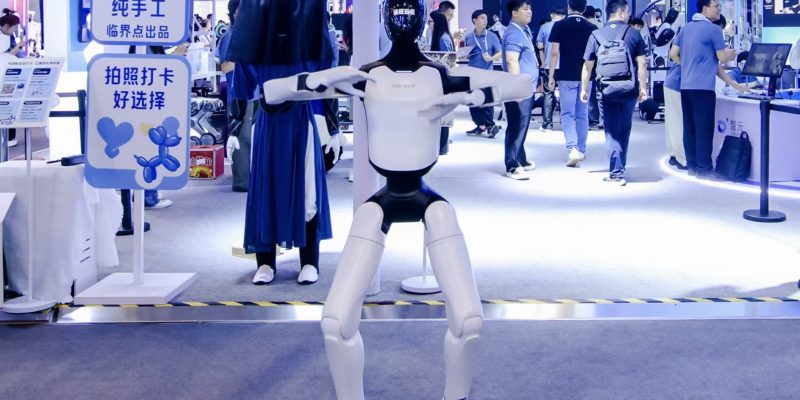
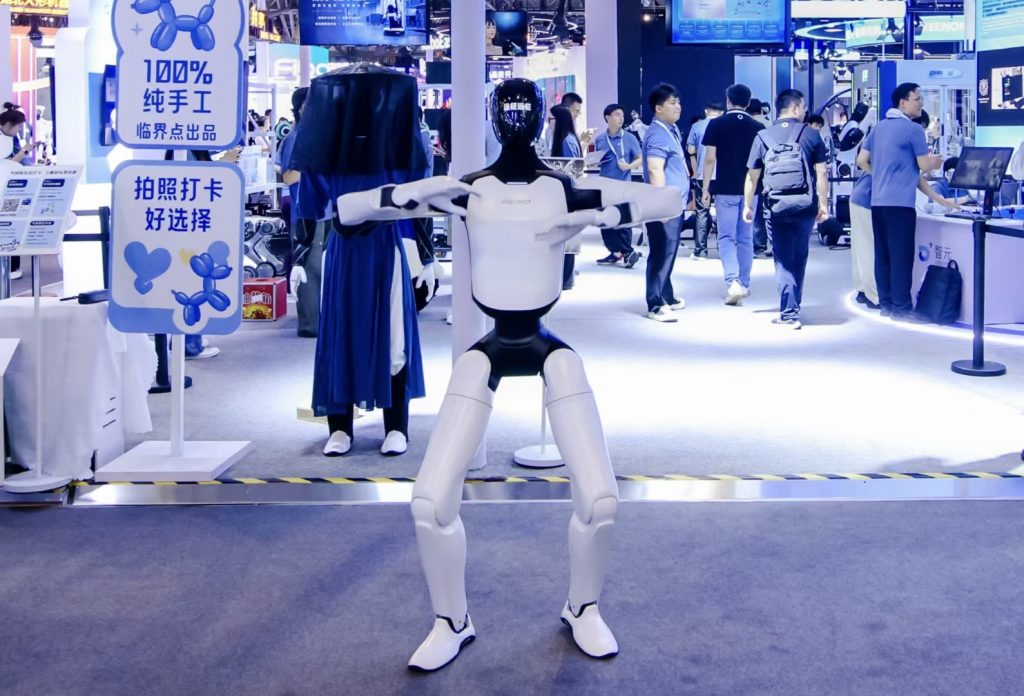
The flagship of the launch is the A3 Ultra, a full-size humanoid robot standing 1.74 m tall and weighing 60 kg. It packs 51 degrees of freedom, supports a per-arm payload of up to 5 kg, and runs for up to eight hours per charge on NVIDIA’s Thor compute platform. Battery swapping, direct charging and autonomous charging are all supported, which is the kind of operational detail that actually matters when a humanoid has to live on a factory floor rather than pose for press photos.
G2 Max and OmniHand 3 Ultra-M Tackle the Factory Floor
For manufacturing buyers, the more interesting product is probably the G2 Max, a force-controlled mobile robot designed for material handling, palletising and the kind of repetitive tasks that eat shop-floor labour hours. It combines omnidirectional mobility with heavy-payload handling and is intended to drop into existing production lines without major retooling.
Rounding out the line-up is the OmniHand 3 Ultra-M, a direct-drive dexterous hand with 20 active degrees of freedom and integrated tactile sensing and force control. AGIBOT is positioning it for manipulation, teleoperation and embodied AI training — basically the manipulation subsystem that the humanoids and mobile robots will lean on as they move into commercial workloads. AGIBOT also launched the X2 EDU, a modular humanoid platform aimed at universities and research institutes that want to swap sensors, hardware and computing modules.
Real Factory Deployments, Not Just Stage Demos
AGIBOT is one of the few humanoid players showing actual production deployments alongside new hardware. At Longcheer Technology’s manufacturing facility, AGIBOT’s G2 robots have been integrated into a tablet quality inspection line that processes around 3,000 units per shift — installed in just 36 hours. A separate partnership with PIA Automation adds more European factory muscle to the mix.
More than 30 robots are also live across the WAIC exhibition venues, handling visitor guidance, information services and live demos outside the booth. AGIBOT says the new products and deployments reflect its strategy of moving embodied AI beyond laboratory demonstrations into repeatable commercial and industrial workflows.
Our Take
AGIBOT is one of the companies to watch as Asia’s humanoid race moves out of the demo era and into the procurement era. The combination of an NVIDIA-Thor-powered humanoid, a factory-ready mobile platform, and a dexterous hand under one roof is unusual — most competitors only have one or two of those layers solved, and AGIBOT now has all three in production hardware.
For Malaysia, the read-across is straightforward. Penang’s semiconductor back-end cluster, Kulim’s advanced packaging lines, and the wider electrical and electronics base have been automating in fits and starts for years. Industrial humanoids are not going to staff Malaysian lines tomorrow, but the fact that a Chinese player can drop a G2-class mobile robot into a working QC line in 36 hours is the kind of benchmark local system integrators should be pricing into their Industry 4.0 roadmaps. Malaysian E&E players that move early on piloting these platforms could shave real cost out of back-end inspection and material handling over the next 18 months.
If AGIBOT can keep the deployments coming, the WAIC 2026 launch will be remembered less as a product announcement and more as the moment embodied AI stopped being a curiosity on the factory floor.