
ASUS Advances AI Factories With Simulation and Continuous Governance

TLDR
- ASUS is positioning its latest platform as a complete operating layer for building, deploying and governing AI factories
- NVIDIA DSX-based digital twins let teams simulate compute, power, cooling and facility constraints before installation
- The AI POD built on Vera Rubin NVL72 targets 10× the performance per watt of the prior generation
- New systems cover enterprise training, agentic reasoning, edge inference, industrial automation and AI-native storage
- No Malaysian price or launch date was announced; availability is being handled through local ASUS representatives
ASUS moves beyond standalone AI servers
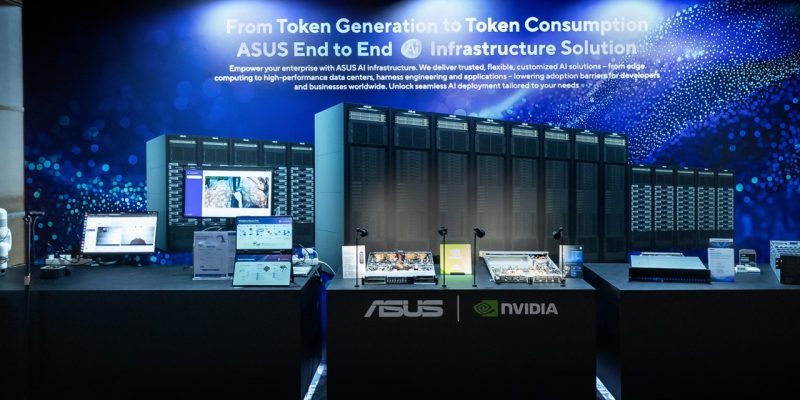
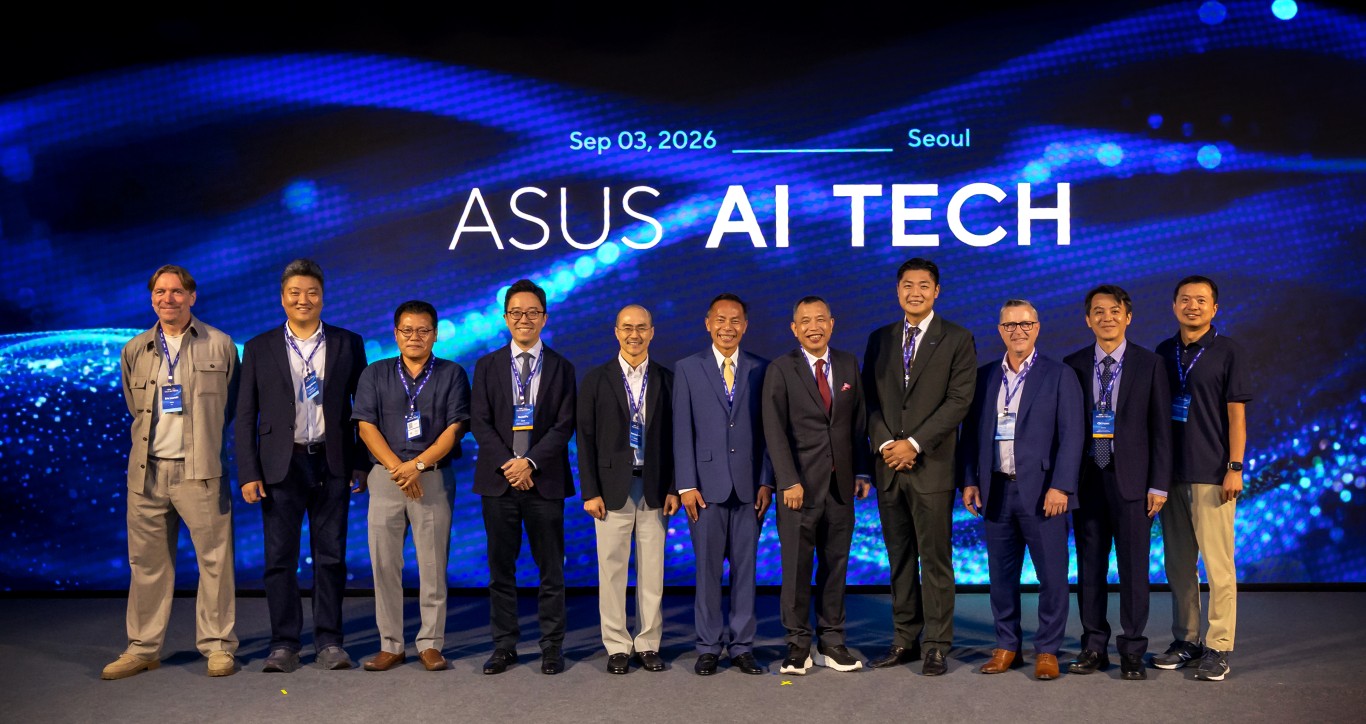
ASUS has introduced a unified AI infrastructure platform spanning facility design, accelerated computing, deployment and day-to-day governance. Announced at ASUS AI Tech 2026 in Seoul, it combines systems engineering, networking, storage and operational controls in a continuous AI factory lifecycle intended to turn GPU investments into reliable AI services with less deployment risk.
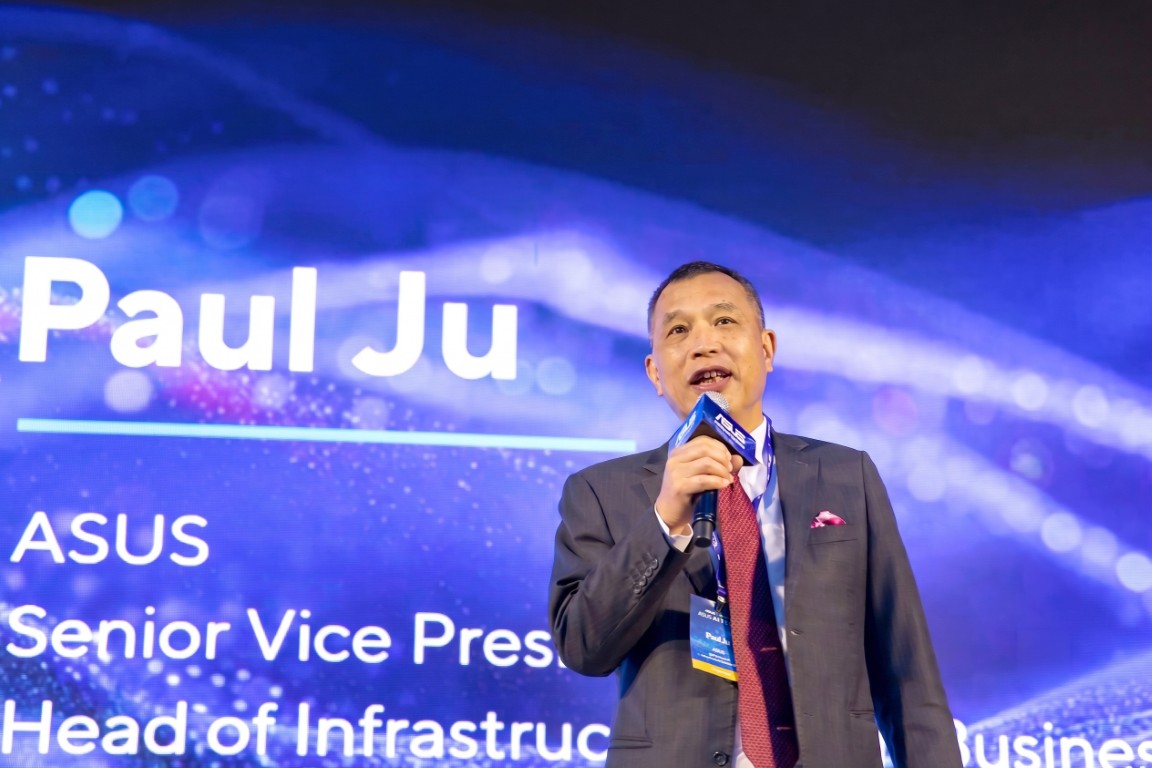
Paul Ju, ASUS Senior Vice President and Head of its Infrastructure Solution Business Group, says the company is bringing compute, connectivity, power, cooling and automation together under its “All in on AI” strategy. Dependable production now requires coordinated facilities and controls for the models, data and autonomous agents—not accelerators alone.
Simulation comes before deployment
ASUS is using the NVIDIA DSX Sim Blueprint to model entire AI factories before physical installation. With partners including Schneider Electric, AVEVA and IBM, its digital-twin environment tests compute, networking, storage, power and cooling as one system. Operators can identify thermal, electrical and configuration constraints earlier, before changes become costly on site.
Governance continues after the first token. ASUS Control Center and ASUS Infrastructure Deployment Center are being expanded through the AI Software Stack and Turnkey AI Applications, including Quota & Billing and an MLOps Portal. The tools manage resources and connect enterprise governance with AI services and autonomous agents.
A portfolio built for every AI layer
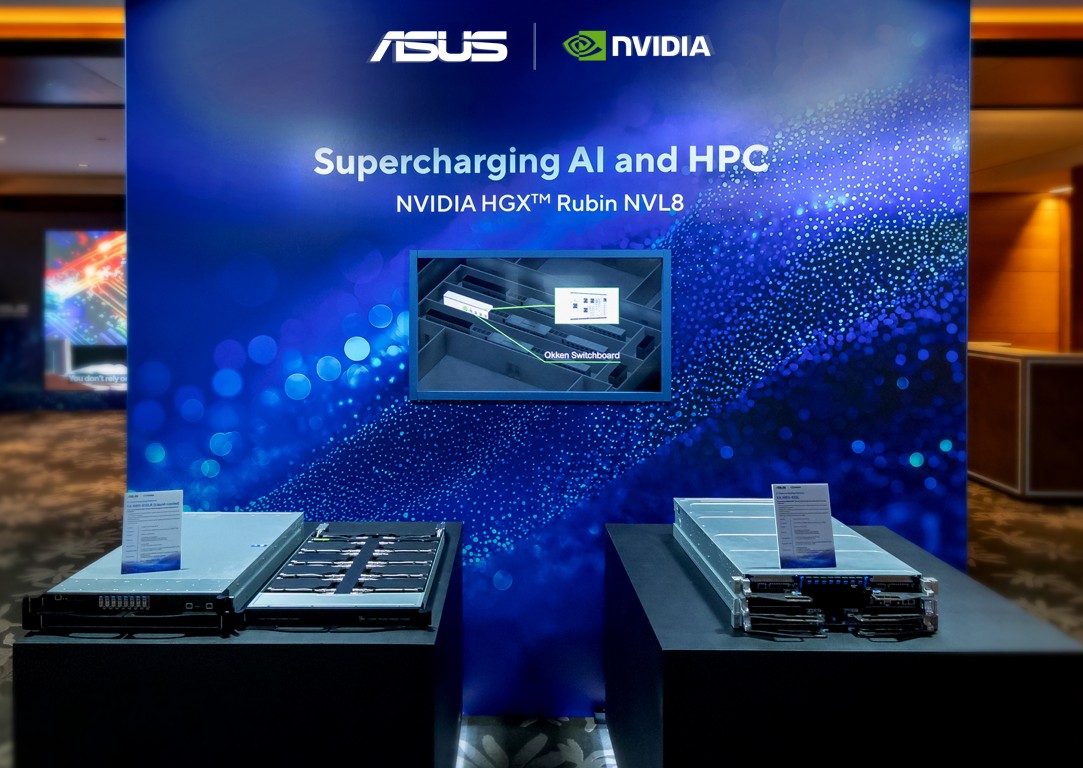
At the top end, the ASUS AI POD XA VR721-E3 uses NVIDIA Vera Rubin NVL72 in a fully liquid-cooled rack design. ASUS says it delivers 10× the inference performance per watt of the previous generation and cuts token cost by a similar margin. The XA NR1I-E12LR and XA NR1I-E12L, based on NVIDIA HGX Rubin NVL8, target dense training, inference and post-training workloads.
The rest of the stack includes the 2U XA P2N-E2 for agentic reasoning, with dual NVIDIA Vera CPUs and up to two dual-slot GPUs. The ESC8000-E12P adds RTX PRO 6000 or RTX PRO 4500 Blackwell Server Edition acceleration for visual and edge workloads, while the PE3000N uses NVIDIA Jetson Thor T5000 for real-time inference and autonomous control. The UF920-E3-RS24, OJ340A-RS60 and VS320D-RS26N supply the storage layer.
From infrastructure to production outcomes
ASUS also demonstrated the platform in use. Foxlink showed autonomous robotics for industrial automation, while Aleria focused on Sovereign AI deployments where localised data control and secure operations are priorities. ASUS says its hardware-software integration and Kubernetes environments can move projects from pilots to production services faster.
The systems are described as available worldwide, subject to local requirements, but ASUS has not announced Malaysian pricing or a launch timeline. Malaysian operators must contact local representatives for configuration and commercial terms. Total deployment cost—not headline GPU performance—will be the figure enterprises should scrutinise.
Our Take
The important shift is not another server launch. ASUS is targeting the space between the GPU cluster and the business application, using simulation, MLOps and governance to make an AI factory easier to design and operate. The proposition needs measurable gains in uptime, resource allocation and time to service.
The strategy extends ASUS beyond its earlier deskside systems, including the ExpertCenter Pro ET900N G3 deskside AI supercomputer. For Asian data-centre and industrial-AI projects, localised control and pre-construction power and cooling simulation could be as valuable as compute density. The test is whether customers can deploy this ecosystem repeatably without excessive integration work.