
BEST Express Kepong Hits 90% Parcel Completion as Malaysia’s Station Network Scales

TLDR
- BEST Express Kepong posts a 90% parcel completion rate on high daily volumes
- Station owner Yew has led the branch since 2020, after a stint in Malaysia’s car spare parts trade
- Branch took Regional Best Outbound in 2022 and National Outbound Improvement in 2023
- SME and e-commerce customers drive the bulk of demand at the Kepong hub
BEST Express Kepong: A Regional Outbound Leader
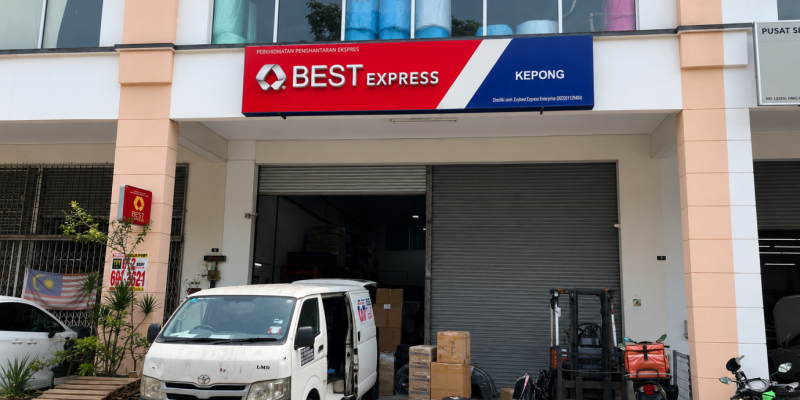
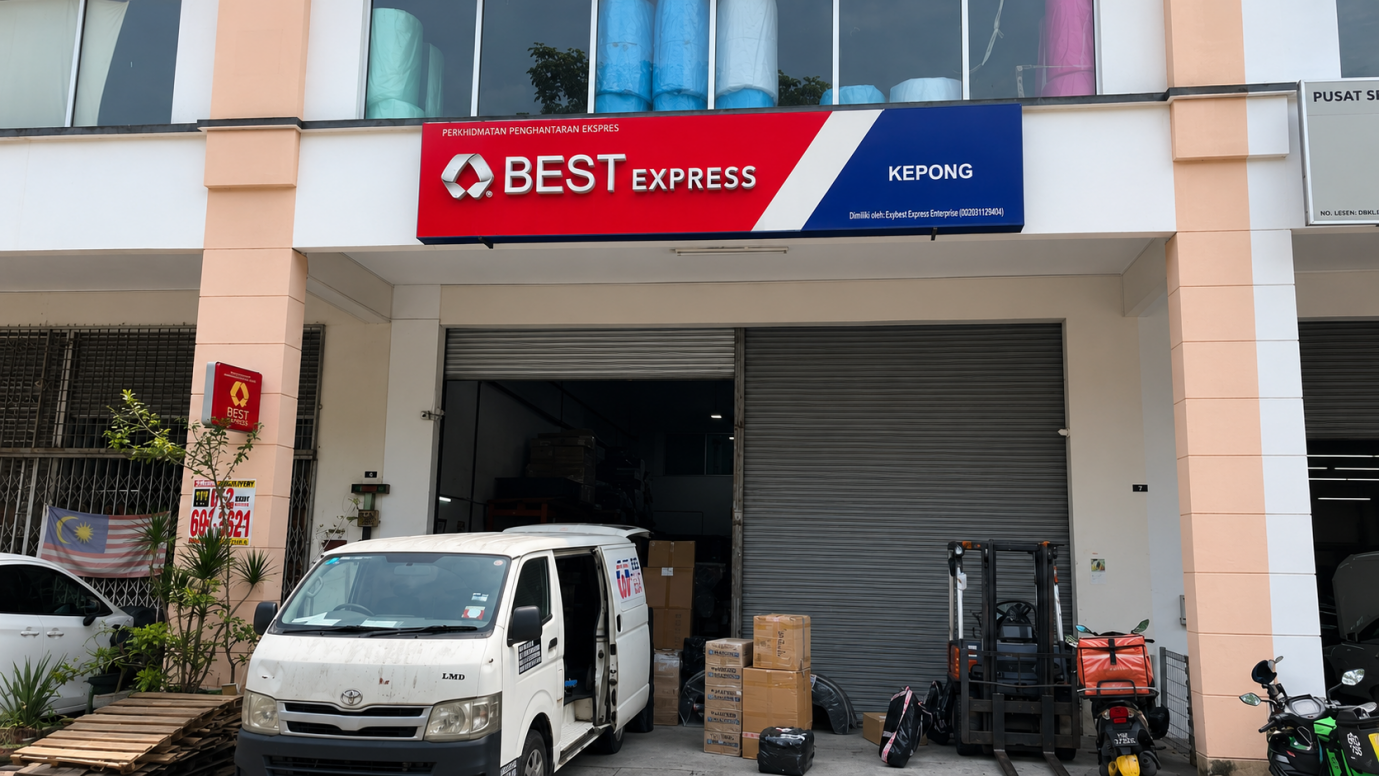
BEST Express Malaysia continues to strengthen its nationwide logistics footprint through the growth of its local station partners, and few branches embody that push better than BEST Express Kepong. Located in one of Kuala Lumpur’s busiest commercial districts, the station has quietly turned into a regional benchmark for outbound performance, supporting the wave of small and medium-sized businesses that now ship parcels daily across the Klang Valley and beyond.

The branch is led by station owner Yew, who joined BEST Express Malaysia in 2020 after years of handling high shipment volumes in Malaysia’s car spare parts industry. That background gave him a sharp eye for operational bottlenecks — and an early read on the rising demand from local businesses for faster, more reliable last-mile services.
Since taking over Kepong, Yew has steered the branch through two standout milestones: Regional Best Outbound performance in 2022 and National Outbound Improvement recognition in 2023 — awards that have cemented the station’s reputation inside the wider BEST Express network.
Built for High Volume: 90% Parcel Completion, No Excuses
Operational consistency is where BEST Express Kepong has built its reputation. The branch currently sustains a parcel completion rate of around 90%, even as it processes a high daily volume of shipments coming from SMEs and online sellers. In Malaysia’s last-mile game, where completion rates often dip when volume spikes, that figure stands out.
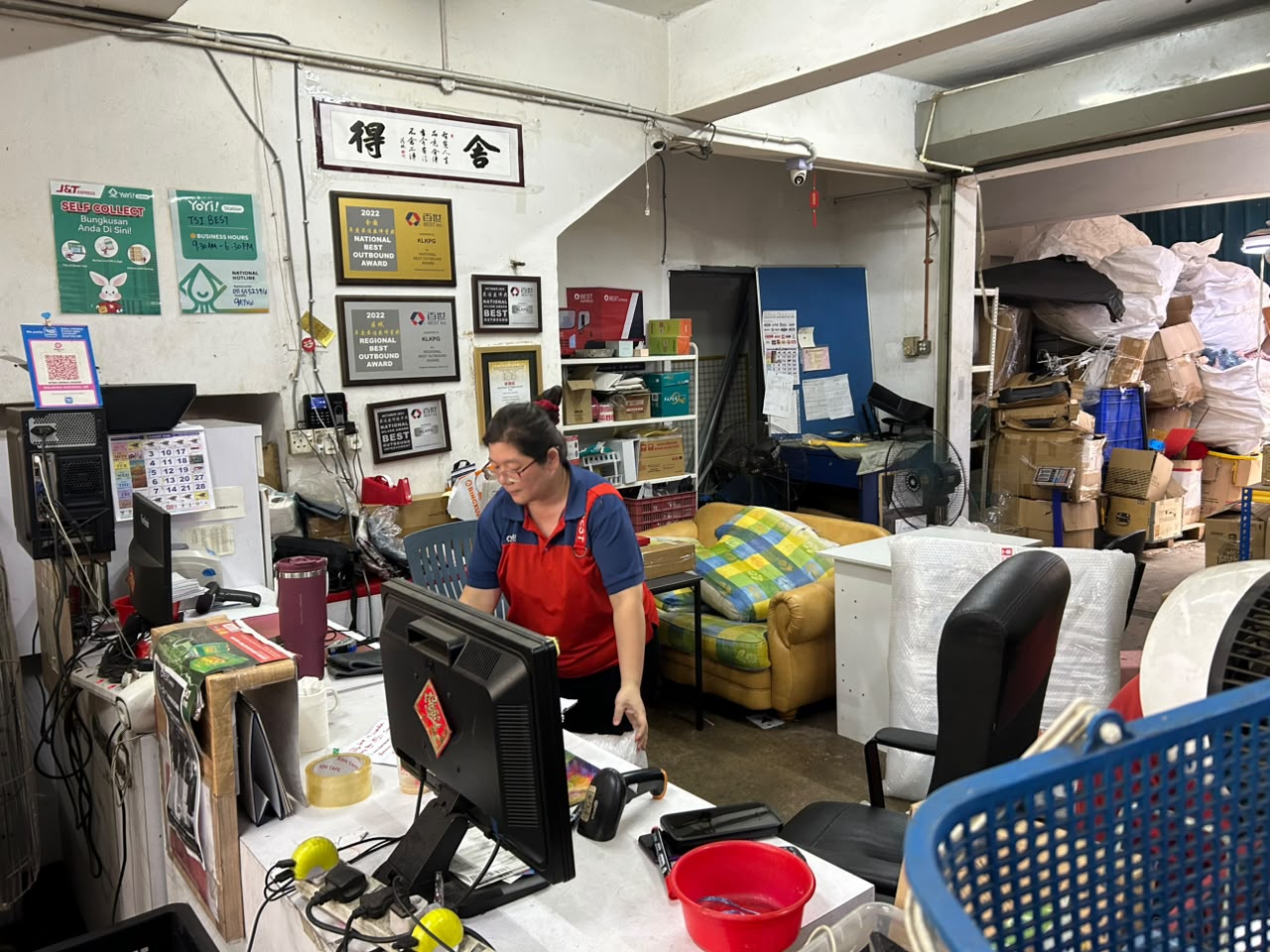
The image below shows the Kepong branch’s interior, where staff sort and process customer deliveries day in, day out. The disciplined sorting workflow and regular customer communication are core to keeping the completion rate steady — and to keeping SME clients loyal when peak-season surges hit.
Empowering Local SMEs Through Practical Logistics
For Yew, the branch’s performance comes back to one thing: customer relationships. “Many SMEs need a logistics partner they can depend on as their business grows. Our focus is to understand their needs and provide reliable and practical solutions,” he said, summarising the philosophy that has earned the branch repeat business across Kepong’s dense SME corridor.
Beyond the quote, BEST Express Malaysia backs that approach with strategic pricing, efficient delivery services and flexible logistics solutions — a combination aimed at helping small businesses manage logistics costs while they scale. Regular check-ins with customers and fast turnaround on shipment concerns are part of the standard operating rhythm.
That focus is increasingly important. As e-commerce volumes grow and cargo demand diversifies, Malaysian SMEs are no longer content with one-size-fits-all delivery partners. They want predictable pickup windows, transparent pricing and the ability to flex capacity up or down — all of which BEST Express says its station-led model is built to deliver.
BEST Inc.’s Bigger Play in Malaysia
The Kepong story is a microcosm of BEST Express Malaysia’s wider ambitions. The company is actively expanding its station network nationwide, with the long-term goal of becoming Malaysia’s No. 1 cargo service provider. Branch performance data — completion rates, outbound volume, customer retention — feeds directly into that growth playbook.
Parent company BEST Inc. (NYSE: BEST) is one of Asia’s larger integrated smart supply chain and logistics services providers, with operations in China and the wider Southeast Asia region. The Malaysia business is a key growth lane in its regional expansion, and stations like Kepong are the on-the-ground proof points for that strategy.
As parcel volumes continue to climb — driven by Shopee, Lazada, TikTok Shop and a growing direct-to-consumer wave from local brands — BEST Express Malaysia is betting that the station-partner model can scale faster and more nimbly than a centralised hub-and-spoke approach run entirely from corporate.
Our Take
The BEST Express Kepong story is worth attention because it is, fundamentally, a story about execution discipline rather than headline tech. There is no flashy AI or autonomous fleet here — just a station owner with operational experience, a clear SME focus, and a corporate parent willing to let local partners run their own playbook. In a Malaysian last-mile market crowded with Pos, GDEX, J&T, Flash, SkyNet and a dozen smaller players, that kind of station-level consistency is harder to fake than it looks.
For Malaysian SMEs shipping 50 to 500 parcels a day, the choice of courier now carries real margin consequences — failed deliveries mean re-shipping costs, late deliveries mean platform penalties, and inconsistent pickup windows mean warehouse headaches. The stations that win the next phase of competition will be the ones that solve those pain points reliably, and BEST Express Kepong is a strong example of what that looks like in practice.
The bigger question is whether BEST Express Malaysia can replicate the Kepong formula at scale. A handful of standout stations is one thing; turning the entire network into a regional-best-outbound-grade operation is another. If the company can keep its 90%-completion benchmark consistent across more branches, the “No. 1 cargo service provider” ambition stops sounding like marketing and starts looking inevitable.