
Microsoft’s 40GW Renewable Bet: Why the AI Era Sustainability Push Matters for Malaysia’s Cloud

TLDR
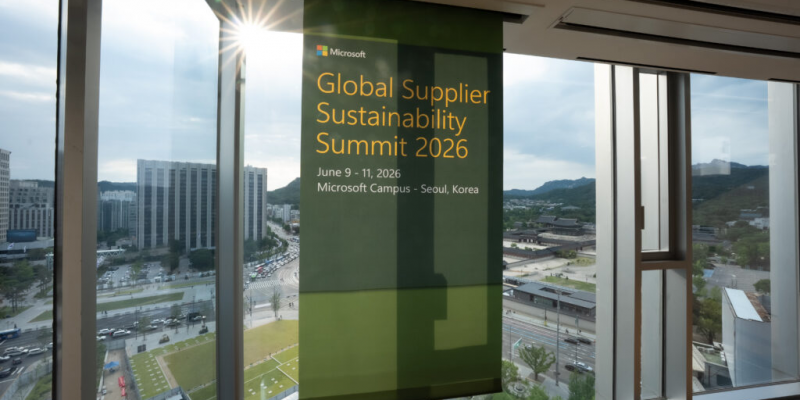
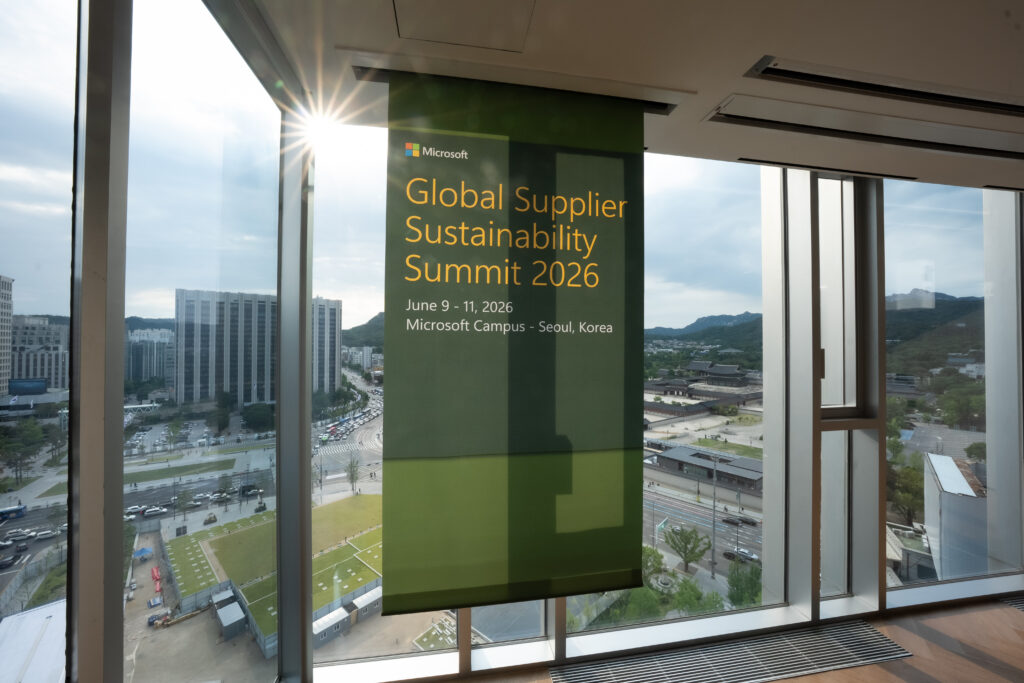
- Microsoft hosted its second Global Sustainability Supplier Summit in Seoul, gathering 100+ attendees from dozens of suppliers, financiers and NGOs
- The company has matched 100% of annual electricity with renewables and contracted up to 40 gigawatts of new clean energy globally
- Circular Centers, Microsoft’s hardware reuse programme, ran at a 92% reuse and recycling rate in its last reporting cycle
- About 70% of Microsoft’s emissions live in Scope 3, with Samsung, TSMC and SK hynix all in the supplier loop
- Asia-Pacific sustainability policy is led from Singapore, and Malaysia’s cloud region makes MY part of the same energy-demand story
Microsoft now runs more than 500 datacentre campuses across 80 regions, and the build-out is accelerating as Copilot, OpenAI workloads and Azure AI services push global capacity upward. Chief Sustainability Officer Melanie Nakagawa opened Seoul with the line that “our sustainability ambitions remain unchanged, but the system in which we operate has changed” — a tacit acknowledgement that the AI demand curve is reshaping what “carbon neutral by 2030” actually requires.
Microsoft can buy enough renewable certificates to match its own electricity, but the real bottleneck is whether regional grids can deliver carbon-free power at the scale AI demands. That is why Seoul is framed as a “policy to power” conversation rather than another procurement announcement.
Four Lessons From the Summit
Authored by Leo Aspauza, Senior Director of Cloud Supply Chain Sustainability, the recap distils the sessions into four pillars. Collaboration is a competitive advantage — Microsoft is leaning into industry bodies such as SEMI’s Global Energy and Sustainability Executive Council, where it leads the carbon-free electricity pillar. Carbon-free power has become a precondition for AI expansion.
Third, the company wants Scope 3 visibility tools and lifecycle assessment frameworks to mature into standard supplier deliverables. Fourth, programmes that strengthen supply security are more likely to scale, with Microsoft’s Gartner 2026 Social Impact of the Year Rare Earth Element Programme cited as proof.
The Scope 3 Elephant
According to Microsoft’s 2026 Environmental Sustainability Report, roughly 70% of its emissions come from purchased goods and capital goods. That single number reframes everything. The 100% renewable match is real procurement, but it sits inside Scope 1 and 2 — the emissions Microsoft can directly control. Scope 3 requires Samsung, TSMC, SK hynix and dozens of other suppliers to move in lockstep, and that requires shared measurement and shared timelines.
Whether Seoul translates into actual supplier-level emissions cuts, rather than glossy slideware, is the question Microsoft will be judged on by 2030.
What It Means for Malaysia
Malaysia sits inside this story in two ways. Microsoft’s West Malaysia cloud region, anchored on datacentre capacity in Cyberjaya, contributes to the same 500-campus footprint, and the country’s push for more hyperscale build-out means the next wave of MY energy demand will be increasingly AI-driven. Will Hudson, Microsoft’s Director of Energy and Sustainability Policy for Asia-Pacific, is based in Singapore and leads regional Scope 3 strategy, which makes MY a logical focus for supplier engagement.
Korea’s solar separation-distance reform — a rule that had locked viable sites out of hundreds of municipalities — is the kind of grid-unlock measure Malaysia’s own energy transition keeps circling around, particularly as the country negotiates new renewable capacity to feed its data-centre corridor. Expect pressure on Malaysian regulators to remove friction in the carbon-free market — and on local suppliers to publish credible Scope 3 data.
Our Take
Microsoft’s 40 gigawatts of contracted renewables and 92% Circular Centers rate are genuinely large numbers, not greenwash, but the framing leaves room for scepticism. “100% matched” renewable energy is a procurement claim, not a grid-physics claim, and Scope 3 — where 70% of the footprint lives — is only as honest as the supplier disclosure regime behind it. Seoul looks like a sincere attempt to fix that, and a defensive moat: if Microsoft can pull suppliers toward a common framework, it gets to define what “good” looks like for the rest of the AI industry.
For Malaysia, the practical takeaway is sharper than the press release suggests. The country is now a node in Microsoft’s regional datacentre map, which means Malaysian energy planners and local suppliers will increasingly be measured against the same Scope 3 yardstick Seoul just debated. That is opportunity for those who plan ahead, and a compliance headache for those who do not.