
Huawei Outlines Six Imperatives for Mobile AI Era at MWC Shanghai 2026 – David Wang Pitches Token Monetisation as Carrier Revenue Path Beyond Bytes

TLDR
- David Wang, Huawei’s Deputy Chairman and Rotating Chairman, used his MWC Shanghai 2026 keynote to outline six imperatives for the next decade of mobile communications, anchored on token monetisation rather than pure data throughput
- Huawei launched an AI-centric target network with three layers — basic communications, computing network, and AI computing infrastructure — to help carriers monetise both bytes and tokens
- 5G-A users worldwide have crossed 100 million, and 2026 is the commercial debut year for U6 GHz, with the Middle East expected to deploy the first commercial 5G-A network on U6 GHz
- Huawei is collaborating with global carriers in Guangdong, Shanghai, Hebei and other regions to reengineer B2C and B2H services with AI for token-consuming use cases
From Bytes to Tokens: Huawei’s Bet on AI-Era Carrier Revenue
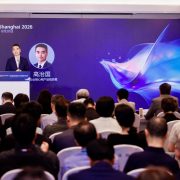
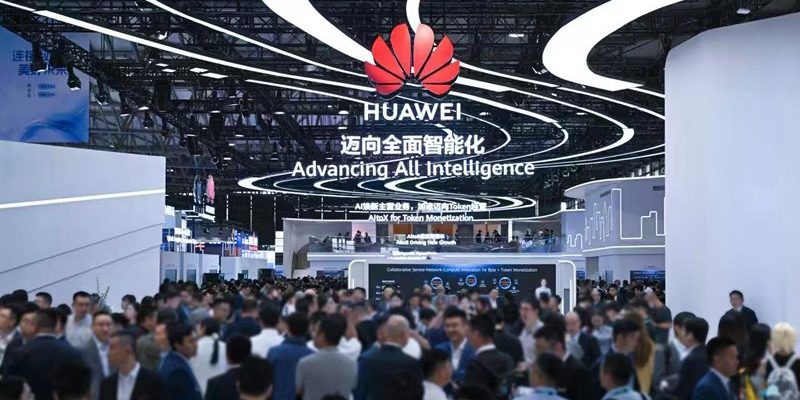
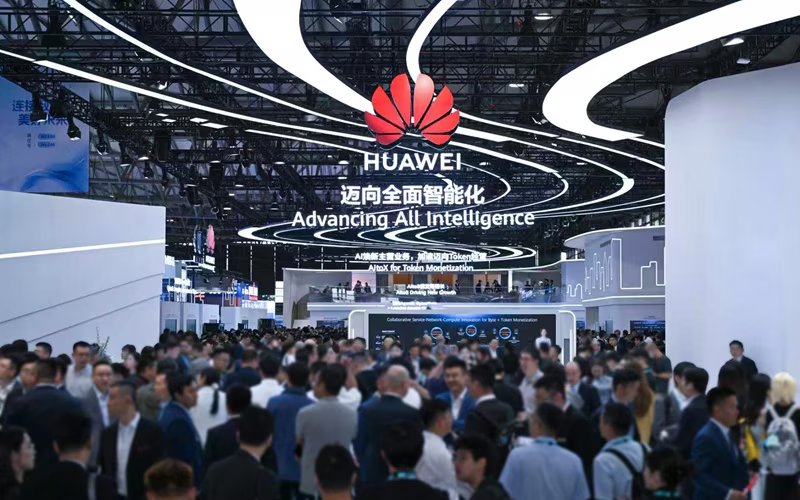
Huawei used MWC Shanghai 2026 to make a strategic pitch for how global telecom operators should evolve beyond traditional data monetisation into a new “token monetisation” model built around AI agents and connected services. David Wang, Huawei’s Deputy Chairman of the Board and Rotating Chairman, delivered a keynote framed around the “Advancing All Intelligence” theme, arguing that as mobile communications enters the age of intelligence, there are six key imperatives that will shape the next decade of industry growth. The argument is that the unit of value for carriers is shifting from bytes delivered to tokens processed, with AI agents becoming the dominant traffic and revenue driver.
Wang’s six imperatives are: developing new services and capabilities for future mobile communications systems, integrating AI with mobile communications to build three distinct layers of intelligence, building network architecture for integrated satellite-ground communications, advocating for sustainable and future-oriented spectrum planning and allocation, clearly defining the specifications of AI-native core networks, and exploring new business models and application scenarios for mobile services. For Malaysian operators evaluating how to position for the AI era, the framework gives a structured way to think about network investment priorities across infrastructure, spectrum, and monetisation layers.
AI-Centric Target Network Spans Communications, Compute, and AI Infrastructure
Huawei’s central product announcement at MWC Shanghai 2026 was the AI-centric target network, which the company pitched as the architectural answer to byte-and-token monetisation. The framework is built across three distinct layers that reflect the shift from connectivity-only to compute-and-AI-as-a-service. The basic communications network emphasises a shift from traffic-centric networking to networking for real-time interaction, offering users guaranteed connectivity with high uplink and downlink plus reliability guarantees. The computing network emphasises a shift from traffic transport to network-wide compute scheduling and supply, with the network designed for computing, where connecting to the network is equivalent to accessing compute. The AI computing infrastructure layer emphasises high performance and efficiency, plus support for open-source and open ecosystems.
Together, the three-layer architecture is the technical manifestation of Huawei’s “service-network-compute integration” thesis. For carriers, the value proposition is the ability to monetise both legacy data services and new agent-driven token services from a single network investment. The 5G-A user base is the proof point — to date, the number of 5G-A users worldwide has exceeded 100 million, and Huawei is working with global carriers to advance 5G-A experience monetisation and make 5G-A an integral part of installed base operations, in a bid to retain mid-range and high-end users, increase average revenue per user (ARPU), and meet user needs for sustainable revenue growth.
High Uplink, U6 GHz Spectrum, and the AI-Native Network Backbone
The high-uplink capability is the most concrete technical requirement for the token monetisation era. AI glasses used for translation and viewing exhibitions through real-time multimodal interaction require 20 Mbps uplink speeds, and similar requirements apply to live streaming, real-time video analysis, and AI assistant interactions. Leading carriers around the world are moving fast to explore commercial high-uplink services through various capabilities to guarantee peak speeds, latency, and universal speeds in the uplink. For Malaysian operators like Maxis, CelcomDigi, and U Mobile, this is the kind of technical roadmap that informs near-term capex decisions on radio access network upgrades.
The spectrum story is also significant. Upper-6 GHz (U6 GHz) is considered the next-generation golden frequency band for networks that need to support high uplink, high reliability, and low latency. More than 20 countries and regions have explicitly designated U6 GHz for International Mobile Telecommunications, covering nearly 80% of the world’s population. 2026 is the commercial debut year for U6 GHz, with the Middle East expected to deploy the world’s first commercial 5G-A network running on U6 GHz, and a few carriers in Hong Kong and Macao of China initiating commercial U6 GHz deployment. For ASEAN operators, the Middle East and Greater China rollouts provide reference deployments to evaluate for the next spectrum auction cycle.
B2C, B2H, and B2B Use Cases for AI-Era Carriers
On the commercial side, Huawei plans to collaborate with carriers in Guangdong, Shanghai, Hebei, and other locations in 2026 to reengineer their B2C and B2H services with AI, creating compelling offerings that drive token consumption in areas like smart home assistants, personal communication assistants, and integrated consumer and home services. For the B2B market, the company plans to work alongside carriers to deliver AI computing services centred on the integration of compute and networks, unlocking new avenues of business growth. The Level-4 autonomous networks roadmap — where Huawei is working with carriers to implement domain-specific intelligence across wireless and transmission networks in key regions — is the operational counterpart, with the resulting synergy expected to enhance both network quality and efficiency while enabling differentiated products for scenarios like high-speed rail, event venues, and campuses.
The strategic implication for the global telecom industry is that the “token economy” is now a real framing in vendor-customer conversations, not just analyst speculation. For Malaysian consumers, the practical question is when their carriers will roll out commercial high-uplink services and 5G-A tariffs that support AI agent use cases beyond standard mobile broadband. For Malaysian enterprises, the B2B AI computing services pitch opens a new path to access GPU compute through carrier relationships, which could meaningfully shift the local cloud and AI services market over the next 24 months.
Our Take
Huawei’s pitch is fundamentally about repositioning the carrier as the AI economy’s connectivity-and-compute orchestrator, not just the dumb pipe that delivers bytes. The framing is smart because it gives operators a credible path to defend ARPU against the secular pressure from over-the-top services, and it aligns with the broader industry shift toward agentic AI workflows that the 5G-A Experience Monetization Forum at MWC Shanghai 2026 covered earlier in the same week. The two announcements are complementary — the forum produced the cross-industry frameworks, while Huawei’s keynote positioned the company as the systems integrator that can deliver them.
The six imperatives are less of a fresh strategy and more of a synthesis of the themes Huawei has been pushing since MWC Barcelona 2026, but the AI-centric target network announcement gives the strategy a concrete architectural anchor. The 100 million 5G-A user milestone is the most useful data point for gauging the speed of adoption, and the 2026 U6 GHz commercial debut in the Middle East and Greater China will be the first real test of whether token monetisation can carry a carrier business case. Our recommendation: Malaysian operators should track the U6 GHz commercial deployments in Hong Kong and Macao closely as the closest regional reference points, and Malaysian enterprises evaluating AI computing capacity should engage early with carriers on the B2B AI computing services roadmap. For broader context, the Huawei Champions 5G-A and AI-Driven Growth at MWC Shanghai 2025 coverage from last year shows the strategic thread, while the AI-Centric Network Solutions unveiled at MWC Barcelona 2026 gives the technical backstory on Huawei’s network architecture evolution.