


Malaysia’s Digital Billions Have Arrived. Now Comes The Infrastructure Test.

TLDR:

- Milestone: Malaysia’s total FDI position crossed RM1 trillion for the first time by end of 2025, at RM1.069 trillion
- Major Commitments: Microsoft (USD 2.2B) and Google (USD 2B) committed to cloud, AI, and data centre infrastructure in Malaysia
- Fastest In Region: Malaysia is the fastest-growing digital economy in Southeast Asia, posting 19% year-on-year growth
- Infrastructure Gap: While 99% internet coverage and 82% 5G populated areas are strong numbers, performance consistency remains a challenge — especially for SMEs
- Satellite Solution: LEO satellite connectivity (Starlink) is emerging as a hybrid infrastructure complement to terrestrial networks, with IEC Telecom establishing Malaysia operations
The Billions Have Landed. The Question Now Is Whether Malaysia Can Handle Them.
By the end of 2025, Malaysia’s total foreign direct investment position crossed RM1 trillion for the first time — a threshold that would have seemed ambitious just five years ago. At RM1.069 trillion, it is a number that reflects sustained international confidence in where the country is headed.

The capital is real and the names are significant. Microsoft committed USD 2.2 billion to cloud and AI infrastructure in Malaysia. Google followed with USD 2 billion for data centres and cloud expansion. These are not speculative bets. They are long-term infrastructure commitments from companies that model risk carefully — and their presence signals that Malaysia is no longer simply an emerging market on the radar, but an active destination for enterprise-grade digital investment.

“Malaysia represents one of the most dynamic digital growth markets in Southeast Asia,” said Antoine Veillon, Group CEO of IEC Telecom, a satellite telecommunications company with more than 30 years of global experience that recently established operations in Malaysia as part of its regional expansion. “The combination of strong investment momentum, supportive government policies, and increasing demand for reliable connectivity creates a compelling environment for long-term infrastructure development.”
Fastest Digital Economy In The Region
For those watching the region closely, none of this comes as a surprise. Malaysia is the fastest-growing digital economy in Southeast Asia, posting 19% year-on-year growth. That pace creates pressure as much as it creates opportunity. Policy direction reinforces the ambition: under the MyDIGITAL Blueprint, Malaysia is targeting leadership in digital services, advanced manufacturing, and technology-driven growth.
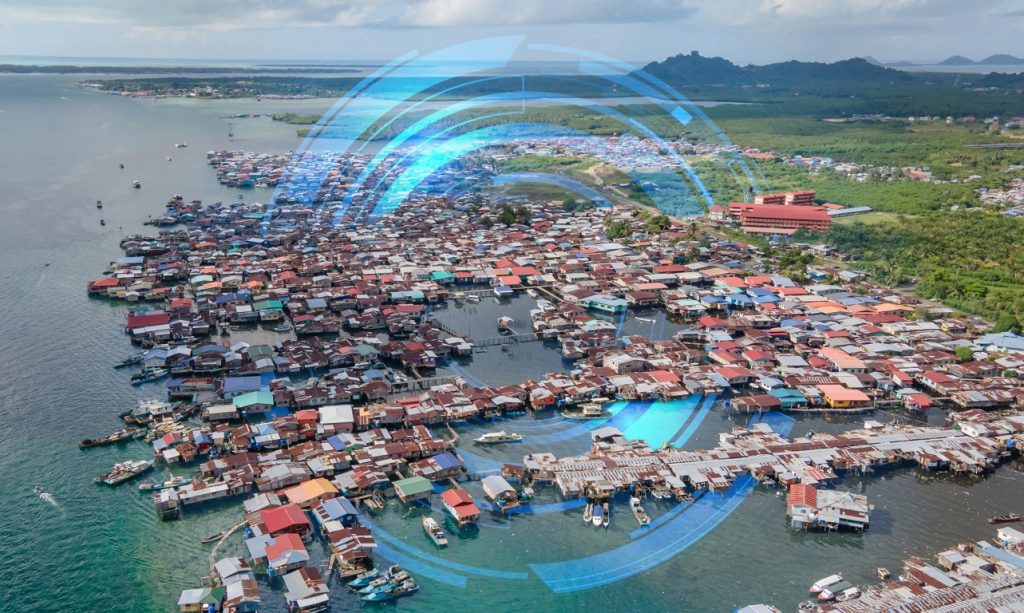
Connectivity has improved substantially. Internet coverage reaches nearly 99% nationwide and 5G has expanded to 82% of populated areas — genuinely strong numbers that compare favourably with regional peers. But the challenge has shifted. Access and coverage, once the primary benchmarks, are no longer sufficient measures of readiness. It is the consistency of performance and quality of network management that are essential to operational success.
When networks slow, productivity declines. When reliability is inconsistent, expansion plans are reconsidered. Infrastructure fragility rarely appears immediately in macro data. It accumulates in higher costs, delayed execution, and reduced competitiveness — and it is felt most acutely by those with the least margin for error.
SMEs: The Most Exposed To Connectivity Risk
Small and medium enterprises sit squarely in that category. MSMEs contributed 39.1% of Malaysia’s GDP and accounted for 48.9% of total employment in 2024. These businesses increasingly run on cloud accounting platforms, integrated logistics systems, digital payments, and cross-border e-commerce. For an SME operating outside Kuala Lumpur or Penang, connectivity reliability can determine whether it scales nationally or remains geographically constrained. The digital economy’s promise is only as strong as the infrastructure that reaches the businesses meant to benefit from it.
The irony is that the SMEs most critical to Malaysia’s economic resilience are the least equipped to absorb connectivity failures. A large enterprise with an IT team can build redundancy into its network architecture. A 20-person logistics company in Kuching running on a single connection cannot.
LEO Satellites: The Missing Piece In Malaysia’s Connectivity Puzzle
Globally, the response to connectivity fragility has been layered infrastructure — reinforcing terrestrial fibre and mobile networks with satellite solutions for resilience and business continuity. What has changed significantly is the economics. GEO-based satellite systems such as VSAT were traditionally reserved for the most critical operations, constrained by lower speeds and high costs. The arrival of Low Earth Orbit (LEO) connectivity — led by services such as Starlink — has fundamentally altered the equation. LEO solutions now offer high-speed, cost-effective backup capable of supporting a wide range of digital operations within sustainable budgets.
In Malaysia, Starlink received regulatory approval from the Malaysian Communications and Multimedia Commission in July 2023, enabling LEO services within national borders and opening the door for enterprise adoption at scale.
It is precisely this convergence — strong FDI momentum, a clear policy framework, and an evolving satellite landscape — that led IEC Telecom to establish a presence in Malaysia. For a company with nearly two decades of operating experience across Asia-Pacific, the move reflects a deliberate read on where enterprise-grade connectivity demand is heading.

“Malaysia has set an ambitious goal for digital transformation. Operational continuity is key to success,” said Hisham Ghaffar, Managing Director of IEC Telecom Malaysia, an authorised Starlink reseller in the country. “As a primary or back-up network, LEO connectivity has proven its efficiency and cemented an integral place in Malaysian telecom infrastructure.”
The emphasis here is on complementarity, not replacement. Hybrid network architectures — combining terrestrial infrastructure such as fibre and cellular with satellite connectivity — are gaining momentum across multiple sectors. For the public sector, this approach helps close coverage gaps, enabling more consistent and equitable access nationwide. For critical infrastructure, it ensures resilience and continuity in times of disruption. In logistics and transportation, it enables seamless coordination across entire supply chains. For SMEs, it provides the flexibility to operate and scale regardless of location.
Our Take
Malaysia has done the hard work of attracting the headlines. Microsoft and Google commitments validate the country’s positioning as a serious digital investment destination. The 99% coverage and 82% 5G numbers are achievements worth acknowledging. But investment announcements are only part of the story, and the deeper question — whether Malaysia’s connectivity infrastructure can support the scale and complexity of what is now being built — is one that deserves more attention than it typically receives.
The SME exposure is the crux of the challenge. 39.1% of GDP and 48.9% of employment sit in businesses that are increasingly digital but not yet sophisticated enough to architect around infrastructure weaknesses. A connectivity outage for a KL fintech firm means an inconvenience. A connectivity outage for a logistics SME in Johor running on a single ISP can mean the difference between fulfilling an order and losing a customer permanently. That is where the risk concentrates.
LEO connectivity is not a silver bullet — it is expensive relative to terrestrial broadband for everyday use — but as a hybrid layer and business continuity solution, it has become economically viable in a way that VSAT never was for this market segment. The regulatory green light for Starlink in 2023 was a quiet but significant move that positions Malaysia to address the consistency gap that raw coverage numbers do not capture.
For Malaysia to transition from “attracting digital investment” to “supporting digital investment at scale,” the infrastructure story needs to evolve from coverage metrics to performance and redundancy. The billions have arrived. Whether the foundations hold up under their weight is the question for the next chapter.
Source: