

Android 17: Google Cracks Down on Accessibility API Abuse — What It Means for Apps

TLDR:
- Android 17 Beta 2 blocks apps from using Accessibility API when Advanced Protection is enabled
- Legitimate apps like Tasker, password managers, and launchers may stop working
- Google targets malware that uses the API to steal credentials (banking trojans)
- Malaysian Android users will see improved security but may lose some app functionality

Google Tightens the Screws
Google is taking a harder line on Android app security with Android 17 Beta 2. The company is now blocking apps from accessing the AccessibilityServices API when the Advanced Protection Program is enabled — a significant shift from previous enforcement efforts.

The Accessibility API was designed to help users with disabilities. Screen readers, switch-based input systems, and other assistive technologies use it to read screen content aloud or perform actions on behalf of users. But over the years, many developers have found alternative uses for the API — not all of them legitimate.
What’s Changing?
With Android 17 Beta 2, when users with Advanced Protection enabled try to activate an app that requires AccessibilityServices, they’ll see a warning: “Restricted by Advanced Protection Program.” Users can choose to disable protection if they need the app functionality, but the default is now to block access.
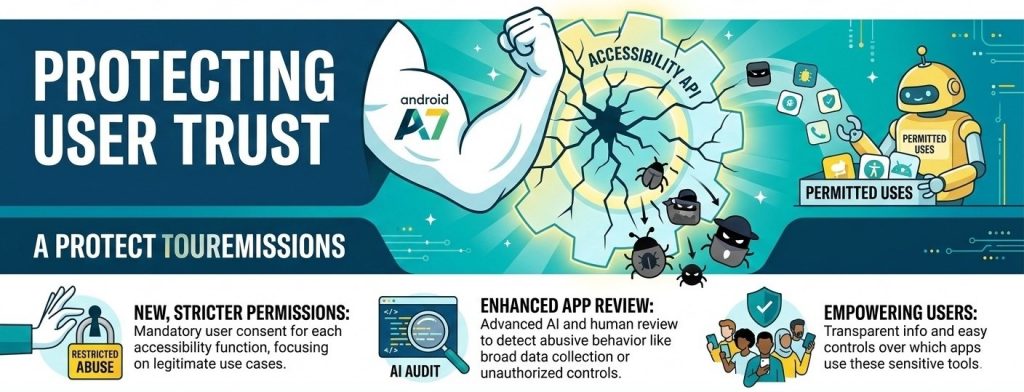
This affects several categories of apps:
- Automation tools like Tasker
- Customization apps and launchers
- Password managers that use the API to find input fields
- Overlay apps like DynamicSpot (which creates a “Dynamic Island” style notification area)
Why Now?
Google has been aware of Accessibility API misuse for years. In 2017, the company threatened to remove apps from the Play Store that abused the API, but enforcement was inconsistent. Now, with malware increasingly using the Accessibility API to steal credentials, Google is finally taking stronger action.
The Anatsa banking trojan and Copybara malware are examples of malicious apps that have exploited this API to spy on login credentials and exfiltrate sensitive data.
What Malaysian Users Need to Know
For Malaysian Android users, this change brings both benefits and trade-offs:
Benefits:
– Better protection against malware that tries to steal banking credentials
– Stronger security for sensitive apps and data
Trade-offs:
– Some popular customization apps may stop working
– Users will need to make informed choices about app permissions
Our Take
This is a long-overdue move by Google. The Accessibility API has been a security weak point for years, and while legitimate developers will need to adapt, the net result is better security for everyday users.
For Malaysian Android users, the message is clear: enable Advanced Protection, be cautious about granting accessibility permissions, and only use apps from trusted developers.
Source
– heise online: Android 17: Google cracks down on Accessibility API abuse