
Google Aluminium OS Arriving in Late 2026 as Chrome OS Successor

TLDR:
– Google announces Aluminium OS as the next-generation Chrome OS successor
– Expected to launch in late 2026 with AI-first design philosophy
– Built on micro-architecture with deep cloud computing integration
– Aims to compete directly with Windows and macOS in the operating system market
– Focus on AI integration and cloud-native experience
Google Aluminium OS: A New Era for Chrome
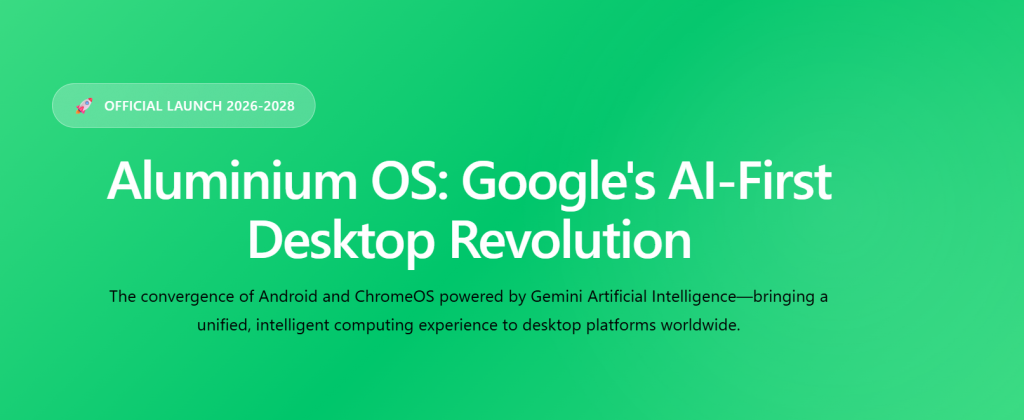
Google is poised to redefine the computing landscape with the announcement of Aluminium OS, a revolutionary new operating system designed to succeed Chrome OS. Expected to launch in late 2026, Aluminium OS represents Google’s bold vision for the future of personal computing, combining powerful cloud capabilities with cutting-edge artificial intelligence integration.
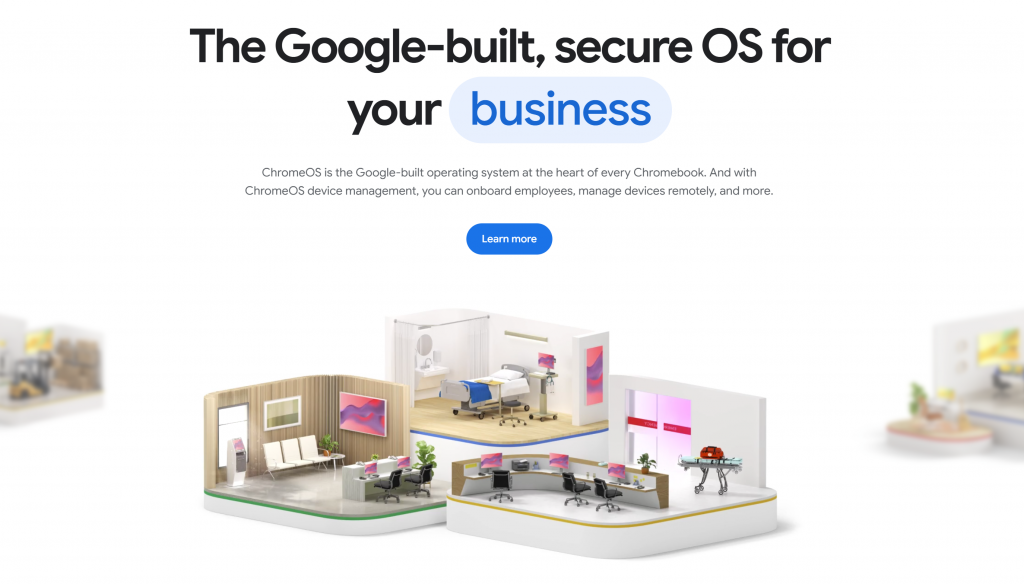
The tech giant has been quietly developing this new platform for several years, and the announcement marks a significant shift in Google’s strategy toward operating systems. Unlike its predecessor Chrome OS, which was built around the concept of web-centric computing, Aluminium OS embraces a more comprehensive approach that leverages the full potential of cloud computing and AI technologies.
Micro-Architecture and AI Integration
At the heart of Aluminium OS lies a innovative micro-architecture designed from the ground up to prioritize AI functionality. This new architectural approach allows the operating system to seamlessly integrate artificial intelligence into every aspect of the user experience, from intelligent task automation to predictive content recommendations.
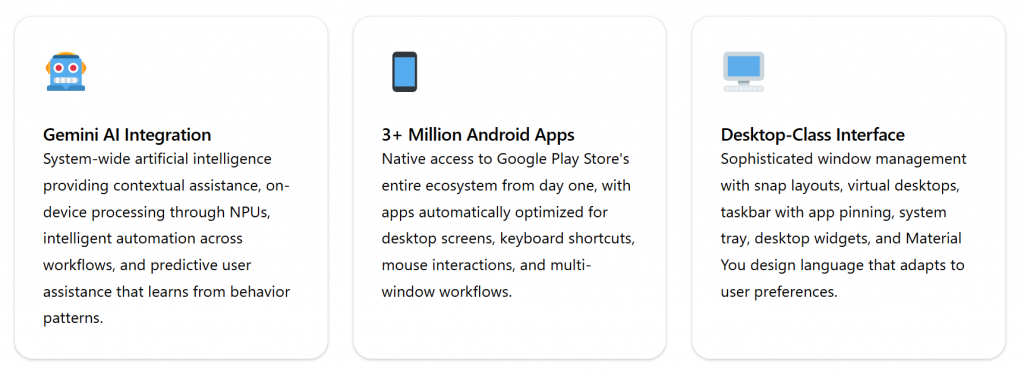
Google’s commitment to AI-first design means that Aluminium OS will feature advanced machine learning capabilities that adapt to user behavior over time. The operating system will learn from user habits, anticipate needs, and provide contextual assistance throughout the computing experience. This represents a fundamental shift from traditional operating systems that simply provide a platform for running applications.
The micro-architecture also enables unprecedented levels of customization and flexibility. Users can expect Aluminium OS to scale effortlessly across different device categories, from lightweight Chromebooks to powerful desktop workstations, all while maintaining a consistent and intuitive user experience.
Competing with Windows and macOS
With Aluminium OS, Google is making a clear statement of intent to compete directly with Microsoft Windows and Apple macOS. The operating system is designed to offer a compelling alternative for both consumers and enterprise users who are seeking a modern, AI-powered computing platform.
Google’s advantage lies in its vast ecosystem of services and its expertise in cloud computing. Aluminium OS will leverage Google’s infrastructure to provide seamless integration with services like Google Drive, Gmail, Google Workspace, and the company’s expanding AI tools. This tight integration promises a more cohesive and productive computing experience compared to traditional operating systems.
The timing of Aluminium OS’s launch also reflects broader industry trends toward AI-enhanced computing. As artificial intelligence becomes increasingly central to productivity and creativity tools, Google’s decision to build AI into the foundation of its operating system positions Aluminium OS as a forward-thinking choice for users who want to stay ahead of the curve.
System Requirements
| Processor Architecture | 64-bit ARM or x86 processor, 1.5 GHz dual-core minimum (quad-core highly recommended). Confirmed testing platforms: Intel 12th Gen Alder Lake and newer, AMD Ryzen 5000 series+, MediaTek Kompanio 520+, Qualcomm Snapdragon X Elite/Plus series |
| System Memory | AL Entry: 4GB RAM minimum AL Plus: 8GB RAM recommended AL Premium: 16GB+ RAM for advanced AI features, multitasking, and professional workflows |
| Storage Capacity | 32GB minimum for basic functionality, 64GB strongly recommended, 128GB+ ideal for extensive app libraries and offline content. SSD required for optimal performance and AI model caching |
| Neural Processing | Required for AI features: Dedicated NPU (Neural Processing Unit) for on-device Gemini AI processing. Supported: Qualcomm Hexagon NPU, MediaTek APU, Intel AI Boost, AMD XDNA |
| Graphics Requirements | Integrated graphics with Vulkan 1.3+ or DirectX 12 support mandatory. Dedicated GPU optional but recommended for gaming, content creation, and enhanced AI processing acceleration |
| Display Specifications | Minimum 1366×768 resolution, 1920×1080 (Full HD) recommended, 2560×1440 or 4K supported. Multi-monitor configuration supported with independent workspaces and extended desktop mode |
| Connectivity Standards | Wi-Fi 5/6/6E required, Bluetooth 5.0+ for peripherals, Gigabit Ethernet support, Optional 5G/LTE modem for always-connected PCs, USB-C with DisplayPort Alt Mode |
| Internet Connection | Required for initial device setup, Google account authentication, app downloads, and cloud synchronization. Many core features function offline after initial configuration |
Cloud Computing at Its Core
Cloud computing forms the backbone of Aluminium OS’s design philosophy. The operating system is optimized for connected experiences, enabling users to access their files, applications, and personalized environments from any device with an internet connection. This approach reduces reliance on local storage and processing power, making powerful computing more accessible across price points.
Google’s investment in cloud infrastructure ensures that Aluminium OS users will benefit from fast, reliable access to their data and applications. The company has been expanding its global network of data centers, which will provide the foundation for a responsive and secure cloud computing experience.
What This Means for Malaysian Users
For Malaysian users, Aluminium OS represents an exciting opportunity to access cutting-edge computing technology. Google has consistently shown commitment to the Asian market, and Aluminium OS is expected to offer excellent support for local languages and regional services.
The operating system’s cloud-first approach aligns well with Malaysia’s improving internet infrastructure. As 5G networks continue to expand across the country, Aluminium OS users can expect increasingly smooth experiences when working with cloud-based applications and services.
Our Take
Google Aluminium OS marks a significant evolution in the operating system landscape. By placing AI at the core of the user experience and embracing cloud computing, Google is charting a new path that could reshape how we think about personal computers. The transition from Chrome OS to Aluminium OS represents not just an upgrade, but a fundamental reimagining of what an operating system can be.
While Windows and macOS remain dominant, Aluminium OS’s AI-first approach and cloud integration could attract users who prioritize modern, intelligent computing experiences. The late 2026 launch gives Google time to refine the platform and build an ecosystem that.
Source: