

Xiaomi 212W HyperCharge Power Bank 24500 Review — a portable multi-device charging station

Xiaomi 212W HyperCharge Power Bank 24500
The Xiaomi 212W HyperCharge Power Bank 24500 is great as a portable power station that can juice up multiple devices like your laptop and smartphone at the same time.
What's Good?
- A design that appeals to techies
- Versatile support for USB-PD PPS and other fast charging standards
- Great port power split
What's Not?
- Screen is extremely under-utilized
- Might face thermal issues
- Relatively slow charging
How much power do you need in your bag? If your answer is just “yes”, then this power bank is for you. The Xiaomi 212W HyperCharge Power Bank 24500 is by no means cheap, nor is it the most portable, but it definitely delivers when it comes to power output and capacity. I mean, it has 24500mAh worth of batteries in it. That’s something. It’s also worth mentioning that this is exactly the same power bank as the Xiaomi 212W HyperCharge Power Bank 25000, which is also available in other countries.
Let’s get the math out of the way
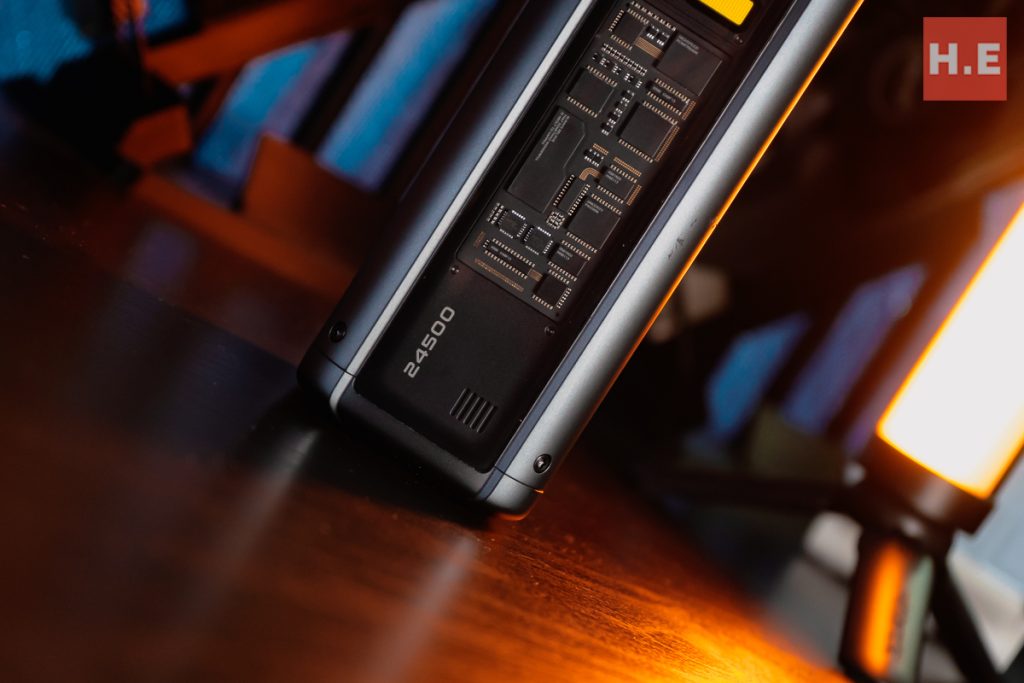
The “24500” in the Xiaomi 212W HyperCharge Power Bank 24500 is somewhat of a misnomer. Five 4,900mAh cells are connected in series, so we actually have a 4,900mAh 18.15V power pack here, translating to a total of 89WHr. Yes, you can bring this on flights. Xiaomi also lists a more conservative rated capacity of 14,000mAh, which takes into account conversion losses of around 20%. Kudos to Xiaomi for listing out this metric. This all means you should practically be able to go from 0-100% on your iPhone 15 Pro around four times, or a POCO F7 Pro close to 3 times over.

Next, the 212W rating of the Xiaomi 212W HyperCharge Power Bank 24500 is also rather misleading, as to get the maximum output you need a specific 5-pin USB-A cable to get 120W from of the USB-A port. I believe that these cables come standard with Xiaomi’s older phones like the Xiaomi 14T Pro, while newer devices come with USB-C power adapters instead. Standard USB-A cables with just four pins will only get 2.5W of power output, which results in a total output 149.5W. On that note, peak multi-port output is a decent 165W, with 120W from USB-C1 and 45W from USB-C2.
Xiaomi 212W HyperCharge Power Bank 24500 — What’s Good?
A design that appeals to techies

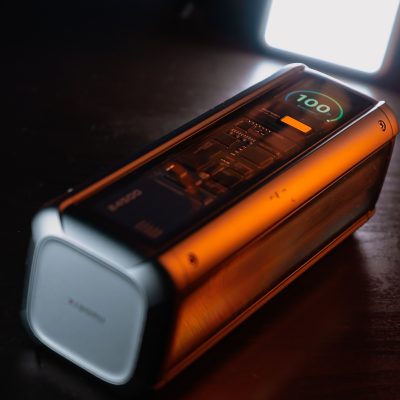
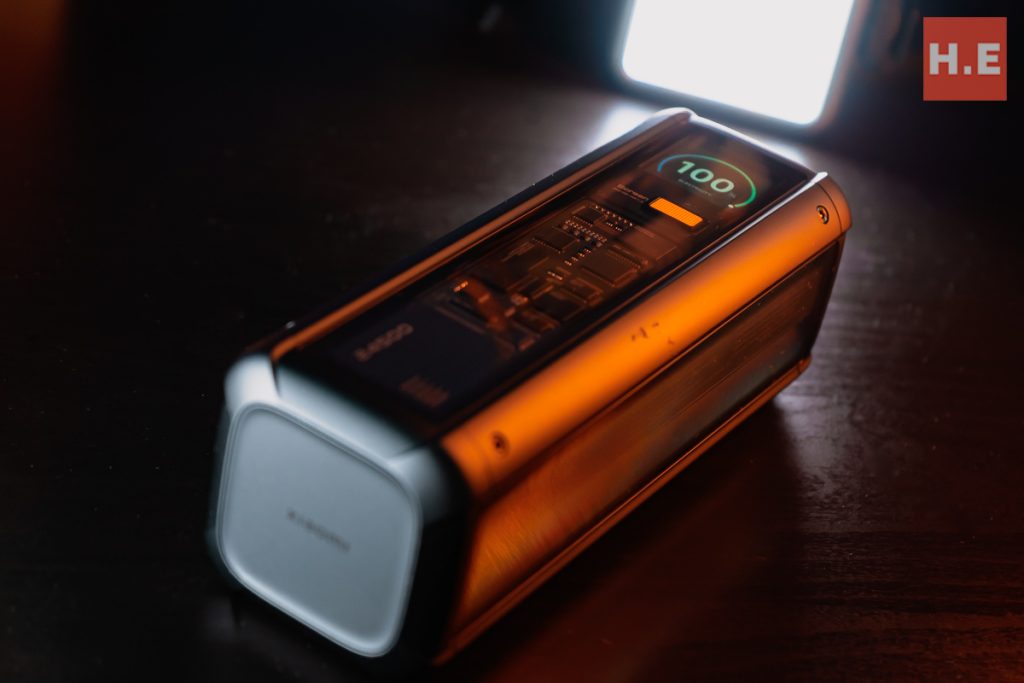
I think I speak for all geeks here: this design looks great. Xiaomi nailed it with the transparent sides and a sturdy matte plastic frame. If I were to nitpick, I wish Xiaomi didn’t create a fake circuit under the clear plastic, although I assume that the actual circuitry is a lot less aesthetically pleasing. I don’t think there’s any way that Xiaomi could have made a chonky 5-cell power bank look better. Maybe, a metallic frame instead of the current plastic one to help dissipate the heat from the batteries might have been nice, but that would also add to the weight and it’s already rather hefty at 630g.
Versatile support for USB-PD PPS and other fast charging standards
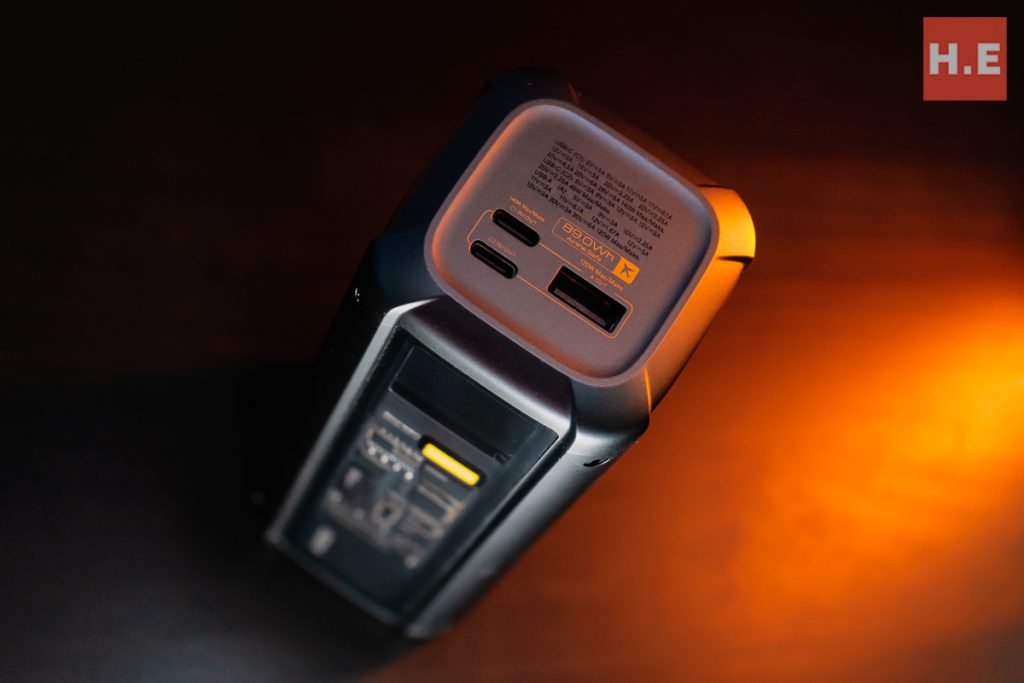
Aside from the USB-A port that can only output 120W via specific cables, the two USB-C ports of the Xiaomi 212W HyperCharge Power Bank 24500 supports all the major fast charging protocols like USB-PD and QuickCharge. The USB-C1 port delivers 140W over USB-PD 3.1, with PPS support all the way up to 20V and 6A. The 6A support is somewhat exclusive to Xiaomi phones, as most other brands cap out at 5A. Meanwhile over on the secondary USB-C2 port, we have a cap of 45W, with PPS support all the way up to 20V 2.25A. Once again, all common protocols, which is nice to see.
Great port power split

Now, while I did mention that the 212W output is somewhat misleading, it is still a very capable power bank with 165W of real output power. And I would say that 165W of power is split very well. When each connected to devices, USB-C1 and USB-C2 get 120W and 45W, respectively. Connecting a USB-A cable brings USB-C2 down to 27W, while the USB-A port gets 2.5W. In the full 212W mode, the main USB-C1 port gets 65W while the USB-A port gets 120W, which is quite a peculiar prioritization. If that’s confusing to you, you can read this table:
| USB-C1 | USB-C2 | USB-A | |
| Single-port Output | 140W | 45W | 22.5W 120W (with Xiaomi 5-pin USB-A cable) |
| TYPE-C1 + TYPE-C2 (Total: 165W) | 120W | 45W | x |
| TYPE-C1 + USB-A (Total: up to 185W) | 140W 65W (with Xiaomi 5-pin USB-A cable) | x | 22.5W 120W (with Xiaomi 5-pin USB-A cable) |
| TYPE-C2 + USB-A (Total: up to 165W) | x | 45W | 22.5W 120W (with Xiaomi 5-pin USB-A cable) |
| TYPE-C1 + TYPE-C2 + USB-A (Total: up to 212W) | 120W 65W (with Xiaomi 5-pin USB-A cable) | 27W | 2.5W 120W (with Xiaomi 5-pin USB-A cable) |
To most users, the USB-C1 port will be great to topup the battery on a laptop, regardless of how many other devices you plug in. Being able to fast charge an iPhone while charging a laptop at the same time is definitely going to be a huge reason for anyone looking to get the Xiaomi 212W HyperCharge Power Bank 24500. I also quite like that all the ports support a low current mode, which helps when trying to juice up devices like smartwatches or wireless mics that do not support any of the faster charging standards.
Xiaomi 212W HyperCharge Power Bank 24500 — What’s Not?
Screen is extremely under-utilized
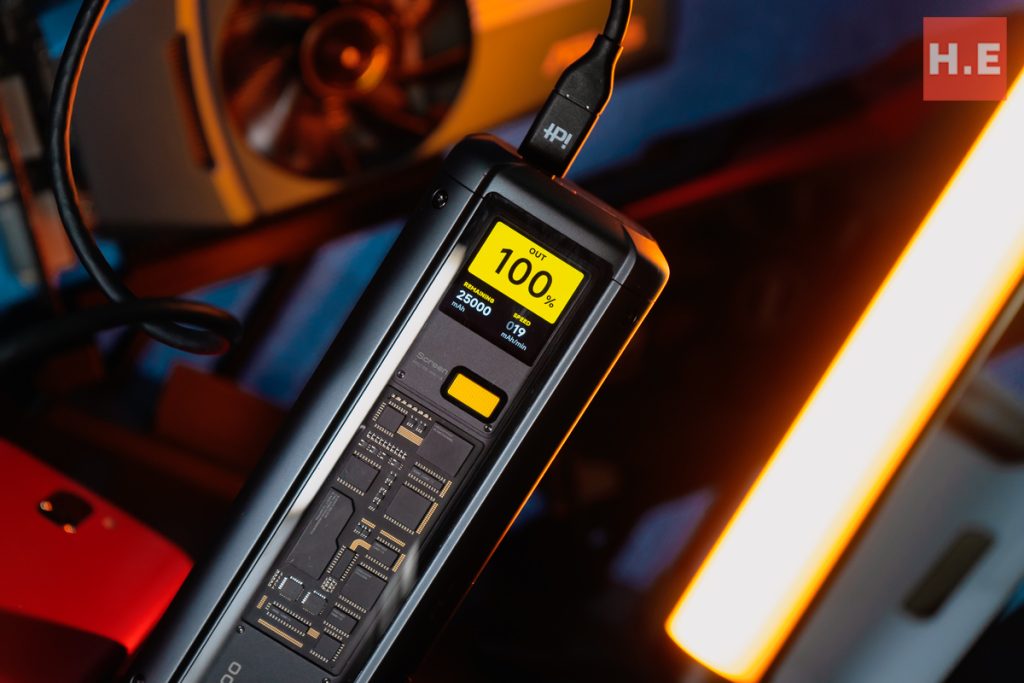
The Xiaomi 212W HyperCharge Power Bank 24500 has a nice 1.3-inch color screen, but unfortunately it is really wasted here. When used to charge other devices, it mainly shows you the remaining charge, in percentage as well as in mAh of all units, as well as the output in mAh/min, which is just illegal. Why can’t they just show the output in watts (W) like normal people? Tapping the bright yellow button switches the screen to show the protocol currently in use, while a quick double tap triggers the low-current mode.
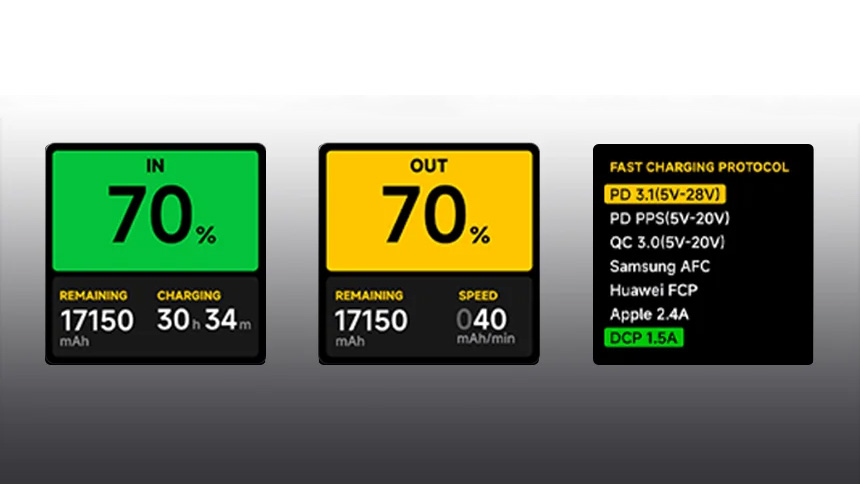
Meanwhile when you’re charging it, the screen switches to tell you how much longer it is to a full charge. I think Xiaomi could have done a lot more with the display, like show the power each port is currently outputting, remaining time at current output or maybe even a temperature reading, as it seems rather prone to throttling even under very normal usage.
Might face thermal issues
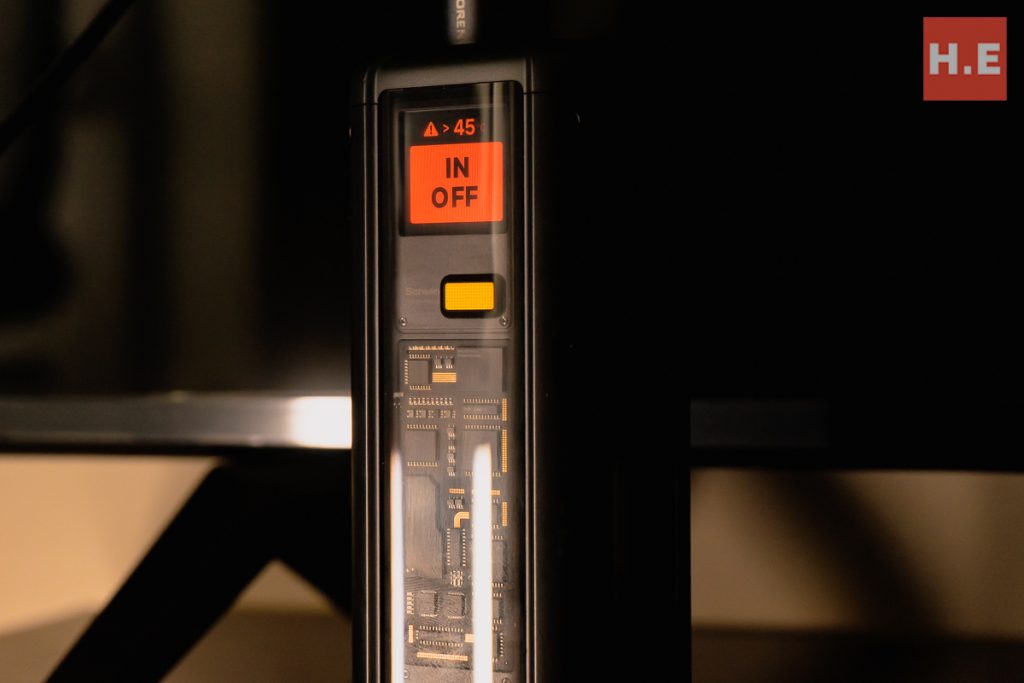
After moderate use, the Xiaomi 212W HyperCharge Power Bank 24500 would actually not accept a charge. I encountered this after using it to output 100W to the TUF Gaming F16 for some time, where it would just not accept a charge, while displaying a temperature warning on its screen. I will note that the shell feels cool to the touch, but it still will not charge with the warning on the screen. Also worth noting is that while it won’t accept a charge after outputting 100W for at least 15 minutes, the Xiaomi 212W HyperCharge Power Bank 24500 will continue delivering 100W without any issues until it hits empty, so at least that’s nice to see.
Relatively slow charging

The Xiaomi 212W HyperCharge Power Bank 24500 supports up to 100W input, but in reality it seems that it doesn’t actually hit 100W. There’s support for USB-PD 3.0 100W, and we saw that it hit over 80W for about 4 minutes before dropping off to draw less than 43W for the most part and then gently tapering off as it approaches full capacity. In our testing, a full charge was achieved in about 2 hours 40 minutes, which is pretty much in line with Xiaomi’s claim of 2.5 hours for a full 0-100% charge.
Xiaomi 212W HyperCharge Power Bank 24500 Specifications
| Input | Up to 100W (USB-C1) Up to 45W (USB-C2) |
| Total output power | Up to 212W / 149.5W |
| Capacity / Rated Capacity | 24,500mAh @ 3.63V / 14,000mAh @ 5V |
| Supported charging standards | USB-C1 Qualcomm QC 5.0, DCP, Apple 2.4A, USB-PD 3.1 5V/3A, 9V/3A, 12V/3A, 15V/3A, 20V/5A, 28V/5A PPS: 5~11V/5A, 5~20V/5A Xiaomi HyperCharge: 5~11V/6.1A, 5~20V/6A USB-C2 Qualcomm QC 4+, Apple 2.4A, DCP, Samsung AFC (up to 24W), HUAWEI FCP (18W), HUAWEI SCP (up to 30W), USB-PD 3.0 5V/3A, 9V/3A, 12V/3A, 15V/3A, 20V/2.25A PPS: 5~11V/3A, 5~20V/2.25A USB-A Qualcomm QC 3.0, DCP, Apple 2.4A, Xiaomi HyperCharge (120W) |
| Protections | Overvoltage, overcurrent, overtemperature, short circuit, over-charge/discharge, foreign objects |
| Dimensions | 55.4 x 55.4 x 160 mm |
| Weight | 630g |
Xiaomi 212W HyperCharge Power Bank 24500 Specs
Xiaomi 212W HyperCharge Power Bank 24500 — should you buy this?
The Xiaomi 212W HyperCharge Power Bank 24500 is priced at RM389, although you can regularly find it for less on Shopee and Lazada. The price is pretty fair if you have the need for a portable power station that can juice up multiple devices like your laptop and smartphone at the same time. The design is nice and support for most popular fast charging standards is solid. The high power output to multiple devices is also very nice to see. With that said, I still wish that Xiaomi made better use of the nice display as it somewhat limits the overall experience of what could be a very capable monitoring tool for power users. Xiaomi doesn’t need any faster output for their next flagship power bank, just maybe faster input and a more robust thermal solution to ensure that the Li-ion cells can be discharged and quickly recharged without having to wait for them to cool down first.
Help support us!
If you are interested in the Xiaomi 212W HyperCharge Power Bank 24500, we would really appreciate if you purchased it via the links below. The affiliate links won’t cost you any extra, but it will be a great help to keep our lights on here at HelloExpress.