
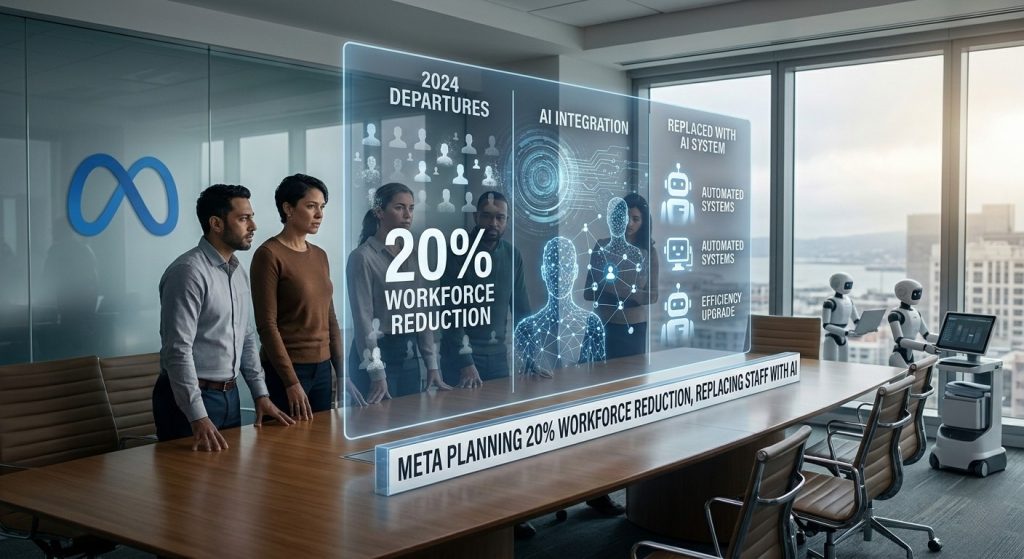
Report: Meta Planning 20% Workforce Reduction, Replacing Staff with AI

TLDR:
- Meta reportedly planning 20% workforce reduction across global operations
- AI systems expected to replace significant portion of affected positions
- Company cites efficiency and AI-first strategic shift as rationale
- Malaysian tech workers among those potentially impacted
- Marks major escalation in Big Tech AI-driven restructuring
Meta Bold AI-First Strategy
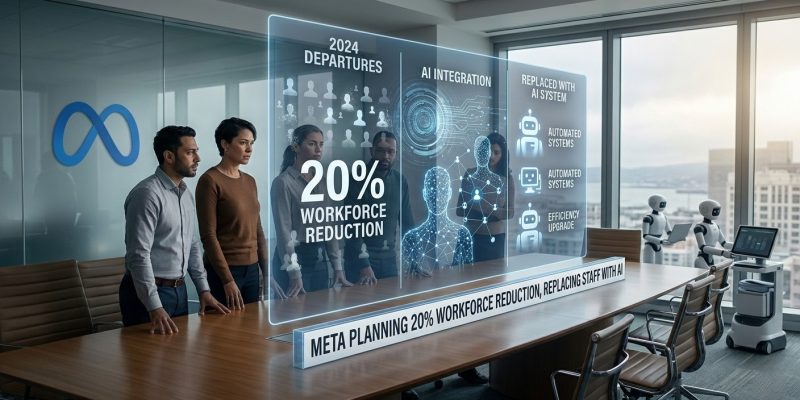
Meta Platforms is reportedly planning to reduce its global workforce by approximately 20% as part of a major strategic shift toward AI-driven operations, according to a report from SiliconANGLE published March 15, 2026. The company, which employs over 200,000 people worldwide, is positioning this move as a necessary evolution rather than traditional cost-cutting.

The report indicates that Meta leadership has been internally discussing this workforce reduction for several months, with AI systems specifically designed to replicate human roles in customer service, content moderation, and certain engineering functions. This represents one of the most significant AI-driven workforce restructurings in tech industry history.
We are building toward a future where AI handles routine tasks at scale, Meta CEO Mark Zuckerberg reportedly stated in an internal memo obtained by SiliconANGLE. This is not about replacing human creativity or judgment—it is about freeing our talent to focus on higher-value work.
Impact on Malaysian Operations
Meta has maintained a significant presence in Malaysia, primarily through its Singapore-based Asia-Pacific regional hub, though the company also employs workers directly in Kuala Lumpur for various operations including content review, customer support, and regional partnerships. While exact numbers are not publicly disclosed, industry estimates suggest Meta direct and contractor workforce in Malaysia numbers in the thousands.
Malaysian tech workers in roles related to content moderation, ad operations, and customer support may be particularly vulnerable to these changes. The country growing tech sector, which has attracted major Silicon Valley companies as a regional base, could see ripple effects across the broader ecosystem.
Malaysia Ministry of Communications has not yet issued an official statement regarding potential impacts on local workers, though industry observers expect discussions between tech companies and government officials in the coming weeks.
Industry-Wide Implications
Meta reported decision signals a potential turning point in how major technology companies approach workforce planning. Other Big Tech firms, including Google, Amazon, and Microsoft, have already implemented various degrees of AI-driven automation, but a 20% reduction would represent a dramatic escalation.
The timing coincides with Meta continued heavy investment in AI infrastructure, including data centers across Asia-Pacific. The company has been aggressively expanding its Llama AI models and integrating AI features across its family of apps, including Facebook, Instagram, and WhatsApp.
Industry analysts note that while AI efficiency gains are real, the human element remains crucial for nuanced decision-making, ethical considerations, and creative work that defines Meta core products.
Our Take
Meta reported plan to cut 20% of its workforce and replace staff with AI represents a watershed moment in the tech industry ongoing transformation. While companies have long promised that automation would create more jobs than it destroys, this move suggests a more sobering reality is emerging—particularly for workers in roles that can be effectively digitized.
The Malaysian tech sector should take note. Our growing digital economy has attracted significant foreign investment from companies like Meta, but this development raises questions about the sustainability of such roles. For Malaysian workers, the writing is on the wall: adaptability and upskilling in AI-resistant fields may no longer be optional.
However, we should also be cautious about accepting corporate narratives at face value. AI-first restructuring can mask deeper cost-cutting motives, and the quality of AI replacement systems remains unproven at scale. Content moderation, for instance, requires cultural nuance that AI still struggles to replicate—especially in diverse markets like Malaysia.
What happens at Meta will likely cascade through the industry. Other tech giants are surely watching closely, and the precedent set here could reshape what working in tech means for millions of workers across Asia-Pacific.
Keyword
Meta AI layoffs