

Qualcomm Dragonwing IQ10: Orchestrating the Proliferation of Physical AI and Humanoid Robotics at CES 2026

TL;DR
- Qualcomm introduces the Dragonwing IQ10 Series, a premier robotics processor engineered to function as the intelligent nucleus for humanoids and industrial autonomous mobile robots.
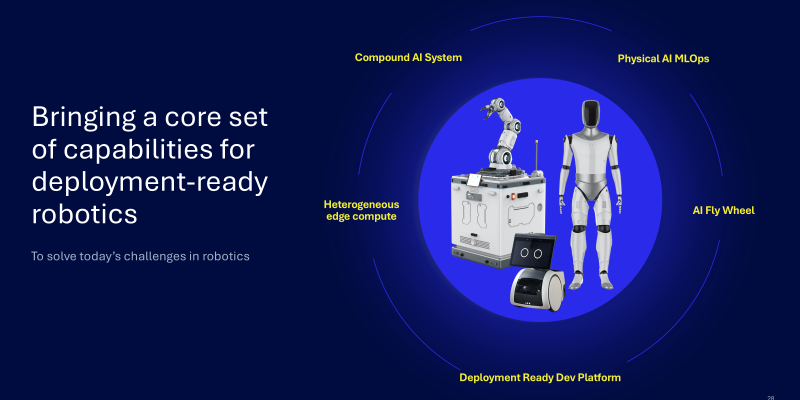
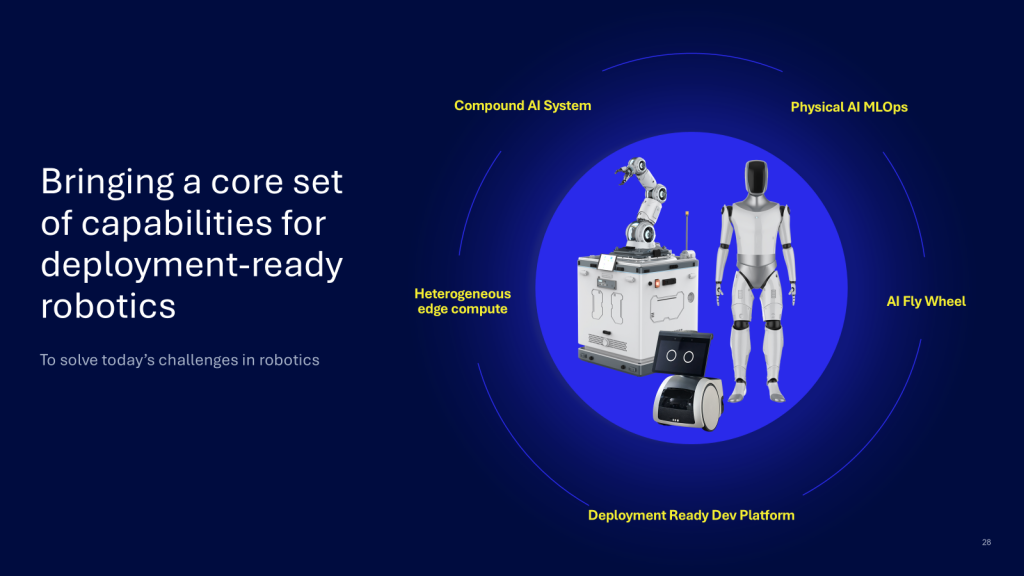
- The unveiling includes a comprehensive, end-to-end robotics stack architecture that integrates hardware, software, and Physical AI to move machines from laboratory settings to real-world environments.
- A landmark collaboration with Figure.ai seeks to define next-generation compute architectures as humanoid platforms scale for global industrial and commercial deployment.
- Real-world demonstrations at CES 2026 feature the VinMotion Motion 2 and Booster K1 Geek, showcasing advanced perception, motion planning, and human-robot interaction.
At the commencement of CES 2026 in Las Vegas, Qualcomm Technologies, Inc. signals a profound transformation in the robotics landscape by shifting the focus from digital intelligence to the tangible realm of Physical AI. This transition marks a departure from static algorithmic models toward dynamic systems that reason, adapt, and execute complex maneuvers within physical space. As the technological foundation of modern connectivity, Qualcomm utilizes its extensive expertise in edge computing and power efficiency to introduce a general-purpose robotics architecture. This framework is designed to empower a diverse spectrum of mechanical embodiments, ranging from sophisticated household service robots to full-size industrial humanoids. By prioritizing safety-grade high performance and heterogeneous computing, Qualcomm provides the necessary infrastructure for robots to transcend their traditional roles and become ubiquitous participants in the global economy.

The Dragonwing IQ10 Series: A Computational Pinnacle for Humanoids
Central to this technological revelation is the Qualcomm Dragonwing IQ10 Series, the latest and most advanced iteration in the company’s robotics-specific processor roadmap. This silicon powerhouse is meticulously crafted to meet the rigorous demands of industrial autonomous mobile robots (AMRs) and advanced full-size humanoids. Substantively, the IQ10 Series provides the requisite “Brain of the Robot,” delivering a synergy of high-performance processing and industry-leading energy efficiency. This balance is critical for untethered humanoid platforms that require immense computational throughput for real-time perception and planning while maintaining long-term battery viability.
Moreover, the Dragonwing IQ10 supports sophisticated end-to-end AI models, including Vision-Language-Action (VLA) and Vision-Language Models (VLM). These integrations facilitate generalized manipulation capabilities, allowing robots to understand natural language commands and translate them into precise physical actions. Consequently, the IQ10 Series serves as the catalyst that transforms experimental prototypes into resilient, deployable machines capable of navigating the nuances of human-centric environments.
Structural Synergy: The Comprehensive Robotics Stack Architecture
The introduction of a comprehensive-stack architecture represents a holistic approach to robotics development, bridging the gap between hardware capabilities and software execution. This end-to-end scalable architecture integrates edge AI with mixed-criticality systems, ensuring that safety-critical functions and high-level reasoning operate in harmony. Furthermore, the inclusion of an AI data flywheel allows for the continuous collection, training, and deployment of new skills. This iterative process ensures that robotic fleets evolve over time, refining their ability to interact with complex spatial and temporal variables.
In addition to hardware, Qualcomm provides a robust suite of developer tools and machine learning operations (MLOps) designed to solve the “last-mile challenge” of robotics deployment. This architecture is optimized to scale across various form factors, ensuring that the same underlying intelligence can power a small logistics bot or a complex bipedal humanoid. By standardizing the robotics stack, Qualcomm enables faster innovation cycles for manufacturers and reduces the barrier to entry for advanced automation in retail and manufacturing sectors.
Collaborative Horizons: Scaling Humanoid Evolution with Figure and VinMotion
Strategic alliances form the cornerstone of Qualcomm’s vision for a robotic future. A primary highlight is the collaboration between Figure and Qualcomm Technologies to define the next generation of compute architecture for humanoid platforms. As Figure seeks to eliminate unsafe occupations and bolster global productivity, Qualcomm provides the essential building blocks for high-level reasoning and physical dexterity. This partnership underscores the necessity of combining visionary robotics design with world-class semiconductor engineering to achieve economic abundance.
The practical application of these technologies is visible through the debut of the VinMotion Motion 2 humanoid, powered by the Qualcomm Dragonwing IQ9 Series. This collaboration illustrates the rapid maturation of hardware-software platforms, where advanced humanoids are no longer confined to speculative research. Simultaneously, Booster’s K1 Geek highlights the company’s leadership in edge AI, offering a glimpse into how developers and organizations alike can utilize Physical AI to solve specific industrial problems.
Ecosystem Scalability and Real-World Deployment
Qualcomm is actively cultivating a comprehensive ecosystem to support its robotics platforms, working alongside industry leaders such as Advantech, APLUX, AutoCore, and Robotec.ai. These partnerships ensure that deployment-ready robotics solutions are available at scale, providing the necessary teleoperation tooling and development kits for rapid application. The emphasis remains on industrial-grade reliability, ensuring that robots can function safely alongside human workers in high-pressure environments like logistics hubs and manufacturing floors.
As these machines move out of the lab, the focus shifts toward human-robot interaction and seamless adaptation. The ability of a robot to intelligently perceive its surroundings and make split-second decisions is the hallmark of the Qualcomm-powered future. To learn more about these robotics initiatives and the future of autonomous systems, interested parties are encouraged to explore the resources provided by the company as they continue to redefine the boundaries of Physical AI.






[…] Baca: Qualcomm […]