

Malaysia’s Solar Revolution: Racing Toward 2050 as Carbon Tax Era Begins

TL;DR
- Malaysia implements a carbon tax targeting the iron, steel, and energy sectors to align with global standards like the EU’s CBAM.
- The Solar ATAP program launches on 1 January 2026, allowing non-domestic users to install solar systems up to 100% of maximum demand.
- Battery Energy Storage Systems (BESS) become mandatory for solar installations above 72kWp to ensure grid stability.
- Tech giants like Google and local retailers like Billion Group are securing long-term renewable energy to future-proof operations.
As 2026 commences, Malaysia has transitioned from policy ambition to operational reality in its journey toward net-zero emissions by 2050. The mid-December 2025 agreement between TotalEnergies and Google—securing 1 TWh of solar power for Google’s $2 billion Selangor data center—serves as a harbinger for the nation’s new economic era. With the official implementation of a domestic carbon tax and the launch of the Solar Accelerated Transition Action Programme (Solar ATAP), the “why” of renewable energy has been replaced by “how fast.” For industry leaders, energy strategy is no longer a peripheral ESG goal but a core requirement for fiscal survival and export competitiveness.

The Carbon Tax Calculus and Global Compliance
The introduction of Malaysia’s carbon tax, focused initially on high-emission industries such as iron, steel, and energy, serves a dual strategic purpose. Locally, it provides the fiscal framework to fund the National Energy Transition Fund. Internationally, it safeguards Malaysian exporters against the European Union’s Carbon Border Adjustment Mechanism (CBAM).

Since CBAM allows deductions for carbon taxes paid in the country of origin, Malaysia’s domestic tax ensures that revenue remains within the country rather than being surrendered to foreign jurisdictions. This mechanism makes decarbonization a commercial necessity for the 75% of Malaysian exports to the EU that fall under CBAM-regulated sectors.
Solar ATAP: Reinvigorating the Retail and Industrial Sectors

Launched on 1 January 2026, Solar ATAP replaces the previous Net Energy Metering (NEM) 3.0 scheme. The program offers unprecedented flexibility for non-domestic users, removing previous capacity caps and allowing installations to meet up to 100% of maximum demand (subject to a 1 MW absolute cap).
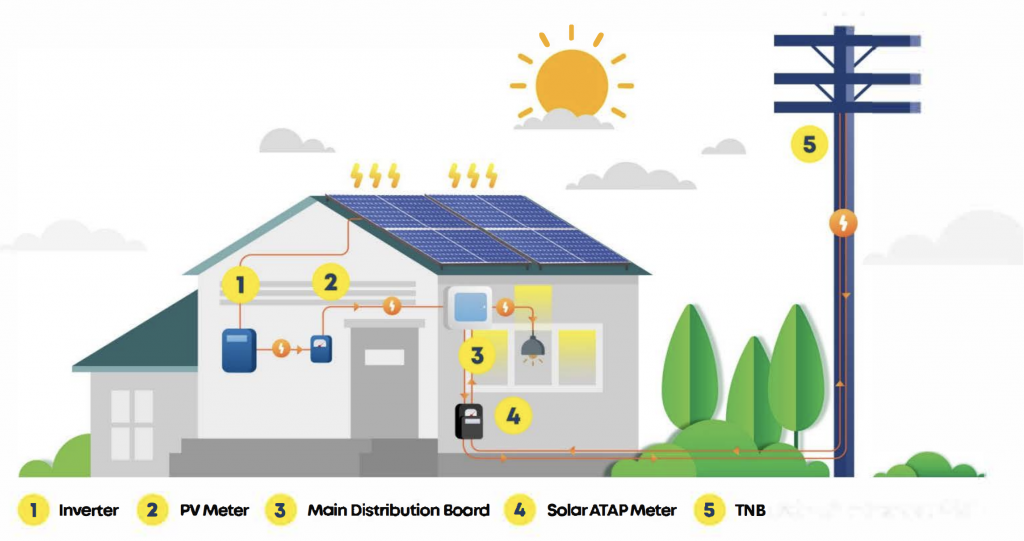
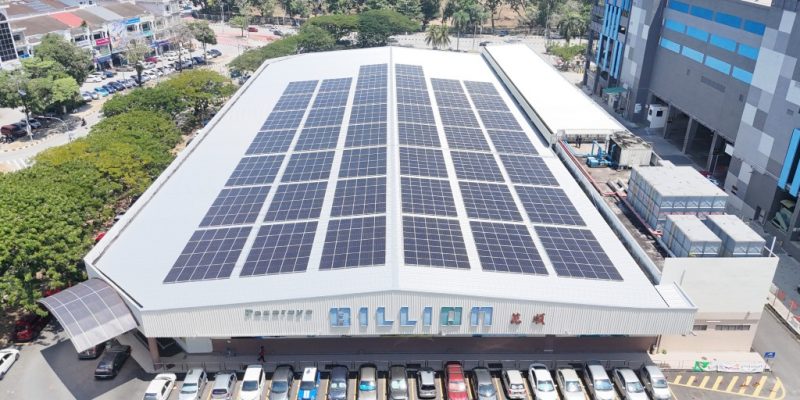
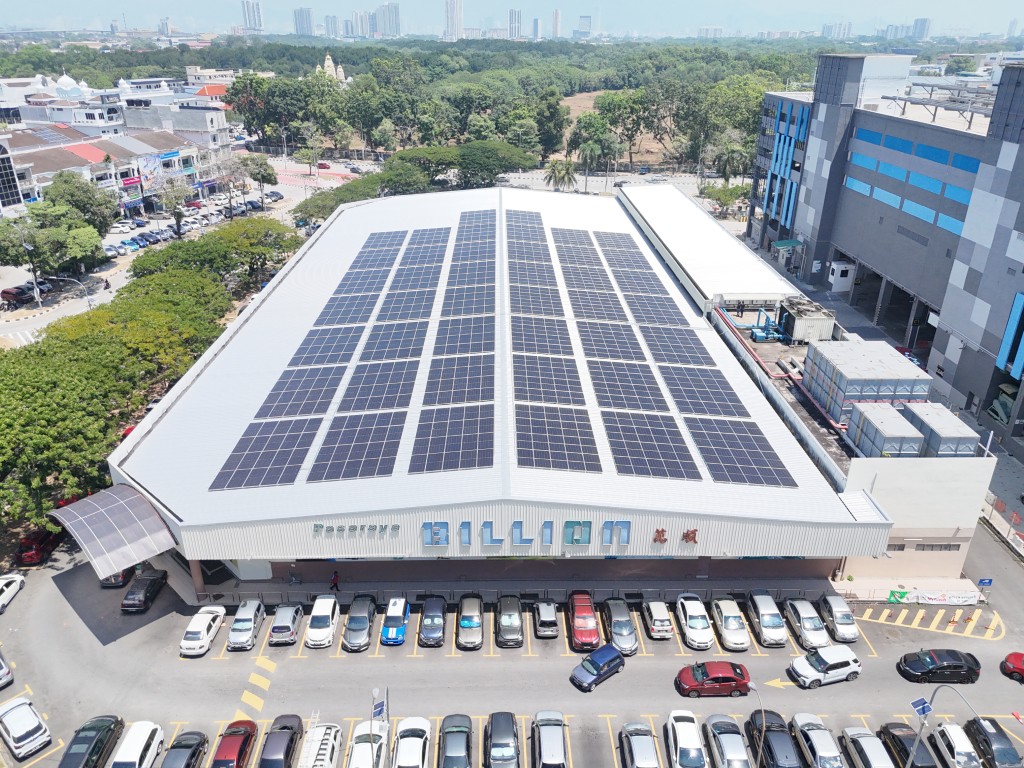
Unlike previous fixed-rate credits, Solar ATAP utilizes the System Marginal Price (SMP)—a market-reflective wholesale rate—to credit excess energy exported to the grid. This shift encourages businesses to optimize their system design for self-consumption. Local success stories, such as the Billion Group, demonstrate this shift; their 3 MWp rooftop solar rollout with EFS Group now offsets 3,300 tonnes of $CO_2$ annually, proving that traditional retail can thrive under new green mandates.
Infrastructure Reality: Why BESS is Now Mandatory
As solar penetration increases, the national grid faces technical volatility. To maintain stability, the 2025 SELCO Guidelines now mandate the integration of Battery Energy Storage Systems (BESS) for all installations exceeding 72kWp.
BESS transforms solar from a passive offset into an active asset by:
- Mitigating Midday Oversupply: Absorbing excess generation when solar output peaks but demand is low.
- Peak Shaving: Releasing stored energy during evening peaks when electricity tariffs are higher.
- Grid Firming: Providing a stable power quality required for sensitive data center operations.
With data centers projected to consume 30% of Malaysia’s total power by 2030, the combination of solar and storage is the only viable path to satisfying the relentless 24/7 demand of AI and cloud computing.
The 18-Month Strategic Window
The next 18 months represent a critical period for Malaysian businesses to secure their energy future. Several milestones are set to redefine the market:
- Q1 2026: Solar ATAP applications open via the SEDA portal.
- Q2 2026: Bidding for LSS6 (Large Scale Solar 6) opens, offering 2 GW of utility-scale opportunities.
- Mid-2026: The full rollout of e-Invoicing and carbon tax enforcement begins to influence procurement cycles.