
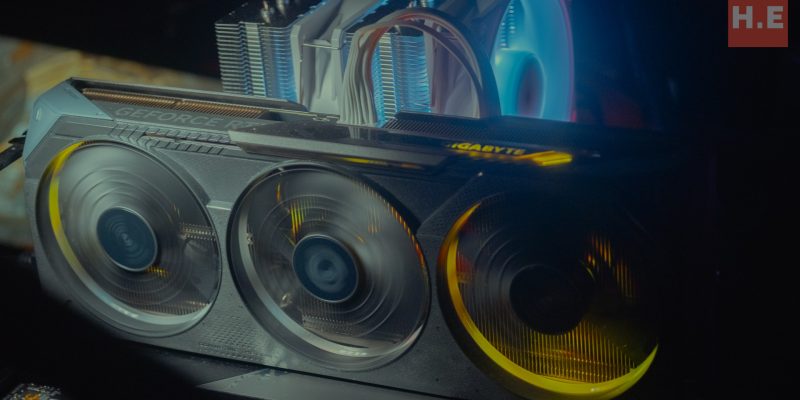
Gigabyte GeForce RTX 5070 OC 12GB Gaming Review: Spend a little more, get more FPS

Table of Contents
GeForce RTX 5070 Overview
We recently had a fantastic experience with the Gigabyte GeForce RTX 5060 Ti OC 16GB Gaming. It truly impressed us with its performance. Now, we’re taking the logical next step: diving into a review of the GeForce RTX 5070, a highly anticipated mainstream graphics card from Nvidia.

The GeForce RTX 5070 boasts a significant increase in CUDA Cores and offers higher memory bandwidth, promising a leap in gaming prowess. However, there’s a crucial point to address: while our previous RTX 5060 Ti came equipped with a generous 16GB of GDDR7 memory, this particular GeForce RTX 5070 sample features only 12GB.
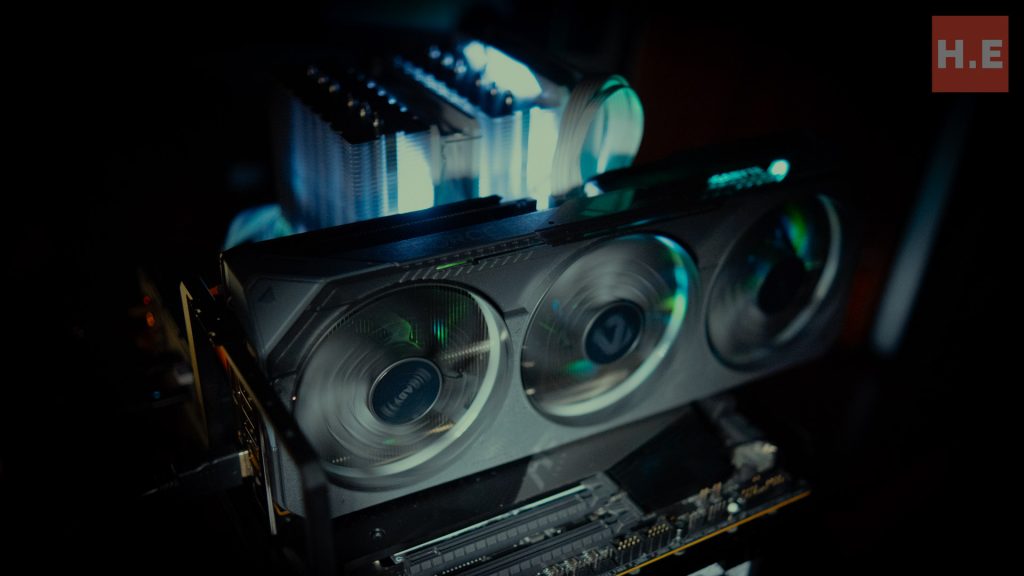
This places it among the lower memory capacity variants of the GeForce RTX 5070 series. So, the big questions remain: Is this GeForce RTX 5070 good enough to effortlessly drive modern AAA titles? Will the comparatively lower RAM capacity impact gaming performance in demanding scenarios? Let’s put the GeForce RTX 5070 to the test and find out.
Nvidia RTX 5070 Overview
For Gamer

The GeForce RTX 5070 is engineered with gamers in mind. This RTX 5070 OC 12GB GAMING edition harnesses the power of cutting-edge Fifth-Gen Tensor Cores. These new Tensor Cores deliver significantly improved AI performance.
Gamers will benefit from features like FP4 precision and the latest DLSS 4 technology. DLSS 4 allows for incredible upscaling, potentially boosting frame rates by up to 4x when compared to older RTX 20 series cards.
This means smoother gameplay at higher resolutions on the GeForce RTX 5070. Furthermore, the inclusion of Fourth-Gen Ray Tracing Cores elevates visual fidelity. These cores are specifically designed for “Mega Geometry,” a new advancement in ray tracing. Games that fully support NVIDIA’s RTX Mega Geometry, such as Alan Wake II, will showcase dramatically improved ray tracing performance. Expect stunning image quality, especially in heavily ray-traced environments.
For Content Creation
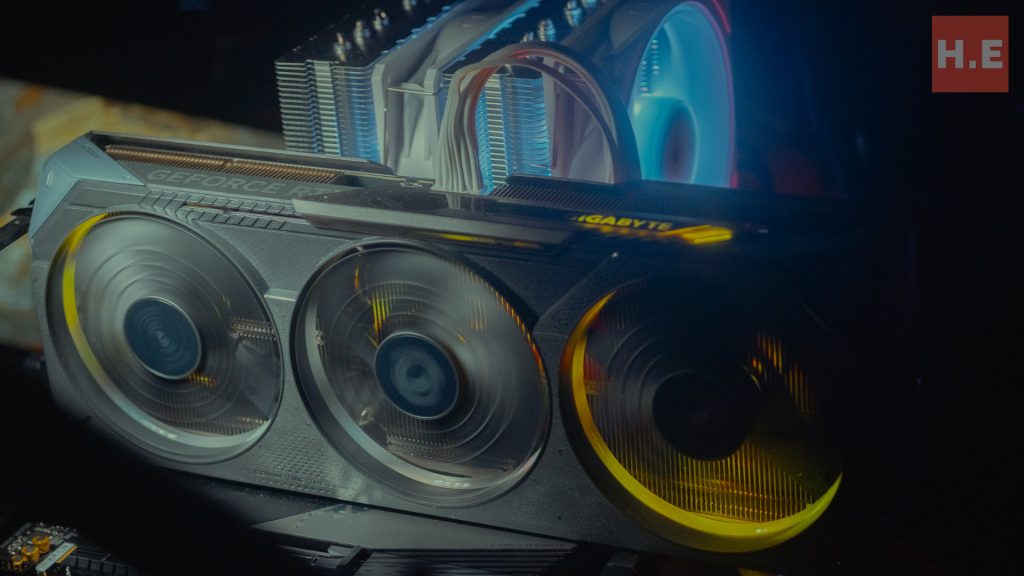
Beyond pure gaming, the GeForce RTX 5070 offers substantial benefits for content creators and streamers. This RTX 5070 card integrates the 9th generation NVIDIA Encoder (NVENC) and 6th generation NVIDIA Decoder (NVDEC). These dedicated hardware blocks significantly accelerate video encoding and decoding tasks.
For streamers, this means smoother, higher-quality live broadcasts with less impact on gaming performance. Video editors will experience faster rendering times and more efficient workflows when working with high-resolution footage. 3D artists will also find accelerated performance in their applications, making the GeForce RTX 5070 an excellent choice.
Specification
Full Specification
| Feature | RTX 5090 | RTX 5080 | RTX 5070 Ti | RTX 5070 | RTX 5060 Ti | RTX 5060 |
| Architecture | Blackwell (GB202) | Blackwell (GB203) | Blackwell (GB205) | Blackwell (GB206) | ||
| Process Node | TSMC 4N | |||||
| Release Date | Jan 30, 2025 | Jan 30, 2025 | Feb 2025 | Mar 5, 2025 | Apr 16, 2025 | May 19, 2025 |
| GPU Die | GB202-300 | GB203-400 | GB203-300 | GB205-300 | GB206-300 | GB206-250 |
| Transistors (billion) | 92.2 | 45.6 | 31.1 | 21.9 | ||
| Die Size (mm²) | 750 | 378 | 263 | 181 | ||
| CUDA Cores | 21,760 | 10,752 | 8,960 | 6,144 | 4,608 | 3,840 |
| Texture Mapping Units | 680 | 336 | 280 | 192 | 144 | 120 |
| Render Output Units | 176 | 112 | 96 | 80 | 48 | |
| Ray Tracing Cores | 170 | 84 | 70 | 48 | 36 | 30 |
| Tensor Cores | 680 | 336 | 280 | 192 | 144 | 120 |
| Boost Clock (GHz) | 2.41 | 2.62 | 2.45 | 2.51 | 2.57 | 2.5 |
| L1 Cache (MB) | 21.25 | 10 | 8.75 | 6 | 4.5 | 3.75 |
| L2 Cache (MB) | 96 | 64 | 48 | 32 | ||
| Memory Type | GDDR7 | |||||
| Memory Size (GB) | 32 | 16 | 12 | 8 (or 16GB variant) | 8 | |
| Memory Clock (Gb/s) | 28 | 30 | 28 | |||
| Memory Bandwidth (GB/s) | 1792 | 960 | 896 | 672 | 448 | |
| Memory Bus Width | 512-bit | 256-bit | 192-bit | 128-bit | ||
| TFLOPS FP32 (Boost) | 104.9 | 56.3 | 43.9 | 30.8 | 23.7 | 19.2 |
| TDP (watts) | 575 | 360 | 300 | 250 | 180 | 145 |
| Interface (Host) | PCIe 5.0 x16 | PCIe 5.0 x8 | ||||
| Power Connector | 1x 12V-2×6 | 1x 8-pin | ||||
| Display Outputs | 3x DP 2.1b, 1x HDMI 2.1b | |||||
The Gigabyte Touch

The Gigabyte GeForce RTX 5070 OC 12GB GAMING shared basically the same design with the Gigabyte GeForce RTX 5060 Ti OC 16GB GAMING. The only difference is the OC frequency, which is from 2625 MHz to based line 2512 MHz, which is an 4.5% of improvement, good enough to see minimal frame rate improvement.
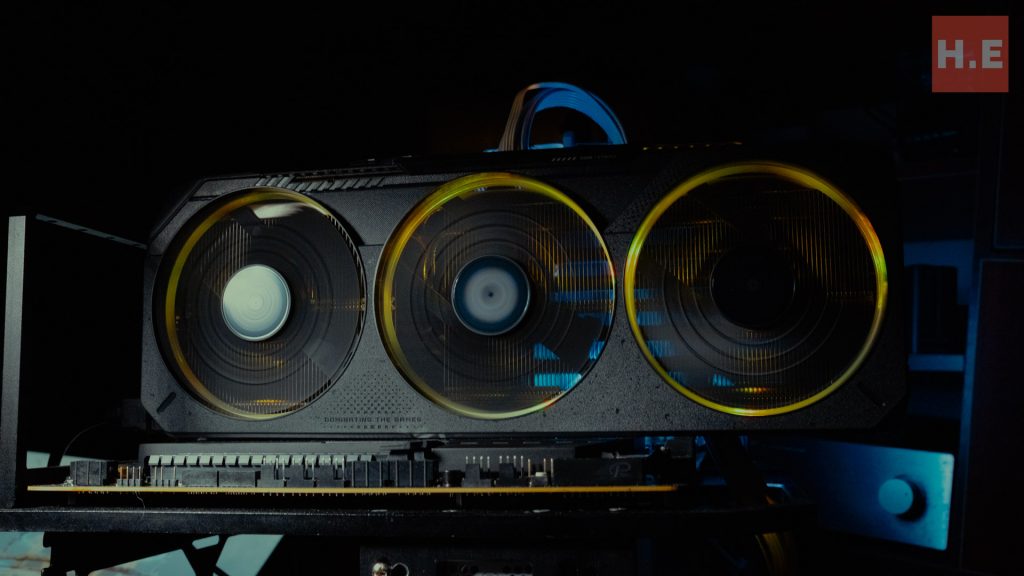
For other features and touch, check out our review of Gigabyte GeForce RTX 5060 Ti OC 16GB GAMING:
Gigabyte GeForce RTX 5070 OC 12GB GAMING Benchmark
To assess the Gigabyte GeForce RTX 5070 OC 12GB GAMING, we ran it through UL benchmarks 3Dmark, Cyberpunk 2077, Black Myth Wukong, and Monster Hunter Wilds’s benchmark too;s.
3DMark
Beyond real-world gaming, synthetic benchmarks like 3DMark offer precise tools to gauge a GPU’s raw capabilities. We put the GeForce RTX 5070 through several demanding 3DMark tests to provide a comprehensive picture of its performance.

In Speed Way, a DirectX 12 Ultimate benchmark focusing on advanced ray tracing and global illumination, the GeForce RTX 5070 achieved a strong score of 5859. This demonstrates its solid handling of the latest graphical technologies.
Moving to Steel Nomad, a new, highly demanding non-ray-traced benchmark, the GeForce RTX 5070 scored 5256. This test is crucial for understanding a card’s pure rasterization power, indicating the GeForce RTX 5070‘s robust performance in traditional rendering workloads.

For dedicated ray tracing performance, Port Royal is the go-to benchmark. Here, the GeForce RTX 5070 truly shined, hitting a score of 14248. This excellent result confirms the generational improvements in ray tracing capabilities for the GeForce RTX 5070.
Finally, the NVIDIA DLSS feature test in 3DMark provided compelling evidence of DLSS’s impact. With DLSS off, the GeForce RTX 5070 scored 23.55 FPS. However, when DLSS was enabled, the frame rate dramatically surged to 119.65 FPS.
| NVIDIA DLSS feature test | DLSS off | DLSS On |
| Score | 23.55 | 119.65 |
NVIDIA’s DLSS technology showed significant impact: the DLSS feature test score jumped from 21.78 (DLSS off) to 85.74 (DLSS on), highlighting DLSS 4’s ability to dramatically boost frame rates. For ray tracing, the Port Royal benchmark recorded an impressive 10,076.
Cyberpunk 2077
To truly illustrate the Gigabyte GeForce RTX 5070 OC 12GB GAMING’s DLSS capabilities, we chose Cyberpunk 2077 for our benchmarking. Despite its age, Cyberpunk 2077 is one of the titles that has received an update for DLSS 4. This allows us to clearly see how much additional frames are generated by this advanced technology on the GeForce RTX 5070. Our tests show remarkable results.
| Average FPS | Min FPS | Max FPS | |
| No DLSS | 79.39 | 61.36 | 92.42 |
| DLSS x2 | 132.80 | 118.51 | 146.42 |
| DLSS x3 | 183.85 | 165.29 | 199.33 |
| DLSS x4 | 224.24 | 203.34 | 241.24 |
With DLSS 4 enabled on the GeForce RTX 5070, the frame rate surged from approximately 80 FPS to an impressive 220 FPS. That’s a staggering 2.75 times more frames! Specifically, without DLSS, the game averaged 79.39 FPS. Engaging DLSS on the GeForce RTX 5070 significantly improved performance, bringing the average to 224.24 FPS.
Black Myth Wukong
Black Myth Wukong serves as an excellent test case for the GeForce RTX 5070, especially when evaluating its compatibility with various upscaling technologies that include frame generation.
This particular game supports a wide array of upscalers: TSR, FSR, XeSS, and of course, DLSS. This allowed us to conduct a thorough comparison on the GeForce RTX 5070. Our benchmark results highlight the clear advantages of NVIDIA’s DLSS technology.
| Average FPS | Min FPS | Max FPS | |
| No Frame Gen | 42 | 34 | 51 |
| TSR | 35 | 29 | 42 |
| FSR | 36 | 29 | 44 |
| XeSS | 36 | 29 | 43 |
| DLSS | 72 | 61 | 85 |
This demonstrates the superior frame generation support with DLSS with the GeForce RTX 5070, providing a significantly smoother and more enjoyable gaming experience.
Monster Hunter Wilds
Monster Hunter Wilds stands out as one of the most demanding AAA games currently available. Its officially announced minimal requirements are notably higher than many other contemporary AAA releases. This makes Monster Hunter Wilds an exceptional test for how well the GeForce RTX 5070 handles truly modern, graphically intensive games.
| Average FPS | Score | |
| No Frame Gen | 59.48 | 20162 |
| DLSS | 102.39 | 17546 |
The results from our testing on the GeForce RTX 5070 are insightful. Without any frame generation, the game managed to achieve almost 60 frames per second (FPS), a commendable feat for such a demanding title. However, the real game-changer was enabling DLSS. With DLSS engaged, the GeForce RTX 5070 pushed the frame rate to a smooth 102 FPS.
Comparing the GeForce RTX 5070 to the RTX 5060 Ti 16GB
Many of you in Malaysia might be wondering how the GeForce RTX 5070 stacks up against its slightly more affordable sibling, the RTX 5060 Ti 16GB. While our specific GeForce RTX 5070 sample comes with 12GB of GDDR7 memory compared to the RTX 5060 Ti’s 16GB, the raw power differences are quite evident in synthetic benchmarks.

Let’s look at the numbers from 3DMark:
In 3DMark Speed Way, a demanding test for ray tracing and advanced graphics, the GeForce RTX 5070 12GB achieved a score of 5859. In contrast, the RTX 5060 Ti 16GB scored 4045. This represents a significant performance lead for the GeForce RTX 5070, showcasing its superior capabilities in cutting-edge rendering.
For Steel Nomad, which focuses on pure rasterization performance, the GeForce RTX 5070 12GB scored 5256. The RTX 5060 Ti 16GB, while capable, managed 3532. Again, the GeForce RTX 5070 demonstrates a clear advantage in traditional gaming workloads.
| RTX 5070 12GB | RTX 5060Ti 16GB | |||
| Speed Way | 5859 | 4045 | ||
| Steel nomad | 5256 | 3532 | ||
| DLSS feature test | No DLSS | DLSS | No DLSS | DLSS |
| 23.55 | 119.65 | 21.78 | 85.74 | |
The NVIDIA DLSS feature test further highlights the generational leap. The GeForce RTX 5070 12GB, with no DLSS, scored 23.55 FPS, jumping to an impressive 119.65 FPS with DLSS enabled. The RTX 5060 Ti 16GB, without DLSS, achieved 21.78 FPS, improving to 85.74 FPS with DLSS.
Gigabyte GeForce RTX 5070 OC 12GB GAMING Conclusion
In conclusion, the Gigabyte GeForce RTX 5070 OC 12GB GAMING truly impresses as a mainstream powerhouse. Our benchmarks consistently demonstrate a significant performance improvement over the RTX 5060 Ti 16GB, especially evident in demanding titles and synthetic tests like 3DMark. The advancements in Fifth-Gen Tensor Cores, DLSS 4, and Fourth-Gen Ray Tracing Cores translate into a genuinely enhanced gaming and content creation experience. While our specific GeForce RTX 5070 sample comes with 12GB of GDDR7, proving sufficient for current demanding games with DLSS, some might see this as a potential bottleneck for future titles compared to cards with higher VRAM.
However, the GeForce RTX 5070 does come with a price tag of RM3799 here in Malaysia. This demands a premium over less well-known brands or previous generation cards. Despite this, one thing is abundantly clear: the GeForce RTX 5070 is a hardy and robust card, built to deliver consistent, high-performance gaming for years to come.
Help support us!
If you are interested in the Gigabyte GeForce RTX 5070 OC 12GB GAMING, we would really appreciate if you purchase it via the links below. The affiliate links won’t cost you any extra, but it will be a great help to keep our lights on here at HelloExpress.
- Gigabyte GeForce RTX 5070 OC 12GB GAMING (Lazada): https://s.lazada.com.my/s.Jns76