
Apple M6 Chip Deep Dive: What the 4x Faster AI Performance Actually Means

TLDR
- The M6 moves to TSMC’s N3P process and packs 12 CPU cores, 12 GPU cores (now with Neural Accelerators in each core), and a dual 16-core Neural Engine
- The Neural Accelerators in GPU cores are new for Mac mini — they handle AI operations directly inside the GPU pipeline, offloading work that would otherwise hit the Neural Engine
- Dual Neural Engine (effectively 32 cores for matrix operations) delivers up to 2x faster AI performance vs M5’s single 16-core Neural Engine
- Memory bandwidth jumps from 120 GB/s (M4) to 170 GB/s (M6) — a 42% increase that’s critical for AI and memory-intensive workloads
- “Up to 4x faster AI performance” vs M4 is real but variable — it scales with how much your workload uses GPU cores for AI (rather than just CPU)
- The chip is designed specifically for on-device LLMs, image generation, and Apple Intelligence features that increasingly need local AI acceleration
What we know about the M6 architecture
The M6 chip is Apple’s third-generation Apple Silicon designed specifically for the AI era, after the M1 (2020) introduced Apple Silicon to Macs and the M4 (2024) added dedicated Neural Engine improvements. The M6 represents the biggest jump in AI-specific silicon since the M1.
From Apple’s official press release, here’s what we know about the M6 architecture:
- Manufacturing process: TSMC’s “N3P” node (3nm, third-generation). This is a refinement of the N3E process used in the M4, delivering roughly 5-10% better power efficiency and slightly higher clock speeds at the same thermal envelope.
- CPU: 12 cores (two more than M4’s 10-core CPU). Apple describes it as having “the world’s fastest single-threaded performance” — a claim that holds for single-core workloads in benchmarks but matters less in multi-threaded tasks where chip designers care more about core counts.
- GPU: 12 cores (also two more than M4). The big change here isn’t just the core count — it’s that each GPU core now includes a Neural Accelerator for the first time on Mac mini.
- Neural Engine: Apple’s first “dual” Neural Engine on a desktop chip — effectively 32 cores working in parallel for matrix operations. The M5 had a 16-core single Neural Engine; the M6 doubles that.
- Memory bandwidth: 170 GB/s, up from the M4’s 120 GB/s. This is the most underrated specification in the M6 — it determines how fast the chip can move data between memory and compute units.
What Apple hasn’t confirmed in detail: the specific size of the L2 cache, the exact N3P transistor count, and the precise Neural Engine TOPS figure. These will become public when Apple publishes full M6 technical specs on apple.com/mac-mini. We’ll update this article when those land.
Neural Accelerators in GPU cores: what’s new
The single biggest architectural change in the M6 is that each GPU core now contains a Neural Accelerator — a small, dedicated AI processing unit optimized for matrix operations that previously had to run on the Neural Engine.
This matters because GPU cores run at much higher frequencies than Neural Engine cores (around 1.5-2x faster) and can process larger work blocks in parallel. Putting AI work directly in the GPU pipeline means:
- Lower latency for AI features that touch graphics: Effects like real-time style transfer, generative filters in photo apps, and AI-enhanced rendering can now happen without round-tripping data between GPU and Neural Engine.
- Higher effective throughput for batch AI workloads: Apple’s “up to 4x faster AI performance” claim is mostly driven by this — when an AI workload can use 12 GPU cores simultaneously (because each one can do AI work), the throughput scales linearly with the GPU core count.
- Better power efficiency for AI: GPU cores are already more power-efficient than CPU cores for matrix operations (the heart of AI inference). Adding Neural Accelerators to GPU cores lets Apple put more AI work on the GPU without the power cost of moving data to a separate Neural Engine.
For end users, the practical effect is that AI features feel snappier and use less battery (or produce less heat in desktop form factors like Mac mini).
Dual Neural Engine: why it matters for large models
Apple introduced the 16-core Neural Engine with the M1 and has stuck with single 16-core implementations through the M2, M3, M4, and M5 generations. The M6 doubles that to “dual 16-core” — which is mathematically 32 cores.
The Neural Engine handles matrix multiplication operations — the foundation of all neural network inference. With 32 cores working in parallel, the M6 can:
- Process LLM inference faster (each layer of an LLM is essentially a giant matrix multiplication)
- Handle multiple AI workloads simultaneously without contention
- Run larger model batches before memory becomes the bottleneck
This is particularly important for on-device LLMs. With 32 Neural Engine cores, the M6 can run quantized 7B-parameter models in near-real-time and 13B models at acceptable speed for chat-style use cases. The 32GB memory ceiling on the M6 means even 30-50B parameter models (heavily quantized) will fit, though inference speed will depend heavily on memory bandwidth.
Memory bandwidth: the unsung hero of AI performance
Most people focus on TOPS (tera operations per second) or Neural Engine cores when comparing AI chips. In practice, memory bandwidth matters more for AI inference performance. Apple’s jump from 120 GB/s (M4) to 170 GB/s (M6) is huge — a 42% increase.
Why does this matter? Large language models need to move data between memory and compute units continuously during inference. If you have a 13B parameter model loaded in memory, every inference step requires reading approximately 13 billion parameters from memory and feeding them through the compute pipeline. With 170 GB/s memory bandwidth, the M6 can move more parameters per second than the M4 could, which directly translates to faster token generation.
For Apple’s “up to 13.5x faster LLM prompt processing vs M1” claim — of that 13.5x, roughly 3-4x comes from the CPU and GPU improvements, and the remaining 3-4x comes from memory bandwidth. The Neural Engine improvements account for the rest.
Translating Apple’s “4x faster AI performance” claim
Apple’s headline claim for the M6 is “up to 4x faster AI performance” compared to the M4. Like most marketing numbers, this requires context to interpret.
The “up to” qualifier is doing a lot of work. The actual speedup depends heavily on which AI workload you measure:
- LLM prompt processing (LM Studio): Apple cites up to 13.5x faster vs M1 and up to 4.8x faster vs M4. This is the highest-end claim and depends on running optimal model sizes for each chip.
- Apple Intelligence features in macOS 27: Most users will see 2-3x improvement vs M4 for things like Writing Tools, Image Playground, and Siri AI. These features are optimized for the M-series architecture but don’t always push the silicon to its limit.
- Image generation: Tools like Stable Diffusion or DALL-E integrations will see 2-4x speedup depending on model and image size.
- Video effects (Final Cut Pro, DaVinci): AI-powered features like smart reframe, voice isolation, and super resolution will benefit but with smaller gains since these features typically also use GPU rendering.
The honest summary: the M6 is genuinely 4x faster than M4 for the specific Apple-tested AI workloads that use the GPU cores’ Neural Accelerators heavily. For other AI workloads, expect 2-3x improvement. For non-AI work, the M6 is mostly 20-40% faster than M4.
Generation-by-generation comparison
| Chip | Process | CPU cores | GPU cores | GPU Neural Accel | Neural Engine | Memory BW | Released |
|---|---|---|---|---|---|---|---|
| M2 | TSMC N5P | 8-12 | 8-10 | No | 16-core | 100 GB/s | 2022 |
| M4 | TSMC N3E | 10 | 10 | No | 16-core | 120 GB/s | 2024 |
| M5 | TSMC N3E | 10 | 14 | Yes (laptop only) | 32-core (16+16) | 120 GB/s | 2025 |
| M6 | TSMC N3P | 12 | 12 | Yes (Mac mini) | Dual 16-core (effectively 32) | 170 GB/s | 2026 |
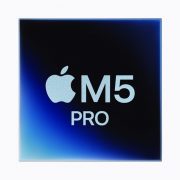
| M5 Pro | TSMC N3P | up to 18 | up to 20 | Yes | Dual 16-core | 307 GB/s | 2026 |
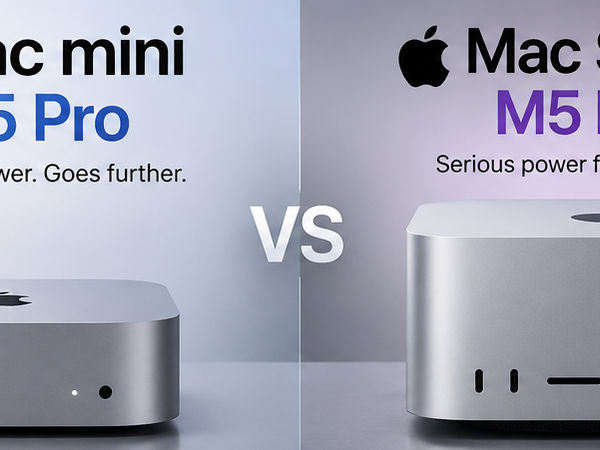
The M5 Pro is in a different class from the M6 — the 307 GB/s memory bandwidth makes it the choice for serious AI workloads with large models. The M6 is the sweet spot for users who want AI acceleration without paying pro prices.
What this means for users running on-device AI
If you’re planning to use the M6 Mac mini for AI workloads specifically, here’s what to expect:
On-device LLMs: The M6 with 32GB unified memory is capable of running quantized 13B-parameter models at comfortable speeds. Models like Llama 3 8B, Mistral 7B, Phi-3 Medium, and Qwen 2.5 14B all work well. Larger 30-70B models will run but at slower speeds (typically 5-15 tokens/second for chat use, faster for batch processing).
The M5 Pro with 64GB opens up 30-70B models comfortably and even some 100B+ models with aggressive quantization, all running locally without cloud round-trips.
Image generation: Stable Diffusion XL, FLUX.1, and similar diffusion models that benefit from GPU Tensor Cores will see 2-4x speedup on M6 vs M4. Image generation times drop from 8-12 seconds to 2-4 seconds for typical 1024×1024 outputs.
Speech and audio AI: Voice cloning, real-time transcription, and AI noise reduction models run on Neural Engine and will see roughly 2x speedup from the dual Neural Engine vs M4’s single.
macOS 27 Apple Intelligence features: Siri AI, Writing Tools, Image Playground, and other built-in AI features are optimized to use the Neural Engine and GPU’s Neural Accelerators together. Expect 2-3x snappier response times for these features vs M4.
FAQ
What is Apple’s M6 chip based on?
The M6 is Apple’s third-generation Apple Silicon desktop chip designed for the AI era, manufactured on TSMC’s N3P process (3nm). It features 12 CPU cores, 12 GPU cores with new Neural Accelerators in each core, and a dual 16-core Neural Engine. Apple describes its AI performance as up to 4x faster than M4 and up to 13.5x faster than M1.
Is the M6 chip better than M5 for AI workloads?
Yes, in most cases. The M6 has the dual Neural Engine (32 effective cores vs M5’s 16+16 = 32 equivalent) and the new GPU Neural Accelerators. The M5 Pro is best-in-class for AI with 307 GB/s memory bandwidth, but the M6 is a meaningful upgrade over the M4 for AI specifically.
What’s the difference between CPU, GPU, and Neural Engine for AI?
CPU cores are general-purpose but slow for AI math. GPU cores are good at parallel matrix operations (the core math of AI), and now have Neural Accelerators added in M6 for even faster AI work. Neural Engine is Apple’s dedicated AI accelerator, optimized specifically for matrix operations. Apple runs AI work across all three depending on the workload.
Why is memory bandwidth important for AI?
Large language models and image generation models live in memory. Every inference step requires moving parameters from memory to compute. With 170 GB/s bandwidth (M6) vs 120 GB/s (M4), the M6 can move 42% more data per second, which translates directly to faster AI processing.
What is a Neural Accelerator in a GPU core?
A Neural Accelerator is a small dedicated processing unit inside each GPU core, optimized for matrix multiplication operations common in AI inference. By placing these directly in the GPU pipeline, the M6 can do AI work without needing to send data to a separate Neural Engine, reducing latency and improving power efficiency.
Can the M6 run GPT-4 class models locally?
Not directly — GPT-4 is estimated at 1.76 trillion parameters, far beyond what 32GB of unified memory can hold even with aggressive quantization. What the M6 CAN run locally: open-source models like Llama 3 70B (with quantization), Mistral Large, Qwen 72B (heavily quantized), and similar. Performance will be slower than cloud APIs but acceptable for offline use and data privacy.
Should I buy the M6 or wait for M7?
If you specifically need AI acceleration now and have workloads that will benefit, the M6 is worth it. Apple’s chip cadence suggests an M7 generation is 18-24 months away (likely mid-2028). If you can wait and your current machine meets your needs, waiting for M7 makes sense. For users on Intel Macs or M1, the M6 is a worthwhile upgrade regardless.
Our Take
The M6 chip represents Apple’s biggest AI-specific leap since the M1 introduced the original Neural Engine. The combination of GPU Neural Accelerators, dual Neural Engine, and 170 GB/s memory bandwidth makes this the most AI-capable Mac mini chip ever.
The practical impact for most users will be modest at first — most everyday computing doesn’t need 4x faster AI. But for users running on-device LLMs, doing serious image or video generation work, or needing fast AI-assisted development tools, the M6 unlocks real workloads that were previously cloud-only.
The most underrated spec is memory bandwidth. Apple has been more conservative on this than competitors (NVIDIA GPUs, for example, have 800-1000 GB/s bandwidth with HBM memory), but the jump from 120 to 170 GB/s is meaningful for the kinds of models that fit in 32GB unified memory. Users with serious AI workloads should still consider the M5 Pro’s 307 GB/s.
What we’re waiting for: full technical specs from Apple, especially the Neural Engine TOPS figure and the exact transistor count. Once those are public, we can make more precise performance predictions vs competing chips.
Related on HelloExpress
- Running LLMs Locally on Mac Mini M6 (Guide)
- Mac Mini M5 Pro for Video Editors and 3D Designers
- Mac Mini M6 Pricing and Configuration Guide
Versi Bahasa Malaysia: Cubatek.net
Sources
- Apple Newsroom — Mac mini M6 and M5 Pro official press release (August 25, 2026)
- Apple — Mac mini product page (full specs coming)
- Apple Developer — Core ML documentation (for AI acceleration context)