
Malaysia’s AI Growth Must Be Green, Intelligent And Real-World: Fahmi At WAIC Connect Malaysia 2026

TLDR
- Communications Minister Dato’ Seri Fahmi Fadzil says Malaysia’s AI push must deliver real-world economic value, not just compute capacity
- The National AI Action Plan 2026–2030, dubbed AI Nation 2030, targets an additional 0.8–1.2 percentage points of annual GDP growth — equivalent to RM13–20 billion a year
- The plan also aims to create 300,000 to 500,000 new AI-related jobs across the economy
- Huawei Malaysia has pledged to nurture 30,000 Malaysian AI talents and develop 200 local AI partners over the next three years
- China’s Ambassador to Malaysia, Ouyang Yujing, framed the event as a new growth engine for China–Malaysia cooperation
Fahmi: Malaysia’s AI Build-Out Must Translate Into Real-World Value
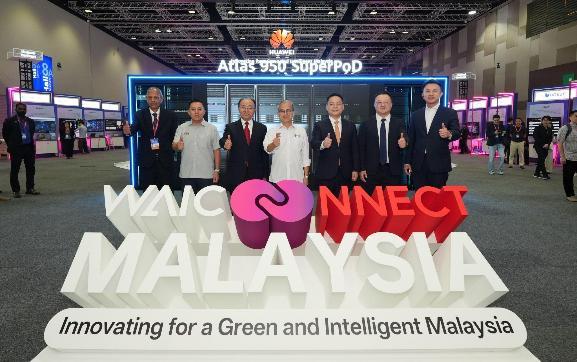
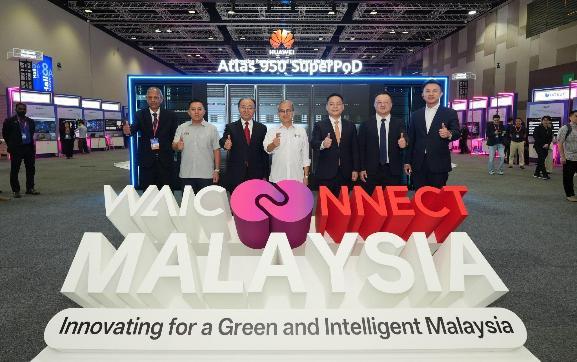
Malaysia must convert its growing digital infrastructure and computing capacity into artificial intelligence capabilities that deliver measurable economic value across the economy, Communications Minister Dato’ Seri Fahmi Fadzil said at the inaugural WAIC Connect Malaysia 2026 in Kuala Lumpur. The two-day conference, held at the Kuala Lumpur Convention Centre from 7 to 8 September, brought together more than 80 ecosystem partners and 1,000 industry experts from across the Asia-Pacific region.

“The distinction we must now make is between having digital infrastructure and being a place where AI is developed, deployed and applied,” Fahmi said in his keynote address. That means using AI to make Malaysia’s semiconductor and electronics industries more productive, strengthen advanced manufacturing and logistics, improve supply chains, transform healthcare, support agriculture, and deliver better public services, he added.
AI Nation 2030 Targets RM13–20 Billion In Additional Annual GDP
Fahmi used the keynote to outline the Government’s National AI Action Plan 2026–2030, branded as AI Nation 2030. The headline numbers are ambitious: an additional 0.8 to 1.2 percentage points of annual GDP growth, equivalent to roughly RM13 billion to RM20 billion a year, alongside 300,000 to 500,000 new AI-related jobs over the plan’s lifetime.
Progress, he said, should not be measured simply by computing capacity but by the economic value and opportunities created from it. He also stressed that growth in AI must create opportunities for young people and support job growth — a clear signal that the government wants the plan to land politically as well as economically.
Huawei Pledges 30,000 AI Talents And 200 Local Partners
Huawei Technologies (Malaysia) was a major partner of WAIC Connect Malaysia 2026, and Fahmi welcomed the company’s goal of nurturing 30,000 Malaysian AI talents and developing 200 local AI partners over the next three years through training, knowledge transfer, and cloud and AI collaborations. Huawei APAC President Terry He positioned Malaysia as a regional AI hub, pointing to Johor’s fast-growing AI data centre cluster, competitive and increasingly green power, and a forecast that Malaysia will host around two-thirds of ASEAN’s data centre capacity by 2035.
China’s Ambassador to Malaysia, H.E. Ouyang Yujing, framed the event as a new growth engine for China–Malaysia cooperation, citing Chinese exports of over 10,000 smart bionic robots to more than 90 countries in the first half of the year as evidence of how intelligent manufacturing is going global. Malaysian regulators MCMC and Malaysia Digital Economy Corporation (MDEC) were also present, alongside more than 40 exhibition showcases spanning AI applications across industries.
Our Take
The headline GDP numbers from AI Nation 2030 are aggressive, but the more interesting signal is Fahmi’s repeated emphasis on real-world deployment over raw compute capacity. Malaysia has spent the last two years landing hyperscaler data centres; the harder question is whether AI tooling actually changes outcomes in healthcare, agriculture, and public services. Huawei’s 30,000-talent pledge is a sizeable commitment, but the test will be whether those skills show up in Malaysian-headquartered products rather than in Huawei’s own regional headcount.