

OPPO Earth Day 2026 — The Brand’s Sustainability Journey and What It Actually Means

TLDR:

- OPPO commits to carbon neutrality by 2050 with interim emissions reduction targets
- 3R+1D packaging principle (Reduction, Recyclability, Reusability, Degradability) applied across all new products
- E-waste initiative has processed over 62 million tons globally through recycling partnerships
- Find X9 series contributes to rhino tracking in Africa and youth programmes in India with 469,500 volunteer hours logged
- India Generation Green Initiative trained 5,000 interns, engaged 1M youth, and processed 10,339kg of e-waste
Carbon Neutrality by 2050 — What OPPO Is Actually Promising
OPPO joined the growing list of technology companies pledging carbon neutrality by 2050, announcing its formal commitment during Earth Day 2026. The pledge covers the company’s direct operations, supply chain emissions, and product lifecycle including manufacturing, transportation, and end-of-life processing. This is a significant scope for a smartphone manufacturer, as the industry’s carbon footprint extends well beyond factory electricity consumption.

Interim targets precede the 2050 goal, with OPPO committing to specific emissions reduction milestones at two-year intervals. The company has not published detailed methodology for these targets, which is common at early stages of corporate sustainability programmes. Environmental analysts will look for OPPO to publish third-party verified emissions data as the programme matures.
The carbon neutrality pledge applies globally, meaning Malaysian consumers purchasing OPPO devices are supporting a company with formal climate commitments. While individual device purchases represent a small fraction of total emissions, the aggregate effect of consumer electronics demand makes manufacturer commitments materially significant.
The 3R+1D Packaging Principle in Practice
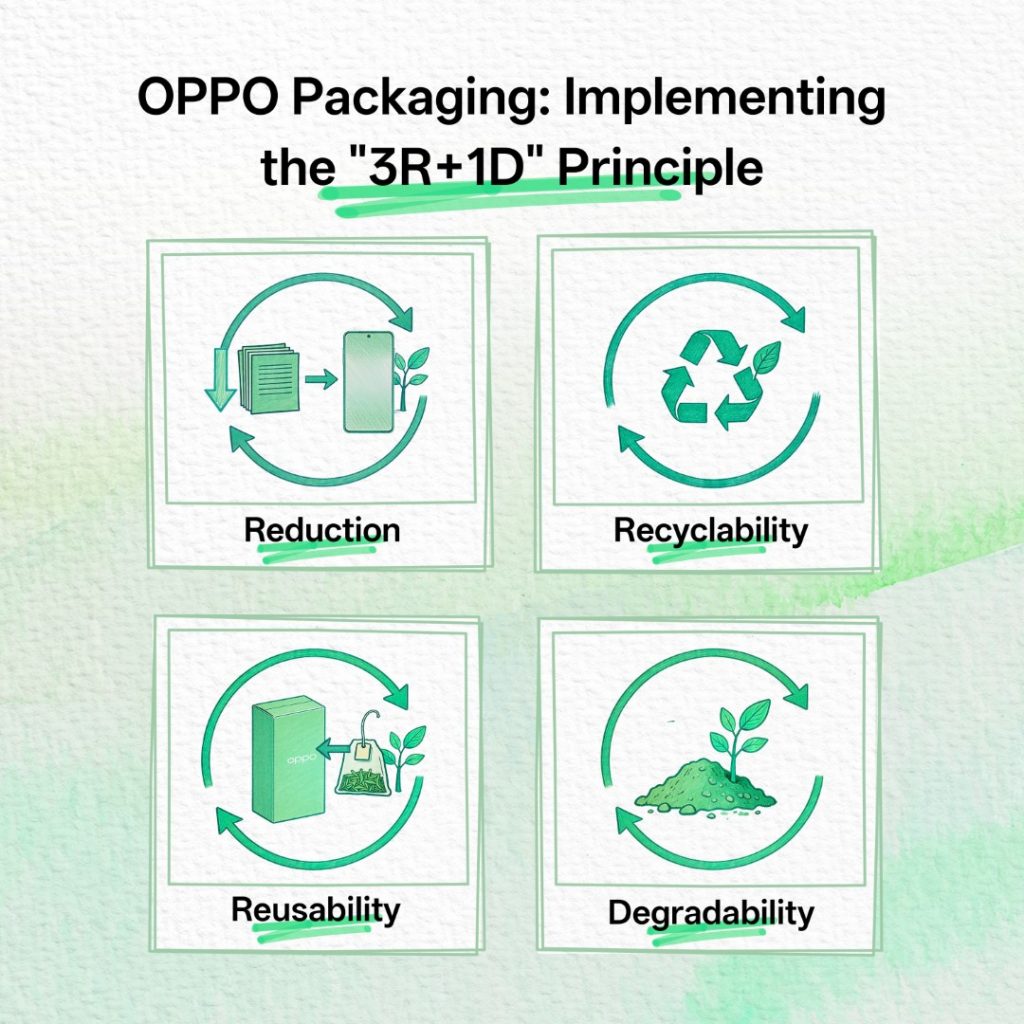
OPPO’s 3R+1D packaging framework defines how the company approaches product packaging across its entire portfolio. The four pillars are: Reduction (minimising material used), Recyclability (using materials that can be processed through existing recycling streams), Reusability (packaging designed for secondary use), and Degradability (materials that break down naturally when composting).
For the Find X9 series specifically, OPPO reduced paper content by approximately 30 percent compared to previous generation packaging. The replacement materials include biomass-based plastics derived from plant sources that are certified compostable under industrial conditions. The charging cable compartments use recycled cardboard inserts rather than plastic moulded trays, reducing the plastic content of each package.
OPPO has begun transitioning retail bags and promotional materials to recycled paper and biopolymers, though the timeline for full conversion varies by market. Malaysian retail partners have committed to supporting the transition as OPPO rolls out updated packaging to the region.
Global E-Waste Processing and the 62 Million Tons Figure
OPPO’s most tangible sustainability contribution is its role in global e-waste processing through recycling partnerships. The 62 million tons figure represents the cumulative weight of electronic waste processed through the company’s authorised recycling network since the programme began. This includes devices collected through OPPO’s trade-in schemes, authorised collection points, and partnerships with municipal recycling programmes across Asia, Europe, and Africa.
To put this figure in context, global e-waste reached approximately 62 million tons annually by latest United Nations estimates. OPPO’s contribution represents a portion of total global e-waste rather than the entirety, and consumers should understand this distinction. The number is still significant — the company’s recycling infrastructure diverts millions of devices from landfills annually.
OPPO’s recycling partner network includes certified e-waste processing facilities that comply with environmental standards for heavy metal extraction, plastic processing, and safe disposal of hazardous components. The company has committed to ensuring no e-waste from its operations ends up in developing nations without proper processing infrastructure, a common problem in the broader electronics industry.
Rhino Tracking in Africa with the Find X9
OPPO has partnered with wildlife conservation organisations in Africa to support rhino population monitoring using Find X9 smartphones. The project equips field rangers with ruggedised Find X9 devices modified for extreme outdoor use, with the phones serving as communication hubs, camera controllers, and data collection tools in protected areas where infrastructure is minimal.
The Find X9’s IP69 rating and large battery capacity make it suitable for multi-day field deployment without charging infrastructure. Rangers use the devices to record sighting data, photograph individual rhinos for identification, and transmit location information to central conservation databases. OPPO’s contribution includes hardware donations and funding for training programmes, with the company receiving conservation data in return for analytical purposes.
The project reflects a growing trend in consumer electronics sustainability: brands using product capabilities to support environmental causes rather than simply offsetting carbon through purchasing offsets. The Find X9’s field deployment provides OPPO with real-world durability data while supporting genuine conservation work.
India Generation Green Initiative — Youth-Focused Environmental Programme
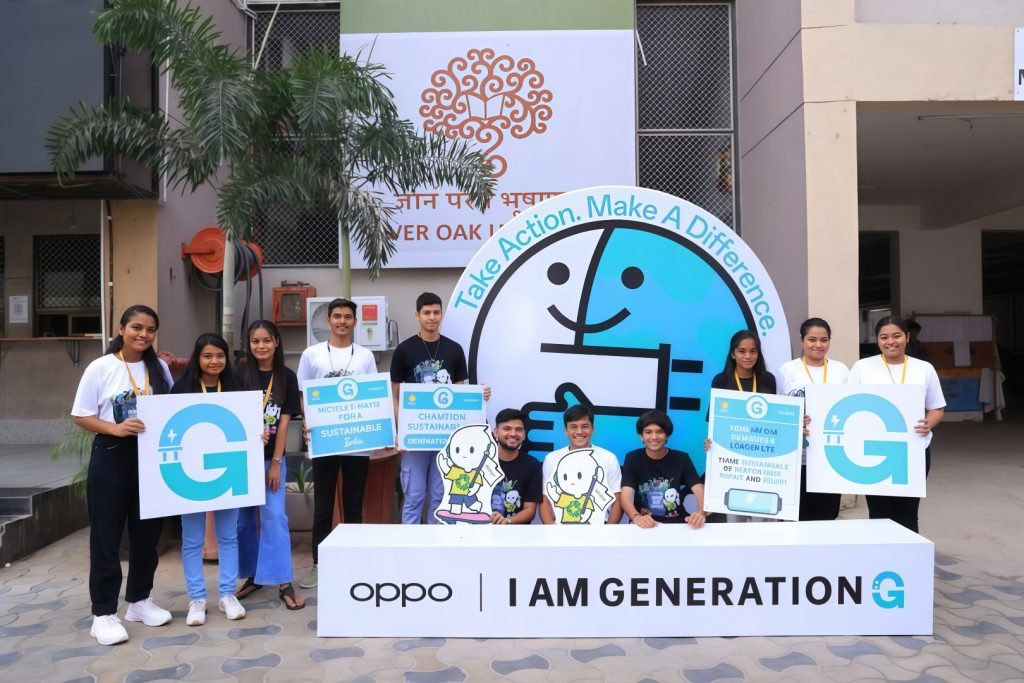
OPPO’s India Generation Green Initiative represents the company’s largest youth environmental programme, engaging young people across India in sustainability activities. The programme has trained 5,000 interns in environmental monitoring and e-waste processing, while mobilising one million youth participants in various sustainability challenges throughout the year.
The volunteer effort has generated 469,500 hours of recorded volunteer work across Indian cities and rural areas, with participants contributing to tree planting, clean-up campaigns, and environmental education programmes. The programme processed 10,339 kilograms of e-waste through supervised collection events, with collected materials sent to certified processing facilities.
OPPO uses the Generation Green Initiative as a model for similar youth engagement programmes in other markets. The company is exploring partnerships with Malaysian educational institutions to adapt the programme for local conditions, though specific timelines for a Malaysian launch have not been announced.
Our Take
OPPO’s Earth Day 2026 announcements cover meaningful ground without relying heavily on carbon offset terminology that has become controversial in sustainability circles. The carbon neutrality pledge by 2050 is credible when paired with interim targets, though investors and consumers should watch for published emissions data that verifies progress.
The most substantive contribution is the e-waste processing network, which has actually diverted material from landfills at scale. The 62 million tons figure deserves scrutiny — it likely represents cumulative collection over multiple years across all OPPO markets — but the infrastructure itself is valuable regardless of the exact tonnage.
The Africa rhino tracking project is the most interesting brand initiative, using Find X9 hardware in conservation settings where the devices’ durability and battery life genuinely matter. This is a better use of product capability than abstract carbon claims, and it gives the sustainability programme a concrete narrative that marketing teams cannot easily fabricate.
For Malaysian consumers evaluating electronics purchases on environmental grounds, OPPO’s trajectory is positive. The company is not yet at the level of environmental transparency that dedicated sustainability brands achieve, but the structural commitments — carbon neutrality pledge, 3R+1D packaging, e-waste network, conservation partnerships — represent a foundation that can develop.