

TransUnion Urges Lenders to Rethink Credit Risk Assessment for Hong Kong Gig Workers

TLDR:
- TransUnion study reveals gig workers in Hong Kong demonstrate strong credit profiles, with 95% falling in prime or higher credit tiers
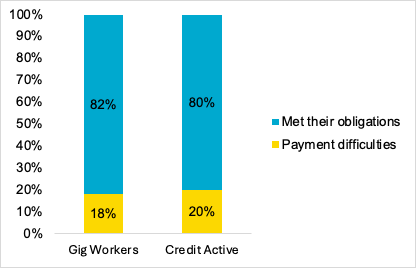
- Repayment discipline among gig workers slightly outperforms the general public at 82% versus 80%
- Nearly half of gig workers face difficulties accessing credit due to traditional underwriting rules that cannot evaluate alternative income
- Approximately 13% of Hong Kong’s workforce are now engaged in gig work, with 89% earning supplementary income alongside regular salaries

Gig Economy Grows as Credit Risk Misconceptions Persist
The gig economy in Hong Kong has expanded significantly over the past decade, with independent workers now comprising approximately 13% of the domestic workforce. These freelancers, contractors, and platform-based workers have become a fixture in the city’s labour market, contributing across industries ranging from delivery services to professional consulting. Yet despite their growing economic significance, traditional lenders have been slow to adapt their risk assessment frameworks to accommodate this new employment landscape.

A new study by TransUnion, one of Asia Pacific’s leading credit reporting agencies, is challenging long-held assumptions about gig workers and their creditworthiness. The research reveals that the prevailing view linking non-traditional employment to higher lending risk lacks substantiation in actual borrower behaviour data. Instead, the findings suggest that gig workers in Hong Kong present a largely underserved market with strong repayment discipline and a appetite for mainstream financial products.
The study’s most striking discovery centres on credit tier placement. Among surveyed gig workers in Hong Kong, 95% sit in prime or higher credit tiers, compared to 90% of the broader credit-active population. This distinction indicates that the majority of gig workers maintain financial discipline comparable to or exceeding that of traditionally employed individuals. The data undermines the stereotype that irregular income automatically translates to unreliable borrowers.
High Borrowing Appetite Meets Structural Barriers
Despite their solid credit profiles, gig workers face considerable obstacles when attempting to access financial products. Almost half of respondents across all age groups reported difficulties during the credit application process. These challenges stem from underwriting rules designed around conventional employment structures that rely heavily on salary slips, employment letters, and stable monthly income verification.
Traditional risk models frequently struggle to evaluate alternative income sources that gig workers depend on. A delivery rider might earn substantial income through multiple platform apps, while a freelance designer could have feast-or-famine monthly revenues. Standard documentation requirements do not capture this income diversity, leaving creditworthy applicants unable to demonstrate their true financial capacity. As a result, gig workers often receive unfavourable pricing terms, encounter unnecessarily complex procedures, or are outright rejected by lenders who cannot fit their profiles into traditional boxes.
The irony is particularly pronounced given the borrowing appetite observed in the segment. The study found that 32% of surveyed gig workers had applied for new credit or refinancing in the past six months, a rate that reflects strong engagement with the financial system. Their uptake of mainstream products also outpaces the general public, with 28% holding mortgages and 22% holding personal loans. These are not financially disengaged individuals; they are active participants in the credit market who are being systematically underserved by existing products.
Alternative Data Could Unlock Credit Access
TransUnion’s findings carry significant implications for financial institutions willing to adapt their lending approaches. The research highlights that 89% of gig workers do not rely solely on freelance income, with the majority earning a regular salary alongside their side jobs. This dual-income reality is rarely captured in credit assessments that focus narrowly on primary employment documentation.
Weihan Sun, Senior Director of Research and Consulting for Asia Pacific at TransUnion, emphasised that gig workers represent a material and growing borrower segment that warrants updated risk frameworks. “Gig workers are a material and growing borrower segment who are often mistakenly perceived as having riskier, volatile income trends and inconsistent payment behaviours,” she noted. Her comment underscores a critical gap between perception and reality in how the credit industry evaluates non-traditional employment.
The employment landscape itself reinforces the case for change. Nearly three-quarters of surveyed gig workers in Hong Kong plan to continue this type of work in the near future, indicating that freelance and platform-based income is not a temporary phenomenon but a permanent structural shift in how people earn a living. Lenders that continue applying legacy underwriting rules risk alienating a substantial and growing customer base while missing opportunities for portfolio expansion.
Our Take
TransUnion’s research arrives at a pivotal moment for Hong Kong’s financial services sector. The data makes a compelling case that the credit industry’s risk models are lagging behind labour market realities. If gig workers genuinely outperform traditional borrowers on key metrics like repayment discipline and credit tier placement, then continued exclusion from affordable credit represents both a market failure and a missed commercial opportunity for lenders.
For Hong Kong consumers, the current system creates unnecessary friction for a demographic that is statistically creditworthy. A food delivery rider or a freelance creative professional who has consistently met payment obligations should not be penalised simply because their income documentation looks different from a salaried employee. The 89% of gig workers who hold regular jobs alongside their freelance work present an especially strong case for alternative data integration, as their income diversity often provides more resilience, not less, than single-income households.
The path forward requires lenders to move beyond checkbox underwriting and genuinely incorporate alternative data sources such as platform earnings histories, multi-income verification, and dynamic income tracking. Regulators, for their part, should provide clear guidance on how such data can be ethically integrated into credit decisions without creating new forms of exclusion. Ultimately, financial inclusion is not just about extending credit to underserved populations — it is about ensuring that credit assessments accurately reflect the consumers they purport to evaluate. Gig workers have demonstrated their creditworthiness. The question now is whether the industry will catch up.
Keyword
gig workers credit risk Hong Kong