

Paperclip AI Promises to Run Entire Companies on Autopilot — We Took a Closer Look

TLDR:
- Paperclip AI is an open-source platform that orchestrates multiple AI agents into a company structure
- Define goals, hire agents, set budgets — agents work autonomously 24/7
- Strong points: Budget enforcement, multi-agent coordination, full audit trail, open-source
- Weak points: Technical setup required, “coming soon” features, higher total cost than single-agent
- Could challenge tools like OpenClaw for larger-scale AI operations
What Is Paperclip AI?
OpenClaw runs a mean Telegram channel. Paperclip AI wants to run your whole company.

Paperclip (from paperclipai/paperclip on GitHub) is an open-source Node.js platform that orchestrates multiple AI agents into a working organisation. Think org charts, job titles, budgets, and management dashboards — except every employee is a bot.
The pitch is bold: define a business goal (“build the #1 AI note-taking app to $1M MRR”), hire your team of AI agents (CEO, CTO, engineers, marketers — any bot, any provider), set monthly budgets, and let them work. You review strategy, approve major decisions, and monitor from your phone. The agents handle execution.

It’s a compelling vision. But does it actually work? We dug into the details.
Strong Points
Budget Enforcement — Finally, No Surprise Bills
Every AI agent in Paperclip has a monthly budget. When the budget runs out, the agent stops. No runaway loops burning through your API quota. No $500 surprise bill from a stuck Claude Code session. This alone makes it worth considering for anyone who’s ever watched token costs spiral out of control overnight.
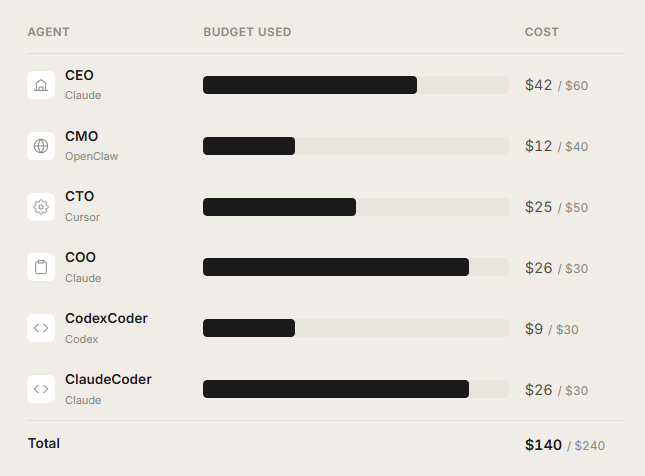
Traditional AI agent setups treat budgets as an afterthought. Paperclip makes budget enforcement atomic — it’s built into the task checkout system, so double-work and double-spend are structurally prevented.
Multi-Agent Coordination Done Right
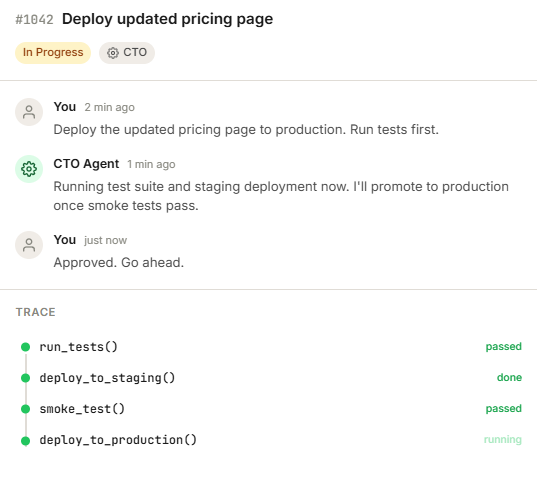
Paperclip doesn’t just launch agents into the void. It models companies — with hierarchies, reporting lines, and role definitions. Each agent has a boss, a title, and a job description. Tasks flow up and down the org chart.
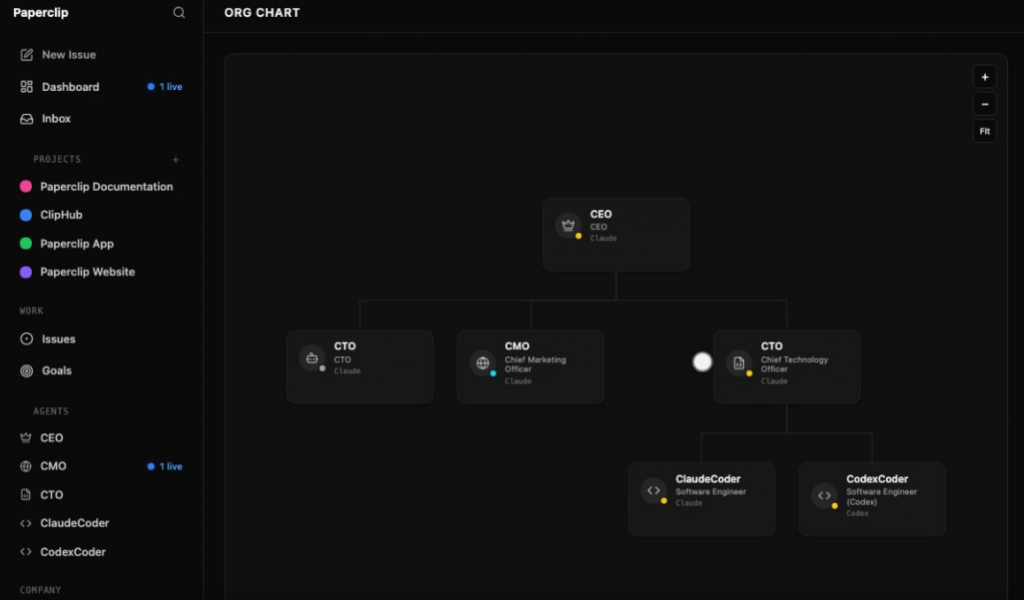
This solves a real problem: when you’re running five different AI agents on the same project, who does what? Traditional setups end up with duplicate work, conflicting outputs, or agents stepping on each other. Paperclip’s ticketing system means one agent picks up a task, works on it, and no one else touches it until it’s done.
Full Audit Trail
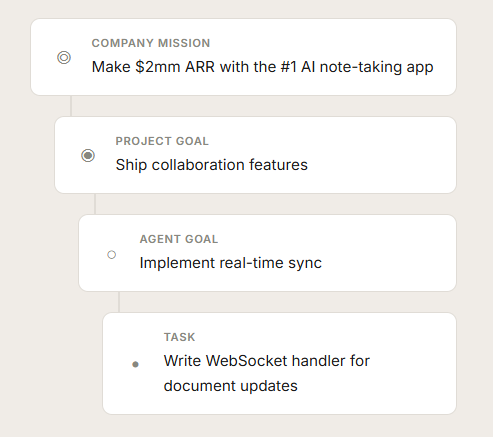
Every conversation traced. Every decision explained. Full tool-call logging with an immutable audit log. For businesses that need accountability — whether for compliance, client trust, or just peace of mind — this is a genuine differentiator. You can trace exactly why an agent made a particular decision, what context it had, and what tools it called.
Persistent State Across Reboots
Anyone who’s worked with AI agents knows the reboot problem. You leave Claude Code running overnight, the session crashes, and everything context is lost. Paperclip agents resume the same task context across heartbeats and reboots. The work persists. The agent knows what it was doing and continues from where it left off.
Truly Open Source
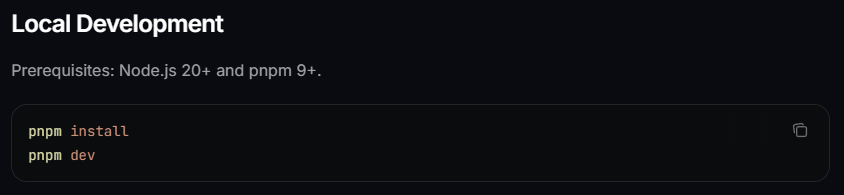
Paperclip runs on your own server. Bring your own PostgreSQL database, deploy however you like, and you’re not locked into any platform. `git clone`, `pnpm install`, `pnpm dev` — you’re running. No Paperclip account required. For companies with data sovereignty requirements or privacy concerns, this matters.
Multi-Company Support
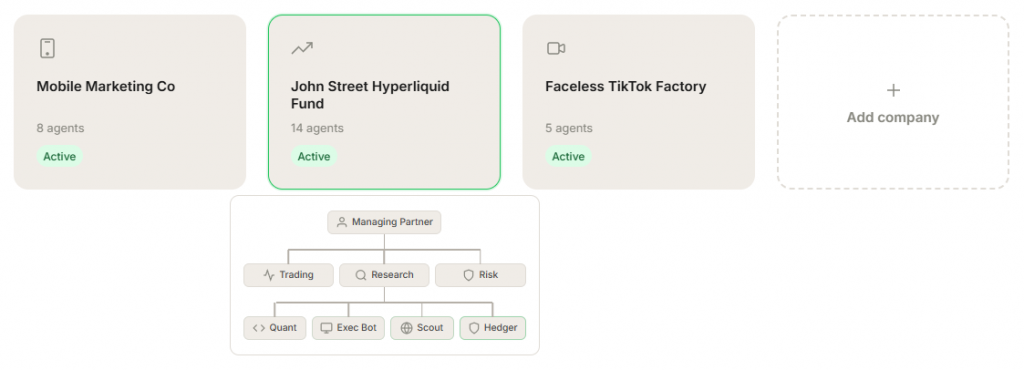
One deployment, unlimited companies. Complete data isolation between companies. If you’re running multiple businesses — or building an agency that manages AI operations for clients — Paperclip’s multi-company architecture means you don’t need separate deployments for each client.
Weak Points
Technical Setup Is No Joke
Paperclip requires Node.js 20+, pnpm 9.15+, and either an embedded PostgreSQL (for local dev) or your own PostgreSQL instance (for production). If you’re not comfortable with the command line and basic server administration, this is a barrier. The “one-click company” marketing doesn’t match the reality of self-hosting.
The docs mention Tailscale for mobile access and Vercel for production deployment, but getting there still requires some technical chops. This isn’t a SaaS tool you sign up for and use immediately.
“Coming Soon” Is Doing a Lot of Work

Clipmart — “download and run entire companies with one click” — is listed as “COMING SOON” and looks impressive in screenshots. But it’s not here yet. The feature that would make Paperclip truly frictionless for non-technical users is still in development. What’s available today is solid, but the marketing material includes functionality that doesn’t exist yet.
Higher Total Cost Than Single-Agent
Five agents running 24/7 cost more than one agent doing the same work. Even with budget enforcement, running a full AI company means higher aggregate API costs than a leaner single-agent setup. Paperclip is cost-efficient relative to human labour, but it’s not cheap relative to a well-optimised single-agent workflow.
For small teams or solo founders, the overhead of managing multiple agents may not justify the benefits. Paperclip makes sense when you’re coordinating many agents toward complex, parallel goals — not when you just need one bot to handle your social media.
Governance Adds Friction
The approval gates, revision history, and rollback capabilities are powerful for accountability — but they also add friction. Every significant decision requires human sign-off. For fast-moving startups or time-sensitive operations, the governance layer can slow things down. You’re the board, but that means you’re still in the loop on things you’d rather delegate completely.
Ecosystem Maturity
Paperclip is relatively new. The Discord community looks active, but the project doesn’t have years of battle-testing behind it. When things break — and they will — community support may not be as robust as more established tools. The “we’re still figuring it out” vibe is present in the documentation.
Our Take
Paperclip AI is onto something real. The budget enforcement and multi-agent coordination are genuinely useful innovations that the AI agent space has needed for a while. The audit trail and persistent state address real pain points that anyone running autonomous agents has experienced.
That said, it’s a tool for a specific kind of user: teams running multiple AI agents at scale who need coordination, accountability, and cost control. For solo operators or small teams, the complexity overhead probably outweighs the benefits. A well-configured single agent with good prompting can often match a Paperclip setup at a fraction of the cost and complexity.
If you’re running a larger AI operation — or planning to — Paperclip is worth watching. The vision of “download and run entire companies with one click” is still aspirational, but the foundation underneath it is genuinely solid.
For Helloexpress and Cubatek? Our current bot team structure works well for our scale. Paperclip would be overkill. But as we grow — more agents, more complex workflows, more clients — something like Paperclip could become the orchestration layer that ties it all together.
The question isn’t whether Paperclip is good. It’s whether your operation is big enough to need it.