
Tesla’s Terafab Set to Launch in 6 Days — Here’s What It Means for AI Hardware

TLDR:
– Tesla’s Terafab semiconductor project launches March 21, 2026, near Giga Texas
– Custom AI chips will power Full Self-Driving, AI training, and future robotics
– Tesla aims to reduce dependence on external foundries like TSMC and Samsung
– Could produce 100B+ chips annually for AI computing demands
– Facility marks major vertical integration in Tesla’s supply chain strategy
Tesla is about to make a massive leap into semiconductor manufacturing. The company’s highly anticipated Terafab project is set to launch in just six days, on March 21, 2026, marking a significant milestone in Tesla’s push to control its entire AI hardware supply chain. Located right next to Giga Texas outside Austin, the facility represents Tesla’s most ambitious move yet into custom chip production.
What Tesla Terafab Actually Is
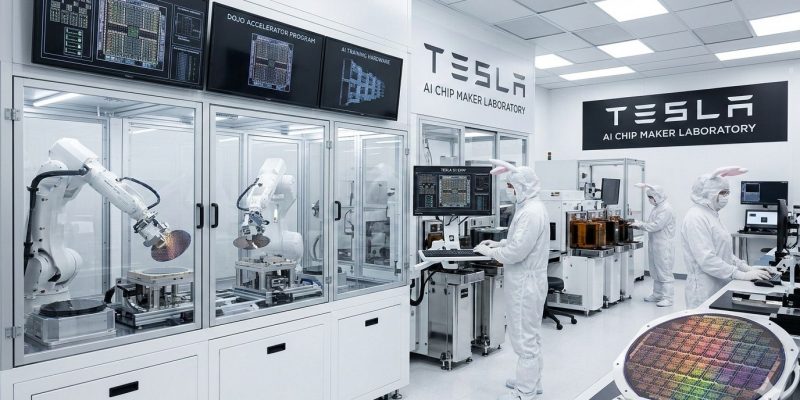
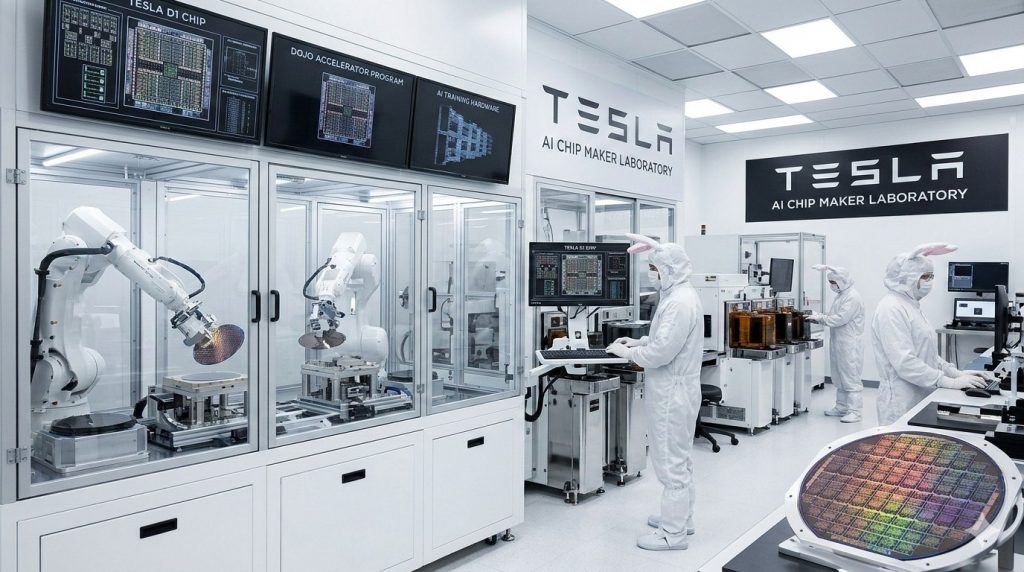
The Terafab Project isn’t just another chip design initiative — it’s a full-blown semiconductor manufacturing facility. According to Elon Musk, the project will manufacture custom AI chips specifically designed for autonomous driving applications, AI training infrastructure, and future robotics platforms. Tesla has been designing its own chips for years, but Terafab marks the first time the company will produce them in-house.
The facility is designed around a tera-scale manufacturing model, potentially integrating logic chip production, memory fabrication, and advanced packaging all in one location. This vertical integration approach could allow Tesla to produce over 100 billion chips annually — a scale that would significantly exceed what current external foundries can provide.
Tesla’s current AI chips power critical systems including Full Self-Driving (FSD) software and the company’s Dojo supercomputer for AI training. The upcoming fifth-generation AI chip will further enhance computing performance for Tesla vehicles and expand capabilities for their growing robotics ambitions.
Why Tesla Is Going Vertical
The move to build its own chip fabrication plant reflects growing concerns about dependency on external foundries. Today, most advanced AI chips are manufactured by a small number of global foundries, primarily Taiwan Semiconductor Manufacturing Company (TSMC) and Samsung. Tesla has worked with these partners, but Musk has argued that existing capacity won’t be sufficient for the company’s future AI needs.
As Tesla expands beyond electric vehicles into autonomous robotaxis, humanoid robots (like Optimus), and large-scale AI training systems, the company anticipates needing enormous volumes of specialized processors. The Terafab facility aims to solve this bottleneck by bringing chip production in-house.
This strategy aligns with a broader trend in the technology sector. Companies heavily dependent on AI — from tech giants to automotive manufacturers — are increasingly seeking to control the hardware that powers their systems. By building its own manufacturing capacity, Tesla positions itself not just as an automaker or AI developer, but as a significant player in the semiconductor ecosystem.
Implications for the AI Hardware Industry
If successful, Terafab could reshape the semiconductor industry in several ways. First, it could accelerate vertical integration across the tech sector, encouraging more companies to design and manufacture their own chips rather than outsourcing production. Second, it could intensify competition in AI hardware, an area currently dominated by specialized chipmakers like NVIDIA and traditional GPU manufacturers.
The project could also push the industry toward building larger, more specialized fabrication facilities to meet rapidly increasing demand for AI computing power. As more companies pursue similar strategies, we could see a fundamental shift in how AI hardware is produced and distributed globally.
Our Take
Tesla’s Terafab represents a bold bet on vertical integration that could pay off massively — or become a costly distraction. The semiconductor manufacturing business is notoriously difficult, with even experienced players like Intel struggling to keep pace with TSMC’s advanced processes. Tesla is essentially betting it can do what few companies have successfully accomplished: build cutting-edge chips at scale without decades of foundry experience.
That said, the timing makes strategic sense. The AI chip shortage has affected every major tech company, and with Tesla’s ambitions spanning autonomous vehicles, robotaxis, and humanoid robots, having control over chip supply isn’t just advantageous — it’s becoming essential for competitive survival. If Terafab delivers even modest success, it gives Tesla a leverage point in negotiations with existing suppliers and protects against future supply chain disruptions.
For the broader industry, Terafab signals that the AI hardware wars are entering a new phase. It’s no longer enough to design great chips — companies now want to own the entire stack. This could lead to more innovation and competition, but also potentially higher barriers to entry for smaller players who can’t afford to build their own fabs.
What This Means for Malaysia
Tesla’s push into custom AI chips is relevant to the Malaysian market in several ways. Malaysia has been positioning itself as a regional EV hub, with Tesla officially launching in the country in 2022 and expanding rapidly through stores in Kuala Lumpur and service centers nationwide. The Tesla Model Y has become one of the most popular EVs in Malaysia, and the company continues to invest in local charging infrastructure.
While the Terafab facility won’t directly affect Malaysian Tesla owners immediately, the long-term implications could be significant. As Tesla brings more AI capabilities in-house — including better autonomous driving features — Malaysian drivers could benefit from more advanced FSD capabilities rolling out to local vehicles faster. Additionally, Malaysia’s own semiconductor industry (which includes major players like Intel and Infineon in Penang) could see increased competition or collaboration opportunities as the global AI chip landscape evolves.
The Malaysian government has been actively promoting EV adoption through tax incentives and infrastructure development. Tesla’s vertical integration in AI hardware could accelerate the timeline for advanced autonomous features reaching Southeast Asian markets, including Malaysia.