

The Huawei X-Tap Sensor: Your Fingertip Health Assistant

Table of Contents
Have you ever wondered if your smartwatch could do more than just continuous tracking? Huawei’s new X-Tap sensor is changing that. Debuting on the HUAWEI WATCH 5, the X-Tap isn’t just a simple sensor. It is a new technology designed to give you a comprehensive health check right at your fingertips. Instead of just passive monitoring, it empowers you to take a fast, high-quality “Health Glance” whenever you need it most.


This technology is a smart fusion of different sensors. It combines an electrocardiogram (ECG) sensor, a photoplethysmography (PPG) sensor, and a pressure sensor into a single module. This three-in-one design makes it a powerhouse for on-demand health insights.
Why Your Fingertip is the Gold Standard
Most smartwatches track your health from your wrist. While useful for general monitoring, this method has limitations. Movement during a workout, body hair, or a loose fit can all interfere with the signal and affect accuracy.
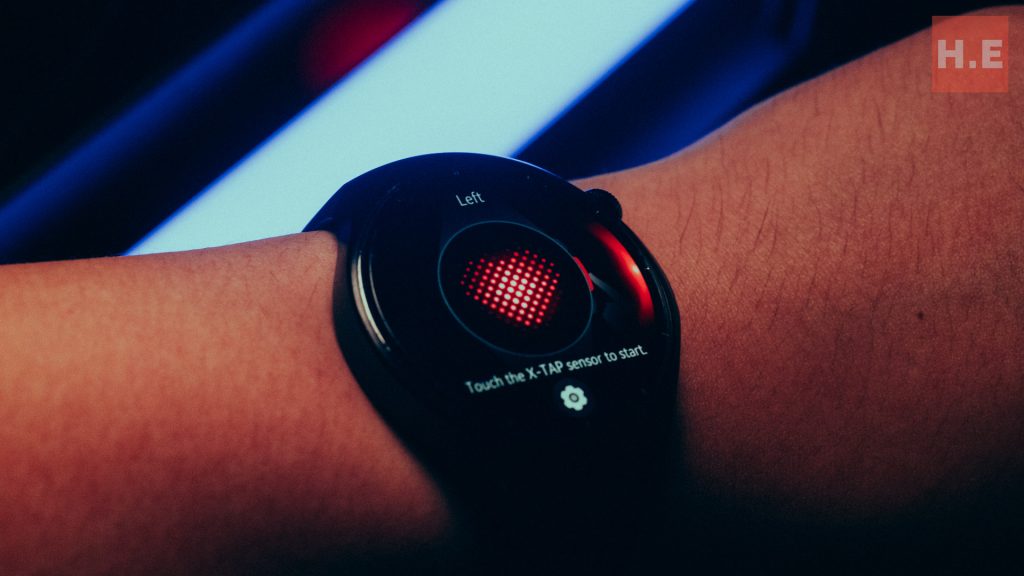
The X-Tap sensor bypasses these issues by using your fingertip. Your fingertip is naturally better for collecting health data. It has a denser network of blood vessels and a richer capillary network , which provides a stronger and clearer signal for readings like blood oxygen saturation (SpO2) . The skin on the fingertip is also thinner and more consistent, allowing light from the PPG sensor to penetrate more easily.
Because your finger is a more stable point of contact, it significantly reduces signal errors caused by movement . Huawei claims this design choice leads to a signal that is 10 to 50 times better and richer than a standard wrist-based reading.
A Complete “Health Glance” in 60 Seconds
The flagship feature of the X-Tap sensor is the “Health Glance.” This is a fast, one-minute health check that you can start by simply pressing and holding the side-mounted sensor for three seconds. The process is designed to be quick and easy to fit into your daily routine.
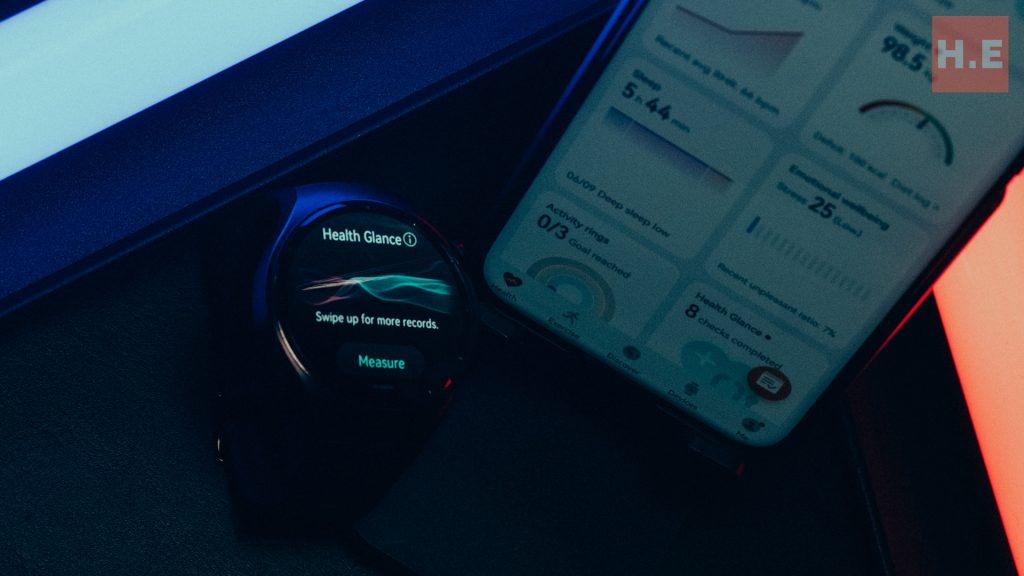
The Health Glance measures a wide range of important health indicators in a choreographed sequence. The process includes:
- A 30-second ECG to check your heart’s electrical activity.
- A 15-second scan for other metrics, such as heart rate, blood oxygen (SpO2), and skin temperature.
- A unique 15-second voluntary cough to assess your respiratory function.
This comprehensive, yet simple, process gives you a detailed overview of your health whenever you feel something is off.
X-Tap vs. Normal Smartwatch Sensors: A Comparison
The main difference between the X-Tap and a normal smartwatch sensor is how they function together. Traditional wrist-based sensors on the back of the watch are designed for continuous, all-day tracking. They’re great for seeing long-term trends but can be prone to noise.
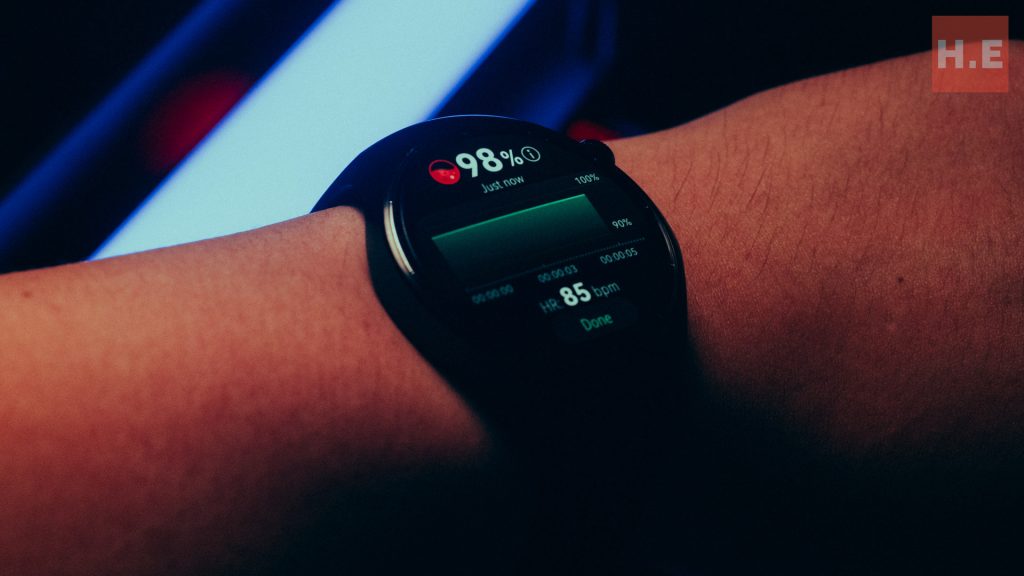
The X-Tap sensor works alongside these wrist sensors, not in place of them. It provides a high-fidelity spot check. This combination of continuous monitoring and on-demand precision gives you the best of both worlds, leading to faster and more accurate health data. In fact, the
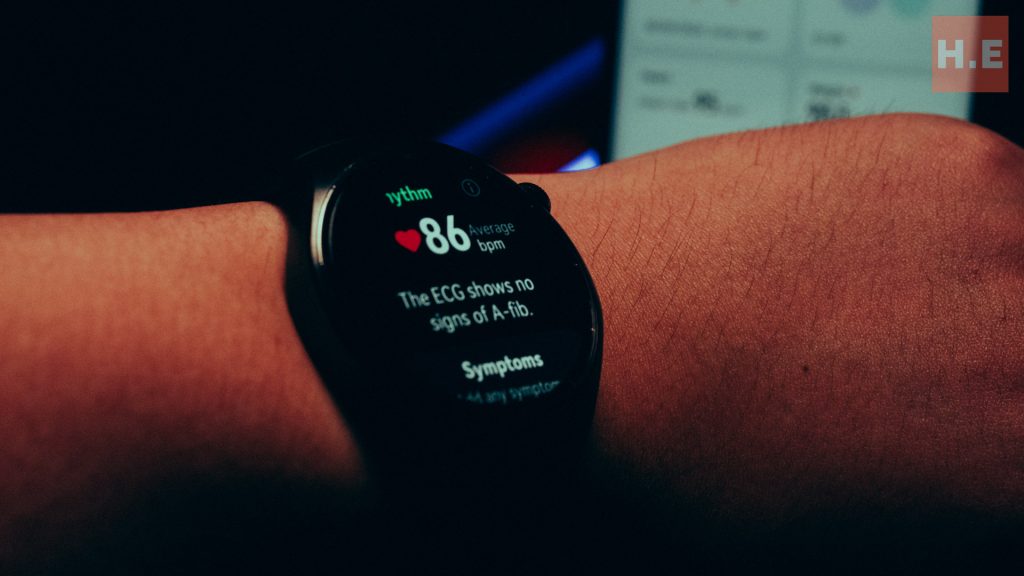
X-Tap can give you a blood oxygen reading in just 10 seconds—33% faster than previous generations. This two-tiered system offers a more reliable and complete health picture for users.
The Future of Wearable Health
he Huawei X-Tap sensor represents an important step forward in wearable health technology. It offers a new, more reliable way to collect on-demand biometric data, addressing the key challenges of traditional wrist-based sensors. By moving data collection to the fingertip and integrating multiple sensors into one simple feature, it provides a high-quality, easy-to-use solution that sets a new standard for accuracy in consumer wearables.
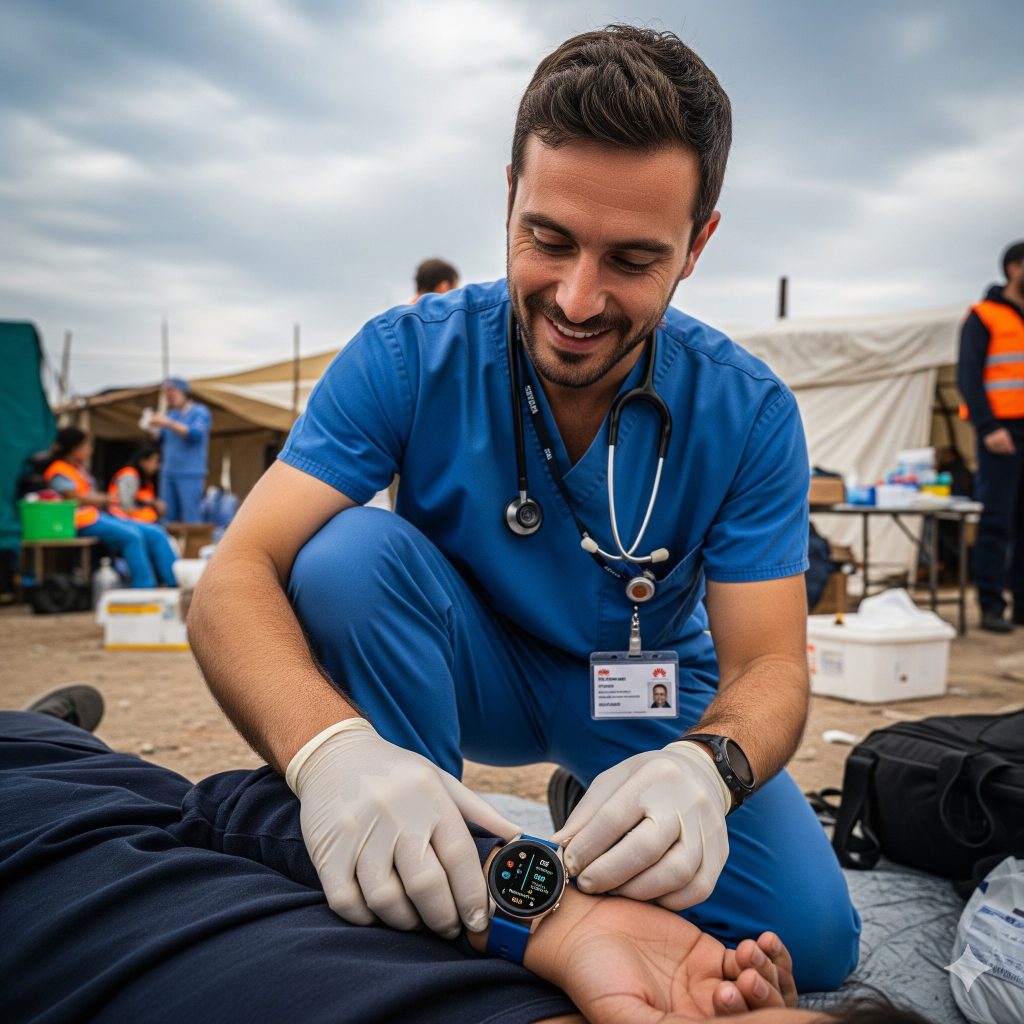
This type of technology has the potential to significantly change emergency medicine and humanitarian aid. Wearable sensors can provide continuous, real-time monitoring of vital signs like heart rate, body temperature, respiration rate, and blood oxygen levels. This data can be transmitted wirelessly to a central command center, providing critical information and allowing first responders to detect physiological distress or environmental hazards without the need for traditional, bulky medical equipment.
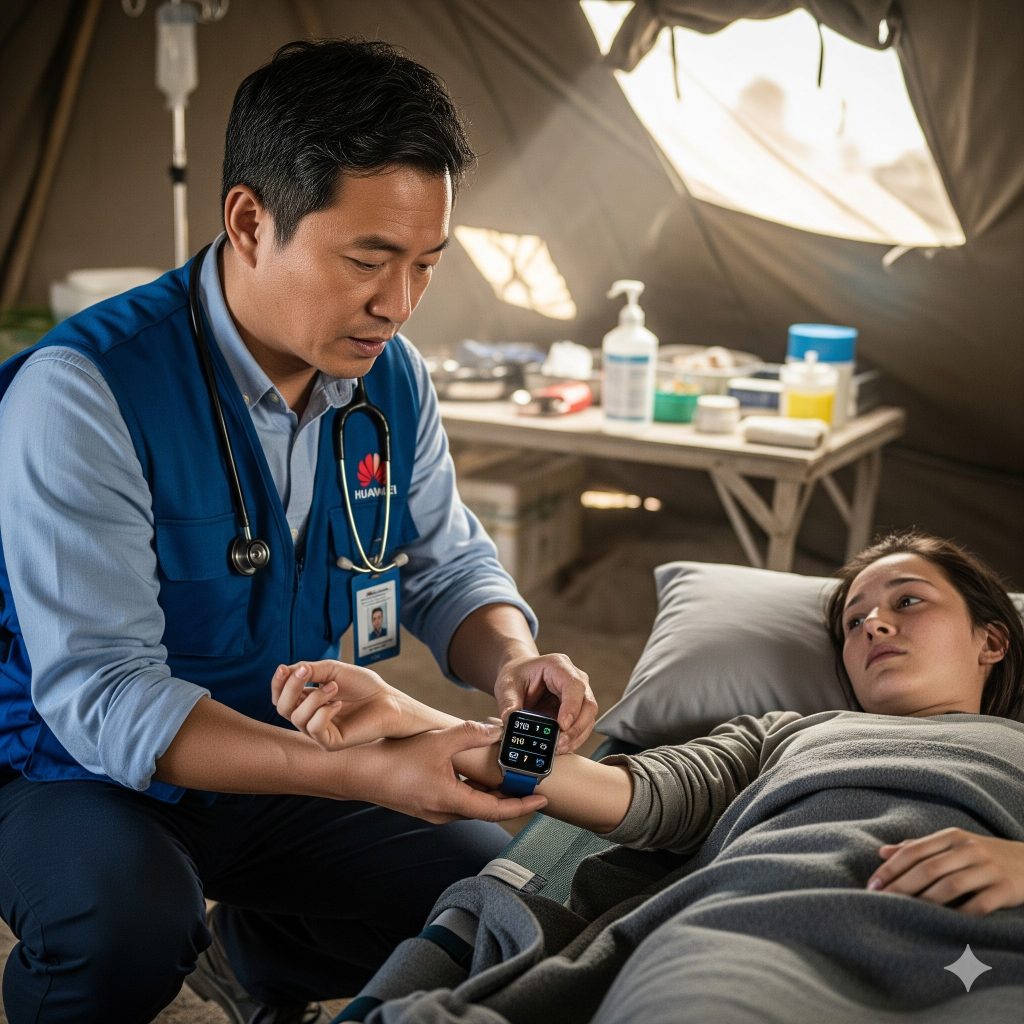
For humanitarian aid and disaster relief, a simple, wrist-worn tool can provide teams with real-time situational awareness. They can be used to track vitals and location, and even send alerts with a single tap if a user needs immediate assistance or if their heart rate indicates a problem. This capability helps commanders manage teams and make faster, safer decisions in the field. Wearables can also help bridge the gap in healthcare access in low-resource settings, offering a cost-effective way to monitor health without frequent in-person visits.
Check out review on the first wearable with X-Tap sensor, the Huawei Watch 5:
We also wrote about another Huawei inovation, the Huawei Sunflower Positioning System, check out the full article here: